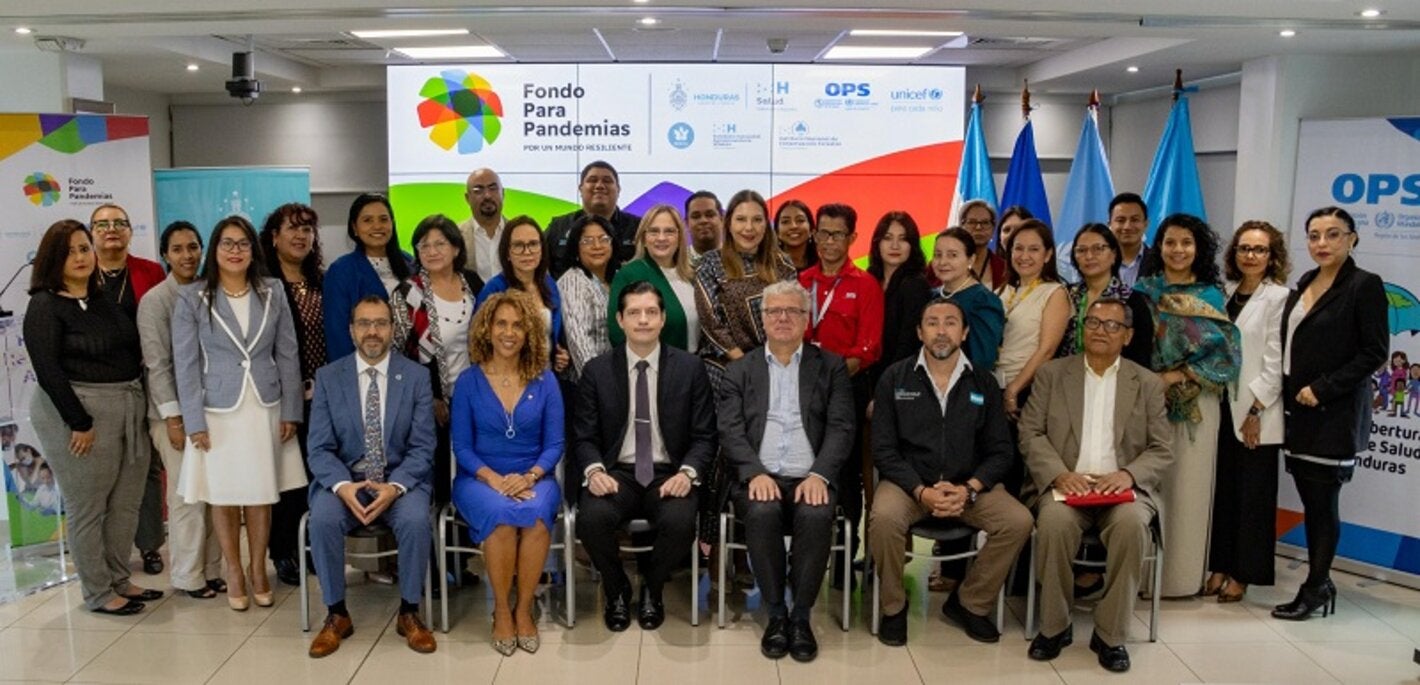
Tegucigalpa, June 18, 2025 (PAHO) — The Ministry of Health of Honduras, working with other national institutions and with technical support from the Pan American Health Organization (PAHO) and UNICEF, officially launched a Pandemic Fund project in the country — a strategic initiative aimed at strengthening national capacity to prevent and respond to future health threats.
The project, titled “Honduras Prepared and on Alert for Potential Pandemic Events,” will run for three years and is funded with US$17 million from the World Bank’s Pandemic Fund, channeled through PAHO and UNICEF.
The event, held at the PAHO/WHO offices in Tegucigalpa, brought together representatives from the Secretariat of Agriculture and Livestock (SAG–SENASA), the Secretariat of Natural Resources and Environment (SERNA), the Forest Conservation Institute (ICF), as well as international strategic partners, including Priya Basu, Executive Director of the Pandemic Fund, and the United Nations Resident Coordinator.
The project aims to strengthen epidemiological surveillance systems, improve laboratory diagnostic capacity, train technical and health personnel, and establish coordination mechanisms across the human, animal, and environmental health sectors. These efforts will enable the country to respond more promptly and in a more coordinated manner to outbreaks and events with pandemic potential.
Additionally, the project will be supported by national counterpart contributions and institutional co‑investment to strengthen public health surveillance systems, enhance rapid diagnostic laboratories, train health and technical personnel in “One Health” methodologies, and promote collaboration and joint protocols among the sectors involved.
The Ministry of Health is leading this initiative as part of its commitment to national health security, recognizing the importance of acting proactively and collaboratively to protect the health of the population, particularly the most vulnerable groups.