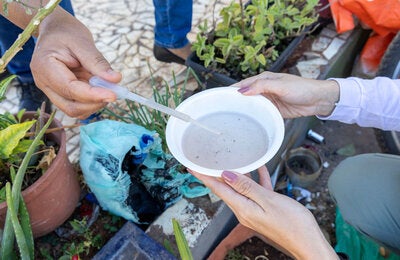
The document, covering the period 2026–2030, establishes measures to strengthen the resilience of health systems, with a focus on vulnerable groups and intersectoral action.
Santo Domingo, March 24, 2026 – The Dominican Republic has launched its National Health and Climate Change Adaptation Plan 2025–2030 (PNASCC), a document developed with the technical assistance of the Pan American Health Organization (PAHO) and funded through the EU-CARIFORUM Strengthening Climate Resilient Health Systems in the Caribbean Project. Led by the Ministry of Health, the process also involved various national ministries, institutions, and international organizations, giving the plan a comprehensive and cross-cutting character.
The PNASCC aims to promote the development of a climate‑resilient health system, enhancing its capacity to protect people’s health and well‑being from the impacts of climate change, and to advance adaptation actions both within the health sector and across other sectors, promoting health co‑benefits derived from emission reductions.
“Climate change is not a distant threat but a reality that directly affects health, as evidenced by rising temperatures, the increasing frequency of extreme events, and the spread of vector‑borne diseases,” said Dominican Republic’s Minister of Public Health, Víctor Atallah, who added, “This is not only a health issue, but also one of infrastructure, water, food, and national security.” With climate change, Atallah noted, “inequities come to the surface because vulnerable groups are the most affected. We must work to ensure no one is left behind. This plan will help prepare the country across all sectors, with health at the center,” he concluded.
Among the concrete measures included in the plan are:
- developing sustainable, low‑carbon health infrastructure that strengthens the resilience of health facilities;
- strengthening the competencies of health personnel regarding climate change and its effects on health;
- generating climate and health evidence to support informed decision‑making;
- assessing the health system’s vulnerability and adaptation needs in the face of climate change;
- establishing an integrated climate and health information system in cooperation with key Dominican institutions and with a One Health perspective;
- implementing an integrated surveillance and early warning system for diseases and health conditions sensitive to climatic and meteorological events;
- strengthening systems for monitoring climate variables and key environmental determinants;
- addressing environmental and social determinants of health with a focus on vulnerable groups and through a comprehensive approach that incorporates health into all policies.
Intersectoral approach and health equity
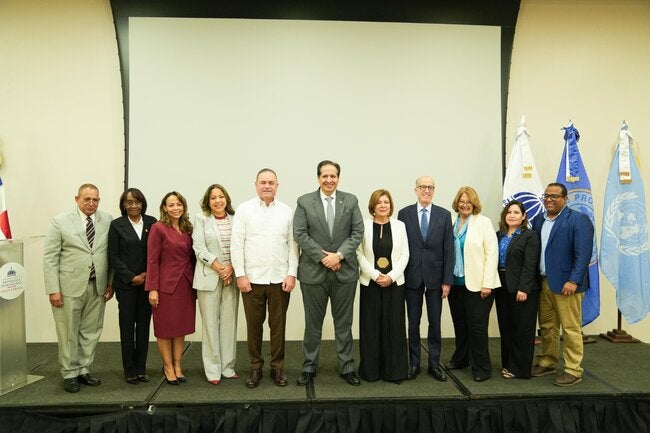
PAHO Representative in the Dominican Republic, Alba María Ropero Álvarez, reminded that the country “faces particular vulnerability to the effects of climate change, a reality that demands anticipatory, comprehensive, and sustained responses that strengthen the resilience of the health system and protect, as a priority, the most exposed and vulnerable communities.”
Ropero Álvarez highlighted that the Dominican plan “promotes an intersectoral approach, recognizing that health and climate are closely linked to the environment, water, energy, risk management, and sustainable development; incorporates climate and epidemiological surveillance and risk management, strengthening timely and informed decision‑making; and prioritizes the protection of populations in situations of greater vulnerability, under the principle of equity that guides public health.”
She also noted that the plan aligns with the Policy for Strengthening Equity-Oriented Health Sector Action on Climate Change and Health, approved by PAHO Member States in 2024, “a policy that seeks to strengthen the health sector, improve adaptation and mitigation to climate change, ensure the participation of vulnerable communities, optimize surveillance systems, and increase financing for climate and health.”
Indeed, two of the plan’s core principles are health equity and intersectorality. As the document states, “many populations are disproportionately affected by the impacts of climate change, worsening existing health inequalities; therefore, the PNASCC and the vulnerability analysis must incorporate equity and gender into climate change adaptation efforts.” The plan adds that, given this context, “applying the Health in All Policies approach seeks to improve health by incorporating a health lens into decision‑making across all sectors.” For this reason, one of the key lines of action is to “establish multidisciplinary, multisectoral, and consensus‑driven governance mechanisms.”
More extreme climate events
The Dominican Republic is exposed to future climate scenarios involving rising temperatures, decreasing rainfall, and increasingly extreme weather events. This will lead to greater variability in precipitation and hurricanes, the arrival of Saharan dust, air quality challenges, and sea‑level rise—phenomena that exacerbate critical risks such as food insecurity, shortages of drinking water, the spread of vector‑borne diseases (including dengue and malaria), impacts on mental health and population displacement, and increased mortality and injuries from extreme events.
Furthermore, according to the future scenarios outlined in the plan, by 2050 the effects of climate change threaten to reduce labor productivity (by 3.5% to 9%), crop yields, tourism, infrastructure (with potential damages up to three times historical levels depending on the climate scenario), and natural ecosystems such as forests and coastal areas. These effects will have a greater impact on vulnerable groups.