St. Johns, Antigua, 22 January 2026 (PAHO) – The Pan American Health Organization (PAHO) partnered with the Ministry of Health, Wellness, Environment and Civil Service Affairs to conduct a four-day HEARTS sensitization and training workshop. This collaboration sought to train and sensitize staff from the ten implementing clinics for phase 1 of the HEARTS roll-out in Antigua and Barbuda.
Participants included dentists, domestic aids, nutritionists, nurses, security guards, pharmacists, and physicians. Team-based care is a principle by which HEARTS operates, emphasizing the importance of a unified approach among a clinic’s healthcare team.
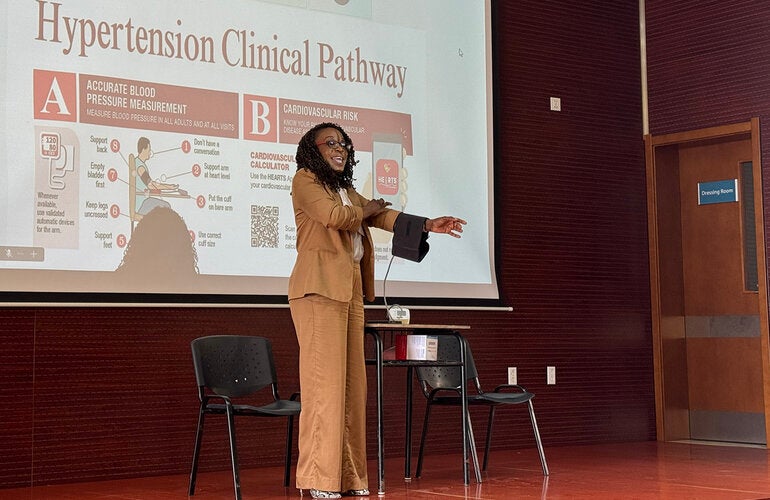
Cardiovascular diseases are the leading cause of death and disability in the Caribbean and furthermore, in Antigua and Barbuda. As part of the strategy to improve hypertension coverage and control, the HEARTS Initiative was launched, under the framework of the Better Care for Non-Communicable Diseases (NCDs) Initiative.
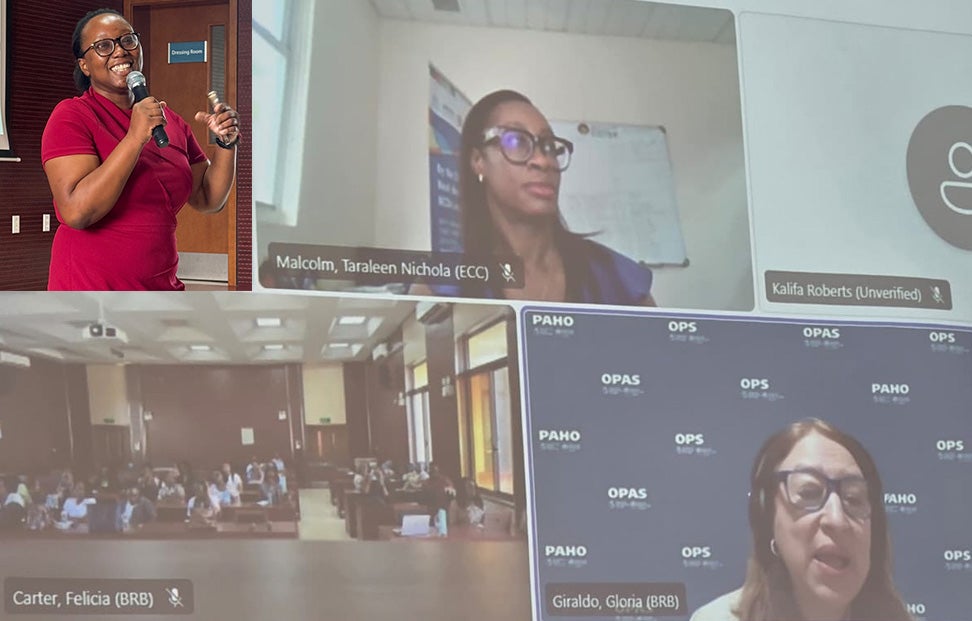
The PAHO team of Dr. Gloria Giraldo, Advisor for NCDs and Mental Health, Caribbean Subregional Program Coordination, Dr. Taraleen Malcolm, Advisor for NCDs and Mental Health, Office for Barbados and the Eastern Caribbean Countries and Ms. Felicia Carter, International Consultant, set the stage by explaining the concept of ‘Better Care for NCDs’, the structure of the HEARTS program and particularly, the importance of measuring the hypertension control drivers. Members of the local Ministry of Health’s HEARTS Implementation Committee, subsequently expanded these concepts, providing participants with practical knowledge and tools to enhance hypertension patient care.
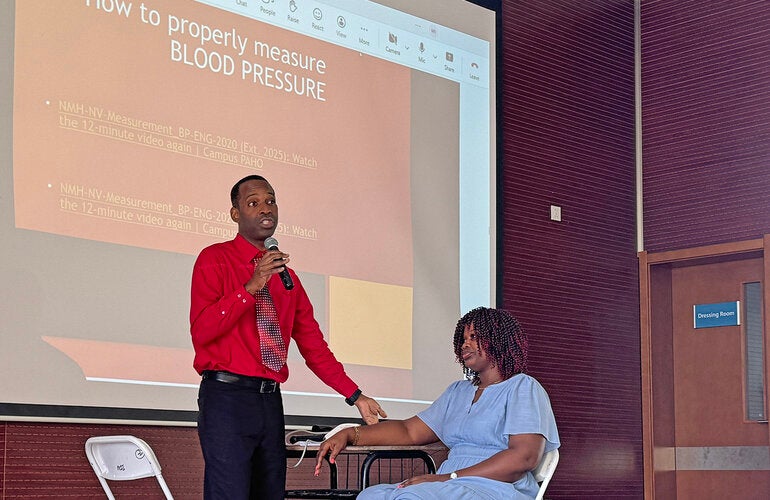
Learning through role-play
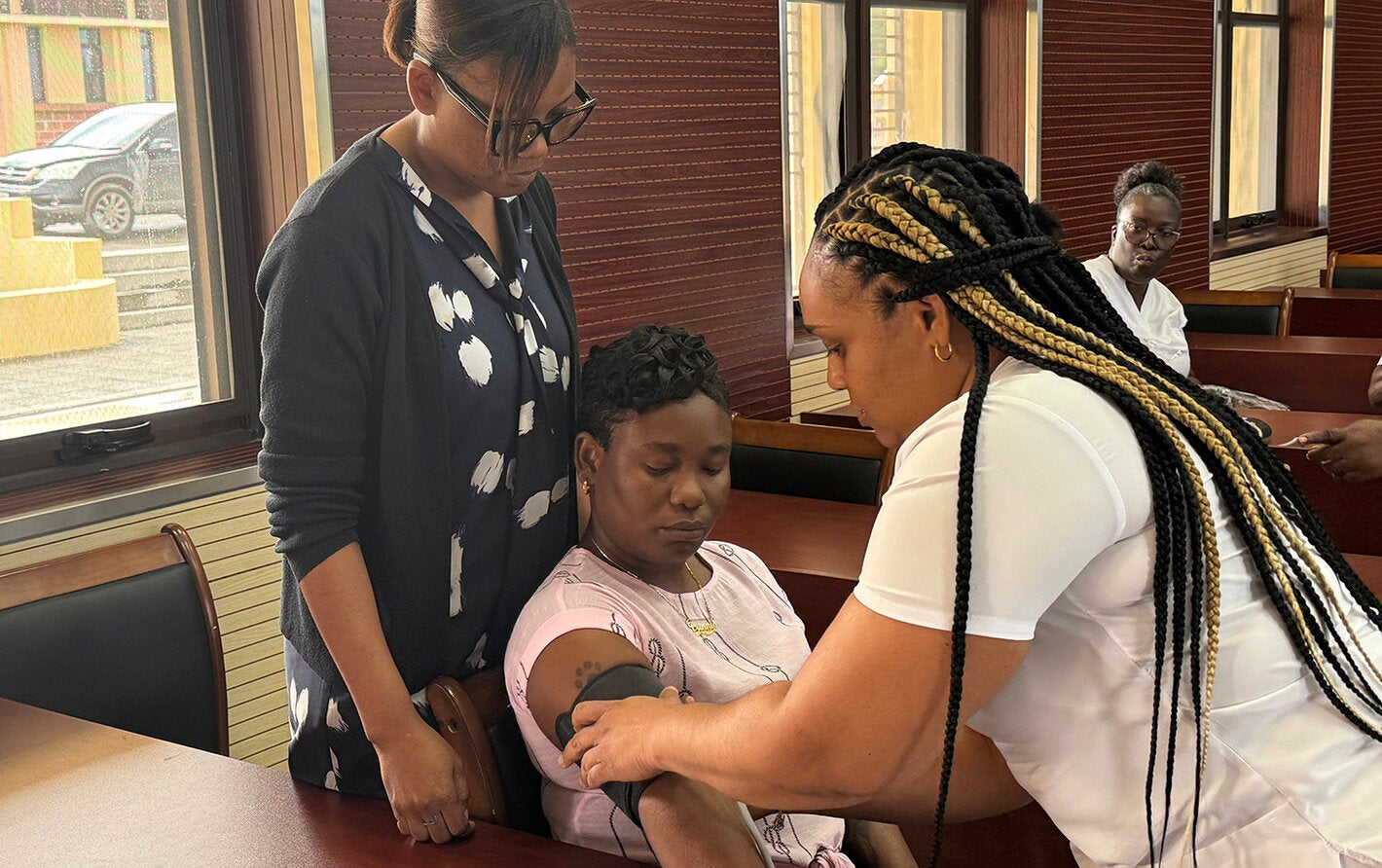
The most engaging part of each day was the hands-on demonstration of accurate blood pressure measurement. This session was especially valuable for clinic staff who do not routinely perform this task, such as domestic aides. Trainers began with a roleplay scenario of a patient having their blood pressure taken. While lighthearted and filled with humorous moments, the exercise effectively underscored how easily poor habits can slip into patient interactions.
One nurse remarked, “Thank you for this, because I usually forget to ask the patient to empty their bladder before taking their blood pressure.” Many other staff members echoed their appreciation for the training and expressed enthusiasm about applying these best practices in their daily work.
The next steps
Following this training and sensitization of staff from the 10 implementing clinics, the next few months will focus on establishing a robust system of monitoring patients and staff at each healthcare centre. Using the hypertension control drivers, patient progress will be measured to ascertain hypertension coverage and control, and staff will be expected to engage in continuous education via courses on the PAHO Virtual Campus of Public Health.
Dr. Amalia Del Riego, PAHO/WHO Representative for Barbados and the Eastern Caribbean Countries congratulates the country on this significant step towards the improvement of hypertension control in primary healthcare while advancing the Better Care for NCD Initiative.
”The sensitization and training workshop was a critical step, as it built participants’ knowledge and empowered them through practical skills in blood pressure management. The focus of this first phase is on quality improvement, to bridge gaps and strengthen deficiencies, she said.”