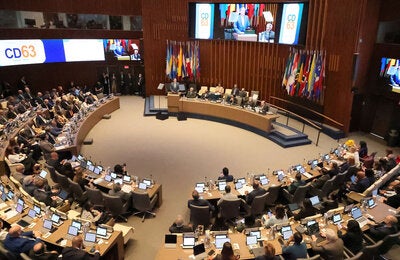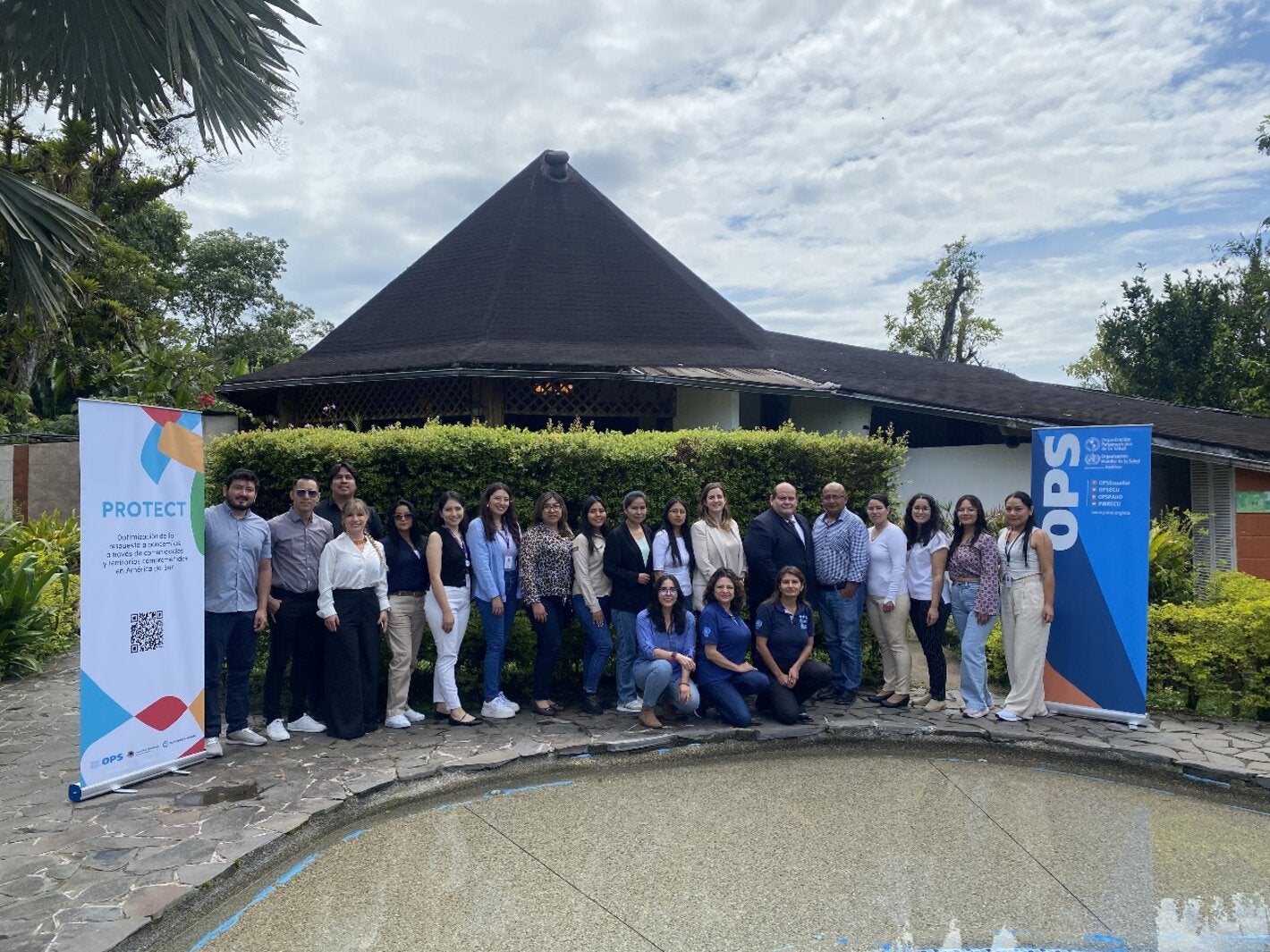
Ecuador, 28 August 2025 (PAHO) – The Pan American Health Organization (PAHO), in coordination with Ecuador’s Ministry of Public Health and the National Institute of Public Health Research (INSPI), held the International Training Workshop on Laboratory Surveillance of Emerging and Reemerging Pathogens with Pandemic and/or Epidemic Potential, from August 26 to 28 in the Amazonian city of Tena, Ecuador.
The event brought together specialists from Bolivia, Colombia, Ecuador, and Paraguay, as part of the project Optimizing Pandemic Response through Engaged Communities and Territories in South America (PROTECT), funded by the Pandemic Fund and implemented by PAHO and the World Bank. The initiative aims to strengthen pandemic preparedness and response in South American countries, with a focus on border areas.
Over the course of three days, technical staff from human and animal health laboratories participated in theoretical and practical sessions on advanced molecular diagnostic methods, including RT-PCR and Multiplex RT-PCR, applied to the detection of dengue, yellow fever, chikungunya, oropouche, mayaro, among others. The workshop also promoted the exchange of national experiences and the use of integrated surveillance approaches under the One Health framework.
Roxana Loaiza Foyle, head of the Molecular Biology Laboratory at Bolivia’s National Center for Tropical Diseases (CENETROP), emphasized: “All of these trainings help strengthen our laboratories so we can respond to our country’s needs, and with the support of PAHO and this project, each of the region’s laboratories will continue to grow.”
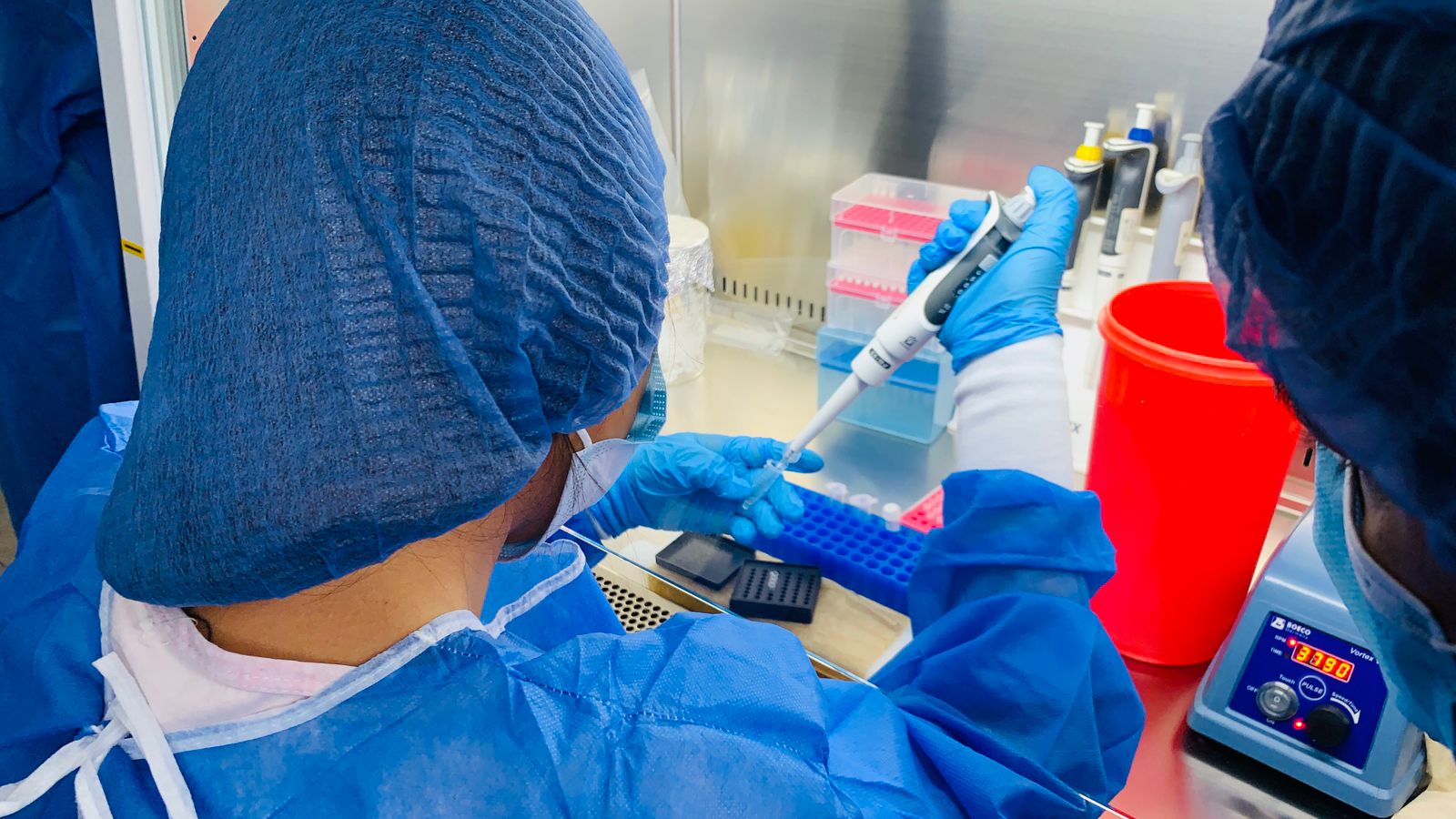
The workshop program combined technical presentations, hands-on laboratory activities, and discussion spaces focused on current challenges in pathogen surveillance. Participants worked on both manual and automated nucleic acid extraction, the application of RT-PCR and multiplex tests for regionally important arboviruses, and the joint analysis and interpretation of results. These practical exercises helped reinforce skills for early detection and timely response to potential outbreaks.
Araceli Fernández, Zonal Technical Analyst at Ecuador’s National Reference Center for Antimicrobial Resistance (INSPI), shared: “The experience at the workshop showed me how different countries have managed to establish various workflows using different technologies, advancing toward more accurate and higher-quality diagnostics. This reflects a strong commitment to public health and the actions of health authorities, who can respond in the best possible way based on scientific evidence.”
This training is part of regional efforts led by PAHO’s Health Emergencies Department (PHE), through its Infectious Hazard Management (IHM) Unit, to strengthen laboratory surveillance networks in South America. The goal is to improve preparedness for epidemic and pandemic threats, helping protect population health and mitigate the health, social, and economic impacts of future outbreaks.
Find out more about the Pandemic Fund projects implemented by PAHO here.