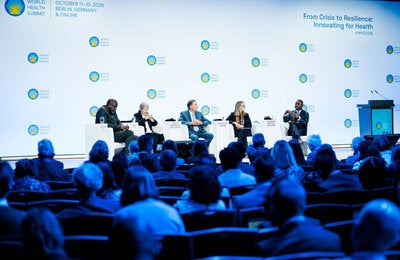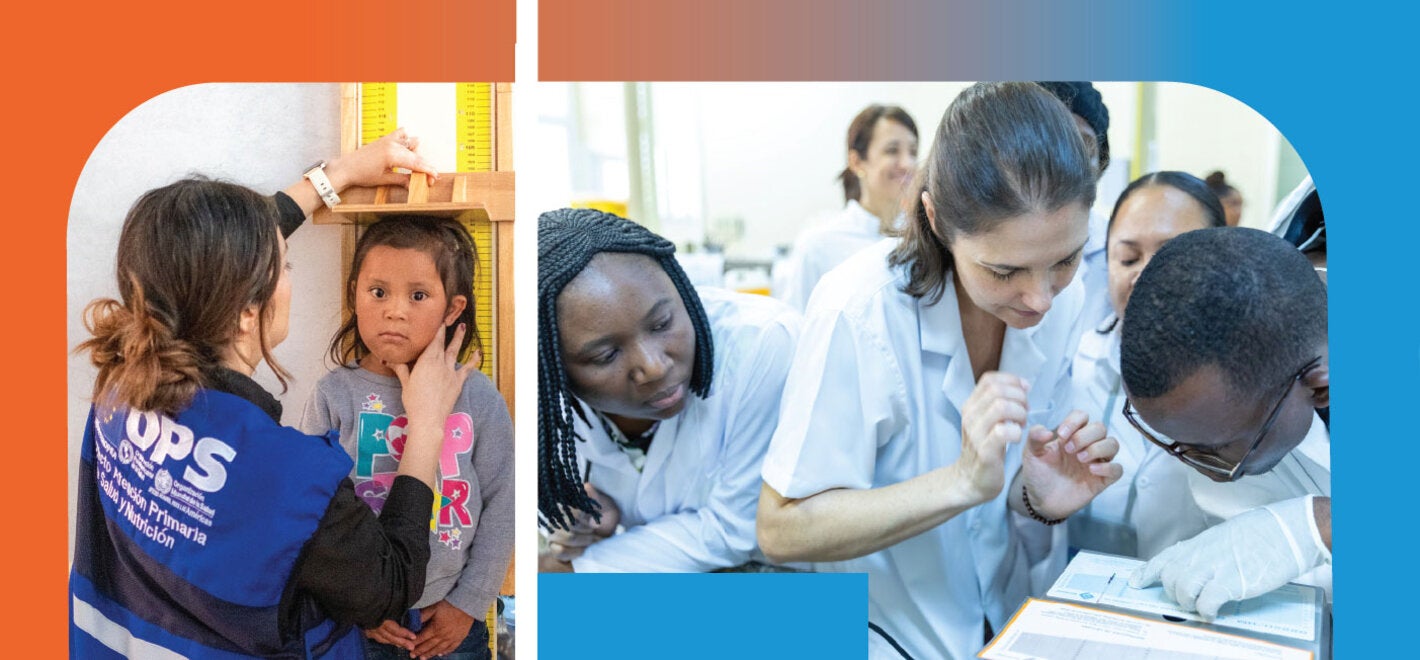
Barbados, Bolivia, the Dominican Republic and Guyana shared experiences on strengthening Primary Health Care through targeted actions in health workforce, services organization and system’s planning during the 63rd PAHO Directing Council.
Washington, D.C., 29 September, 2026 (PAHO) – Innovative approaches to transform health systems based on primary health care (PHC) were highlighted today during a briefing session at the 63rd Directing Council of the Pan American Health Organization (PAHO).
The session, “Accelerating Action in Primary Health Care: Innovative Experiences from the Americas,” brought together health authorities and partners to share practical experiences from across the region and discuss how countries are using PHC approaches to deliver more efficient and effective care.
“Primary Health Care is the pathway through which we expand access, reduce inequities, strengthen health security, and improve health outcomes. It remains our most effective strategy for transforming health systems and advancing the health and well-being of the peoples of the Americas,” said PAHO Director Dr. Jarbas Barbosa.
The session highlighted experiences from Barbados, Bolivia, the Dominican Republic and Guyana, demonstrating how countries are adapting primary health care approaches to their national priorities and contexts.
Barbados presented an innovative debt-for-health swap to mobilize additional resources for health systems transformation based on primary health care. This innovative mechanism will generate funds to be directed to priority health programs, including efforts to address noncommunicable diseases and childhood obesity through a primary health care approach.
Guyana presented its experience transforming nursing education through a hybrid model that combines digital learning, clinical simulation and supervised clinical practice. The approach is expanding opportunities for nursing education beyond urban centers and strengthening the health workforce needed to provide care in communities. In August, Guyana graduated its first cohort of 669 nurses through the program, bringing skilled professionals closer to the communities that need them most.
Bolivia presented its ongoing health sector planning process, which places primary health care at the center of its health transformation agenda. With support from PAHO and the Alliance for Primary Health Care in the Americas, the country is advancing integrated, people-centered services and expanding access to care for all.
In the Dominican Republic, the HEARTS initiative demonstrates how primary health care can strengthen the prevention, detection and control of hypertension and diabetes through evidence-based interventions integrated into more responsive and people-centered health service networks. The country is also working through the Alliance for Primary Health Care in the Americas to strengthen the first level of care and improve coordination across health services.
The session also included a panel on partner engagement in primary health care, with representatives from the World Bank and the Inter-American Development Bank (IDB) – as well as from MSD for Mothers. The discussion highlighted the importance of sustained cooperation, technical support and investment to help countries advance PHC-based health system transformation.
Dr. Barbosa highlighted the strategic collaboration with the World Bank and IDB through the Alliance for Primary Health Care in the Americas, which aligns technical cooperation and investment with national priorities.
Since 2023, the Alliance has supported 13 countries in the Region to accelerate innovation, investment and implementation of primary health care according to national priorities. PAHO is also working with partners, including MSD for Mothers, to accelerate reductions in maternal mortality and support disease elimination through a primary health care approach.
“Our challenge is no longer to demonstrate that Primary Health Care works. The evidence is clear. Now we must accelerate its implementation, amplify the innovations that are generating results, and mobilize the partnerships and investments needed to expand their impact,” Dr. Barbosa said.
The session underscored that countries are taking different approaches according to their national contexts, while strengthening primary health care remains a foundation for expanding access, reducing inequities and building more integrated, people-centered health systems across the Americas.