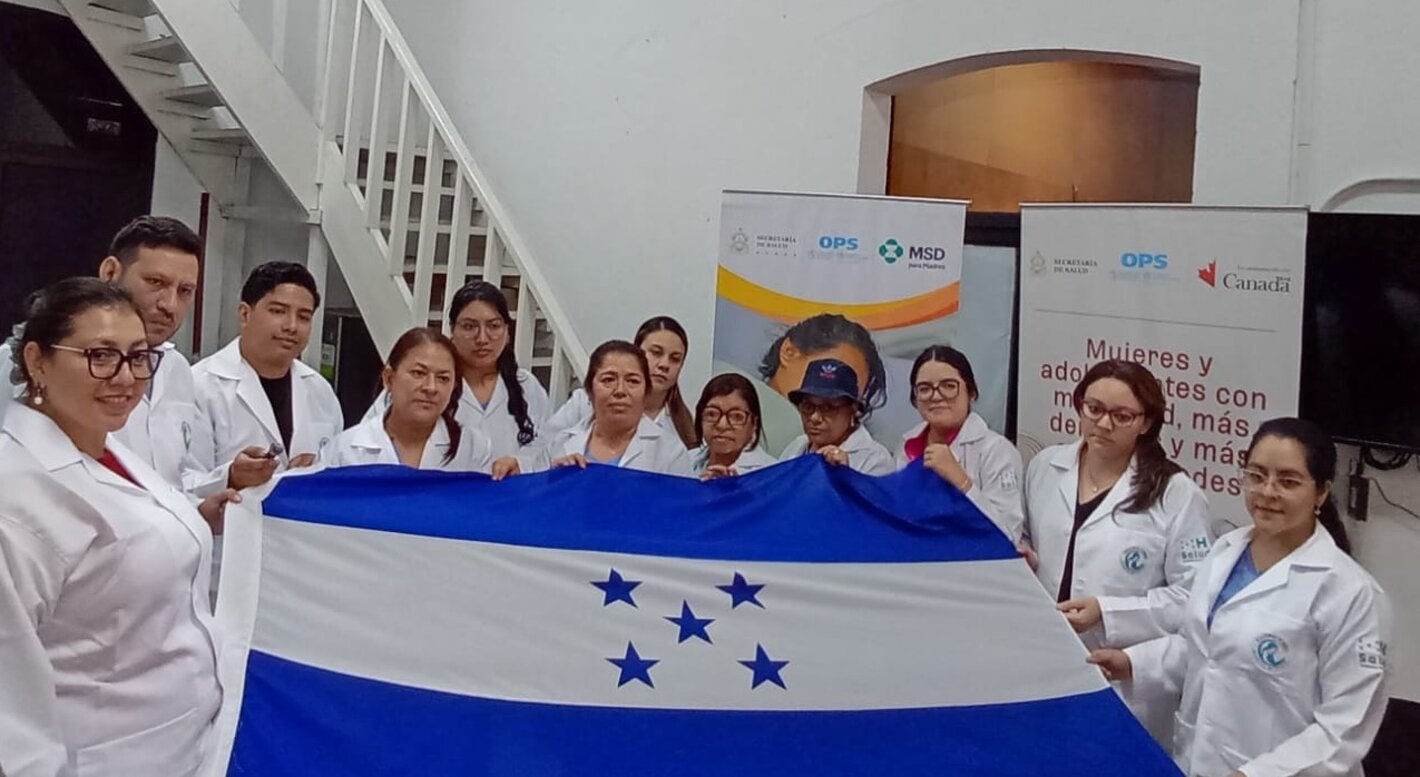
Tegucigalpa, Honduras, July 2026 (PAHO/WHO). With the official swearing-in of its Zero Maternal Death Operational Team and Management Steering Team, San Felipe General Hospital has taken a significant step toward strengthening the quality of maternal and neonatal care by institutionalizing a continuous improvement model aimed at preventing avoidable maternal deaths and ensuring safer care for women and their newborns.
The establishment of these teams represents far more than a ceremonial act. It involves creating a permanent structure within the hospital that will enable the timely identification of gaps in care, strengthen response capacity to obstetric emergencies, monitor key indicators, and promote evidence-based decision-making to improve maternal and neonatal health outcomes.
Every preventable maternal death reflects challenges that still persist within health systems. In response to this reality, the Zero Maternal Death strategy seeks to strengthen the clinical and managerial leadership of health facilities to ensure that women receive timely, safe, and quality care during pregnancy, childbirth, and the postpartum period. At San Felipe General Hospital, this commitment was formalized through the swearing-in of the teams responsible for leading and advancing improvement actions within the institution.
During the session, the institutional work plan for the strategy was also presented, along with an indicator dashboard designed to support the identification of gaps and the monitoring of improvement actions. These tools will enable the hospital to continuously assess its performance, measure progress, and guide interventions aimed at strengthening the quality of care.
As part of the technical support provided, health personnel will also strengthen their competencies in applying the World Health Organization’s recommendations for care during labor and childbirth, promoting care that is woman-centered, respectful of women’s needs, and grounded in the best available scientific evidence.
The process also incorporates the analysis of Severe Maternal Morbidity (Near Miss) cases, a methodology that helps identify preventable factors, understand the causes that place women's lives at risk, and generate corrective actions to prevent similar situations from occurring again.
The Pan American Health Organization (PAHO/WHO), with funding from MSD for Mothers, the Government of Canada, and the Primary Health Care Alliance, is supporting this effort through specialized technical cooperation to strengthen the implementation of the strategy in the country. This support promotes international quality standards and helps build institutional capacities that contribute to ensuring more women reach childbirth in good health and return safely home with their sons and daughters.