High-Level Event Launches New Estimates on Violence Against Women in the Americas
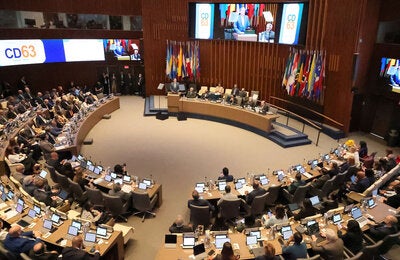
Washington, D.C., 4 December 2025 — Nearly 123 million women and girls aged 15 years and older, approximately one in three, have experienced physical or sexual violence in their lifetime in the Region of the Americas, accordingly to the new WHO estimates. The regional estimates of the prevalence of violence against women (2000-2023) were launched in a high-level event on November 24, co-organized by the Pan American Health Organization (PAHO), UN Women, and the World Bank.
Intimate partner violence continues to be the most common form of abuse: one in four women aged 15–49 has experienced physical or sexual violence by a current or former partner, while one in eight has experienced sexual violence by someone other than a partner. The new estimates offer a critical evidence base to guide action, deepen accountability, and reaffirm the Americas’ longstanding commitment to ensuring that all women and girls live free from violence.
“These figures are striking because this violence is preventable,” said PAHO Director Dr. Jarbas Barbosa da Silva Jr., in opening remarks delivered via video. “High-quality data is essential to give this issue the visibility and urgency it requires. PAHO remains committed to supporting countries to strengthen prevention capacities, improve the use of data in decision-making, and ensure that all survivors receive the quality care they deserve.”
Cecilia Alemany, Deputy Regional Director of UN Women for the Americas and the Caribbean, affirmed: "We have achieved greater visibility and recognition of gender-based violence, and this November 25, we urge that it be made a priority of public policy and investment by States and regional development banks to strengthen the prevention and response system. There will be no peace or sustainable development if women, girls, and diverse groups continue to face violence in their homes, public spaces, politics, and institutions."
High-level representatives from across the Americas and beyond, including ministers of Health and Women, and senior authorities from Canada, Costa Rica, the Dominican Republic, Mexico, Panama, and Uruguay, shared national perspectives, lessons learned, and priorities for strengthening violence prevention and response. Key regional organizations, notably the Inter-American Commission of Women (CIM) of the Organization of American States (OAS) and the Inter-American Development Bank (IDB), highlighted the importance of sustained financing, multisectoral coordination, and data-driven policymaking. Contributions from civil society organizations, including DataCívica and MundoSur, underscored the essential role of feminist and community-led initiatives in monitoring trends, generating evidence, and advocating for accountability across the Region.
A persistent and preventable crisis
In the Americas, 29 countries and territories now have updated prevalence estimates for the period 2000–2023, covering intimate partner violence, non-partner sexual violence, or both. The event showcased the most up-to-date and comprehensive picture of the magnitude of violence against women in the Americas, aiming to elevate the visibility and urgency of the issue, highlight evidence-based approaches to prevent it, showcase good practices from countries and partners, and underscore the need for sustained financing and strengthened cooperation across the Region. Quality data is critical to inform policy and practice and sustain achievements in terms of increased awareness, multisectoral plans, and health services in the Region.
“The new global prevalence estimates make it clear: we must invest more in preventing and responding to violence against women and girls. This violence carries costs we can no longer ignore. It is time to act; it is time to invest,” expressed Diana J. Arango Torres, GBV Prevention and Response Portfolio Coordinator, Latin America and the Caribbean, World Bank.
Key priorities and next steps
Participants underscored the need to:
- Sustain predictable financing for violence prevention and response;
- Strengthen multisectoral coordination across health, justice, education, and social protection systems;
- Expand national data systems to improve prevalence measurement, monitoring, and visibility;
- Promote community and civil-society leadership, especially women’s and feminist organizations;
- Ensure that all survivors—regardless of age, ethnicity, disability, or socioeconomic status—receive timely, quality, and survivor-centered care.
About the 16 Days campaign
This event was held within the framework of the UNiTE campaign, launched in 2008 under the leadership of the UN Secretary-General, which was created to support the civil society–led 16 Days of Activism against Gender-Based Violence campaign worldwide. It provided a timely opportunity to galvanize political momentum and elevate the visibility of this critical issue across the Region. The 16 Days are celebrated annually to raise awareness of the issue and advocate for change.
More information on the campaign can be found at: