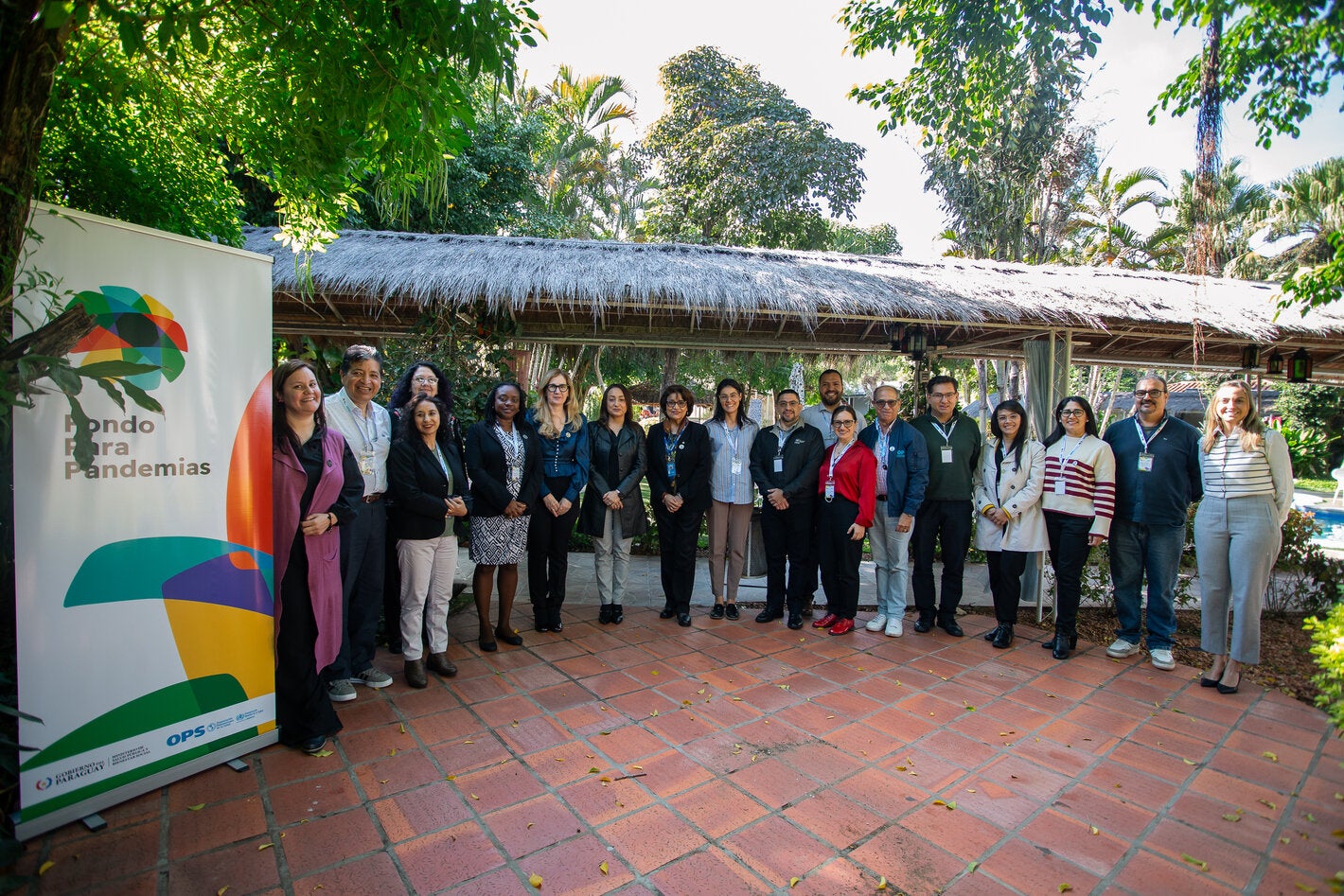
San Bernardino, Paraguay, June 4, 2026 – To strengthen early warning capacities for health emergencies, technical experts from Bolivia, Brazil, Chile, Colombia, El Salvador, Saint Lucia, Uruguay, and Paraguay gathered in San Bernardino from June 2–4 to advance the development of Community-Based Event Surveillance (CBES) across the Americas.
Convened by the Pan American Health Organization (PAHO), the informal consultation focused on reviewing competency frameworks and training materials for the implementation of CBES. Participants worked to validate professional profiles, operational competencies, and curriculum designs that will guide the training of health personnel and community-based structures throughout the Region.
CBES recognizes the critical role communities play in identifying and reporting unusual signals—such as atypical disease patterns, animal deaths, or significant environmental changes—before they escalate into outbreaks or public health emergencies. By establishing agile, secure, and two-way communication channels between communities and health authorities, this approach complements traditional surveillance systems and strengthens health resilience at the local level.
“Preparedness for future pandemics is not built solely within ministry headquarters; it is built with communities,” said Dr. María Almirón, Head of the Health Emergency Information and Risk Assessment Unit in PAHO’s Health Emergencies Department. “By standardizing competencies and training materials for community-based surveillance across the Americas, we are providing countries with a robust package that combines the scientific rigor of epidemic intelligence with local knowledge. We thank Paraguay for its hospitality and the experts from across the Region for helping achieve this important milestone.”
This collaborative effort directly supports the implementation of PAHO’s Epidemic Intelligence Strategy for Strengthening Early Warning of Health Emergencies 2024–2029 and advances the operationalization of the Guidance for the Implementation of Community-Based Event Surveillance.
The consultation also contributes to the global Pandemic Fund–financed project Pandemic Response Optimization through Engaged Communities and Territories (PROTECT), jointly implemented by PAHO and the World Bank to strengthen critical preparedness, early detection, and response capacities.
The technical and educational inputs generated during the discussions in San Bernardino will help refine regional guidance documents and training manuals, ensuring that future training programs for community-based actors are culturally and linguistically appropriate, equity-centered, and aligned with strong standards for biosafety, ethical confidentiality, and local data protection across priority areas of the Region.