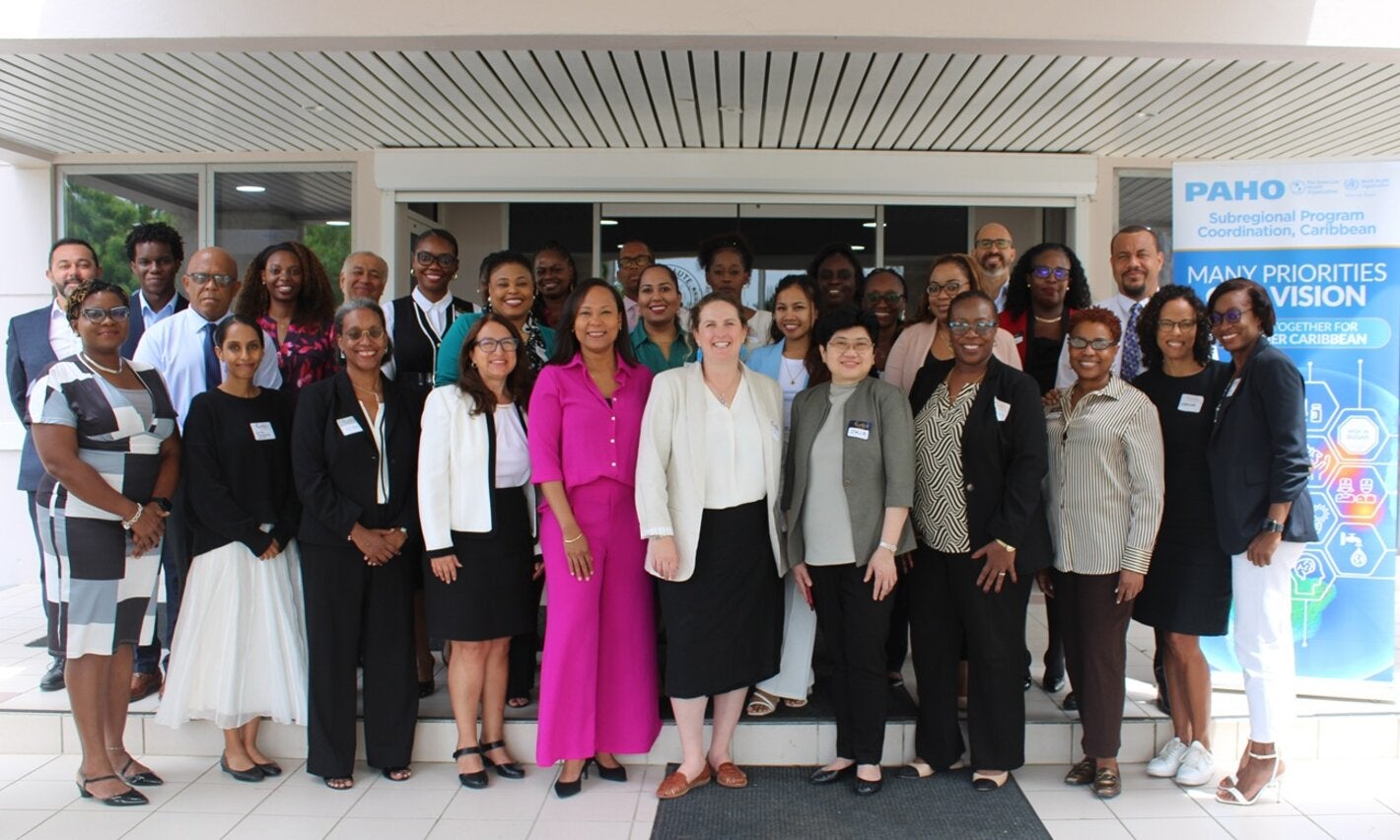
Bridgetown, Barbados, 8 June 2026 (PAHO/WHO) - Nutritionists, Noncommunicable Disease (NCD) focal points and legal drafters from eight Caribbean countries recently met in Barbados to determine the steps needed to advance the adoption, implementation and monitoring of sodium reduction targets and policies for the elimination of industrially produced trans fatty acids (iTFAs).
Excessive sodium and trans fats consumption are among the top causes of death and contribute to the global burden of noncommunicable diseases. It is estimated that approximately 2 million deaths each year are attributable to these two factors. In many countries, three quarters of sodium intake comes from processed and ultra processed foods, such as processed meats, packaged breads, sauces and condiments and cheese.
The three-day meeting’s goal was to promote collaboration and guide the development of local roadmaps. Recently installed Chief, Subregional Program Coordination Office, PAHO/WHO, Leah-Mari Richards noted that though ultra-processed foods dominated Caribbean grocery shelves and school cafeterias, no Caribbean nation had crossed the finish line of comprehensive trans fat elimination or the WHO "Best Buy" interventions for sodium reduction.
“Excessive sodium and hidden, industrially produced trans fats are putting our people at risk every single day. The tragedy isn’t just the data; it’s the fact that this is entirely preventable. The solutions aren't mysteries - they are some of the most cost-effective, impactful public health tools we have. We have seen what is possible when we act. Globally, since the World Health Organization launched the REPLACE initiative, massive strides have been made. In fact, nearly 85% of the population in the Americas is now protected by best practice trans fat regulations. But, if we are being honest with each other, progress within our own Caribbean sub-region has been unequal. The gaps are real and you all know what needs to be done,” Ms Richards emphasized. REPLACE is an action package to eliminate industrially produced trans fat from the global food supply.
On behalf of the PAHO/WHO Representative for Barbados and the Eastern Caribbean Countries, Dr Taraleen Malcolm, Advisor, Noncommunicable Diseases and Mental Health, called on countries to urgently shape and implement their regulatory policies. She praised the Caribbean Public Health Agency, the CARICOM Secretariat, the World Health Organization, the Healthy Caribbean Coalition, the University of the West Indies, and Resolve to Save Lives for their participation and continued collaboration and support to countries.
Countries worked towards the drafting of regulatory tools for adoption and implementation of IP-TFA elimination and mandatory sodium reduction targets in line with PAHO best practices and roadmaps for approval and implementation of the regulatory tools.
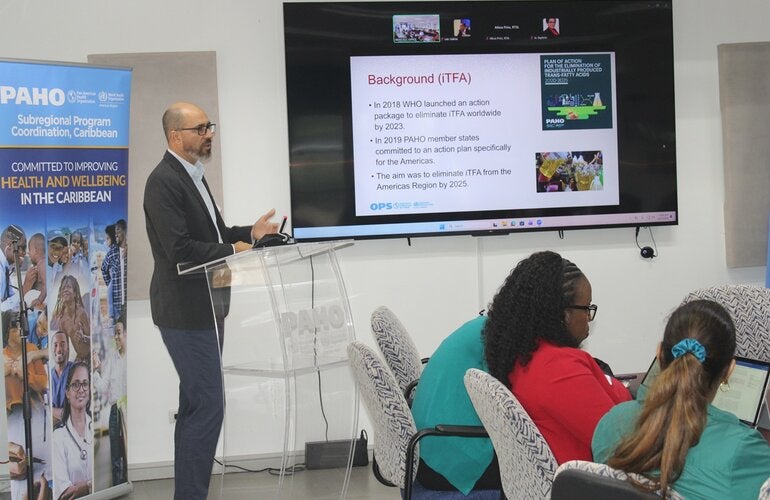
Senior Technical Advisor on Nutrition/Trans Fat at Resolve to Save Lives, Liz Drummond was pleased to participate in and support the meeting. She described the discussions and learning opportunities as rich. “Many of the participating countries are well prepared to take action on trans fat elimination and reduce sodium content in their food supplies through mandatory measures in the near future. We hope that this momentum continues and front-runner countries lead the way to improve diets across the Caribbean,” she expressed.
In his closing remarks, Fabio Gomes da Silva, PAHO Regional Advisor on Nutrition and Physical Activity acknowledged the advances made by countries and reiterated PAHO’s support to Member States in drafting and implementing regulations for industrially produced trans fatty acids elimination and for implementation of sodium targets. Engaging with regional partners and civil society organizations, he said, was key in moving these processes forward.
Bahamas, Barbados, Belize, British Virgin Islands, Jamaica, Saint Lucia, Suriname, and Trinidad & Tobago were represented at the meeting. In 2022 Caribbean policymakers committed to the elimination of partially hydrogenated oils, the main source of iTFAs, from national and regional food supplies by December 31, 2025.