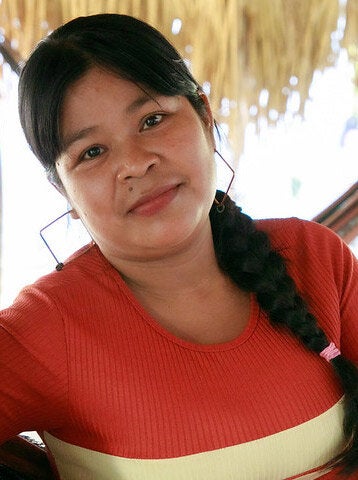
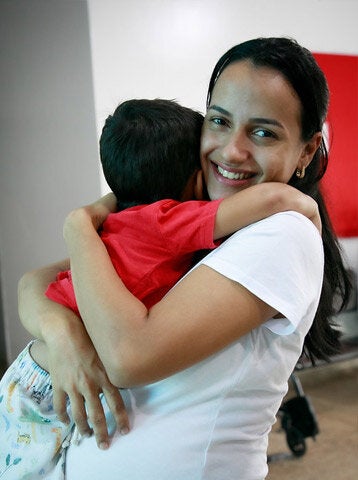
• woman seeks testing

Eliminating mother-to-child transmission of HIV in Brazil by caring

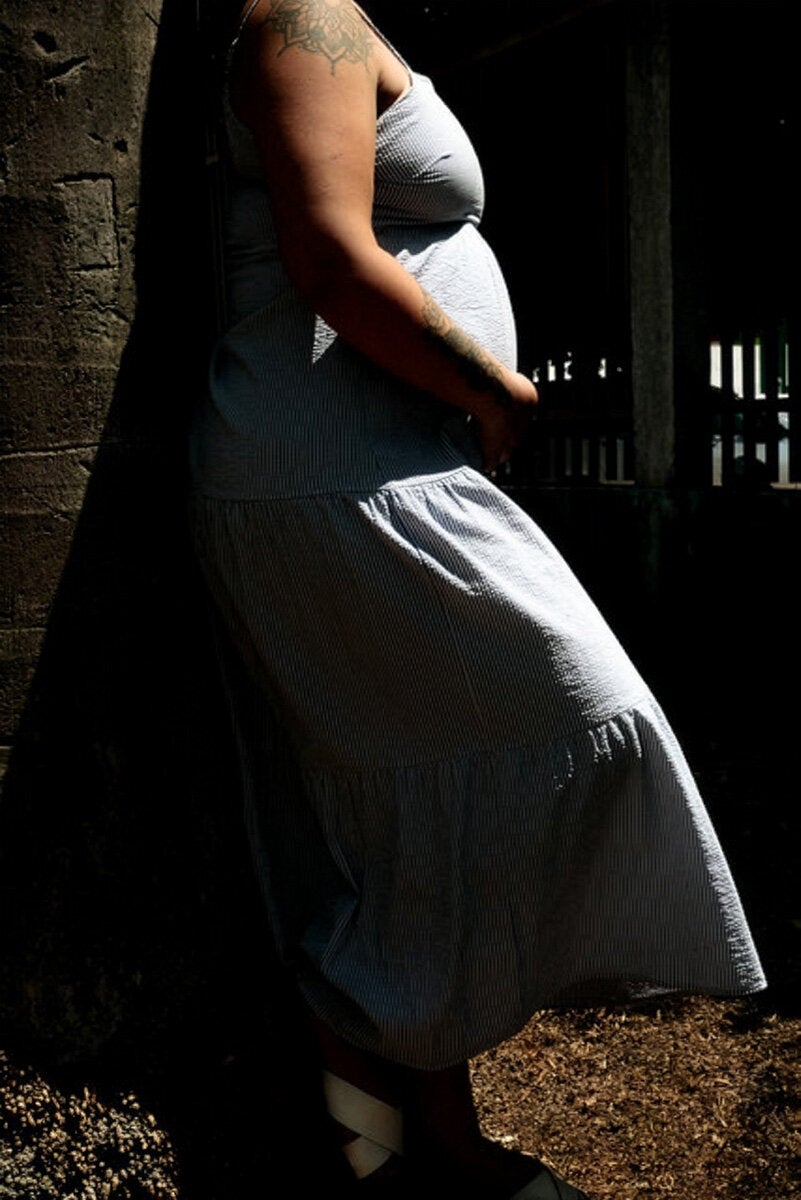
In the small room of the HIV treatment unit, known as Specialized Care Units in Brazil’s public health system, Isabella (28) runs her hand over her pregnant belly of 38 weeks. She smiles as she talks with the professionals who have accompanied her and become an essential support network since the start of her pregnancy.

— December 2025 —

Over the next two weeks, her first daughter will be born. Deep down, Isabella always wanted to be a mother, but it wasn’t clear that she would achieve that dream. The young women, who lives in Rondônia in northern Brazil, has been living with HIV for two years, and maybe longer, because she had no idea that she was HIV positive. When she finally received the results, she remembers feeling lost.

isabella standing

“My world collapsed. All I could think was that my life was over,” she recalls. “The first thing I thought was that I wouldn’t be able to be a mother.”

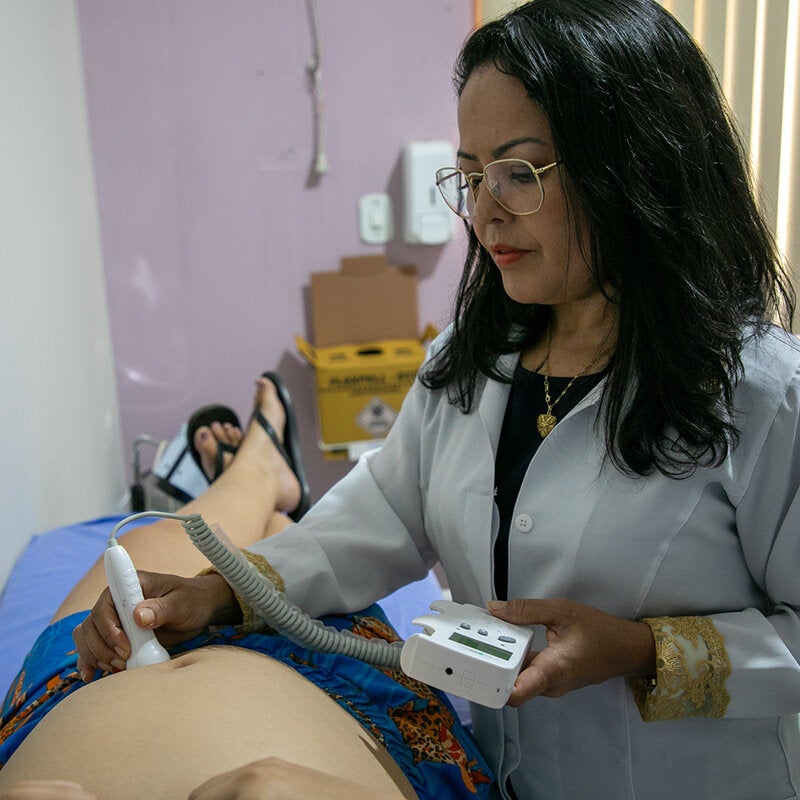
She was devastated as she had been planning the pregnancy for two years. But her outlook changed when doctors calmly explained to her that with proper treatment, people living with HIV can have healthy children. With regular use of antiretrovirals, it is possible to reach an undetectable viral load and prevent transmission of the virus to the baby. Specialized prenatal care, frequent appointments, and close monitoring are key to the process, which also includes psychological support.

“I hope for the best for my daughter. I want to see her grow up healthy and know that all the treatment I underwent was the best decision. I chose to take care of myself to give her a peaceful future. I think this is just the beginning of the best part of my life,” Isabella says with hope.

Reaching every region of Brazil

In Salvador, Bahia, Maria, a mother of two, received her positive diagnosis in week 24 of her pregnancy. She had gone to the primary care unit to schedule a prenatal appointment when she took the HIV rapid test, which came up “reactive.” She was referred to the HIV treatment unit.

The next day, after meeting with the infectious disease specialist, she started antiretroviral therapy. By her second test, her viral load was already undetectable, ensuring an HIV-free pregnancy. Throughout the process, doctors, nurses, social workers, and  the cleaning staff created an environment of care that she describes as warm and compassionate.

“Mass testing and this connection with the community are what make primary care strong. We’re able to reach the largest number of pregnant women and possibly prevent and avoid mother-to-child transmission,” explains Nurse Hanna Silva, who works in the HIV treatment unit of Salvador’s Liberdade Hospital.

Her son, Ariel, was born by C-section for medical reasons, underweight but healthy. “Just seeing my son healthy—it’s such a big emotion. He changed my life. He’s my angel,” Maria says.

Primary care as the gateway

Across Brazil, stories like Maria and Isabella, are connected by a common thread: care. Their stories begin before prenatal care, with rapid testing, welcoming environments, active surveillance, the sensitivity of health professionals, and the trust built with each woman.

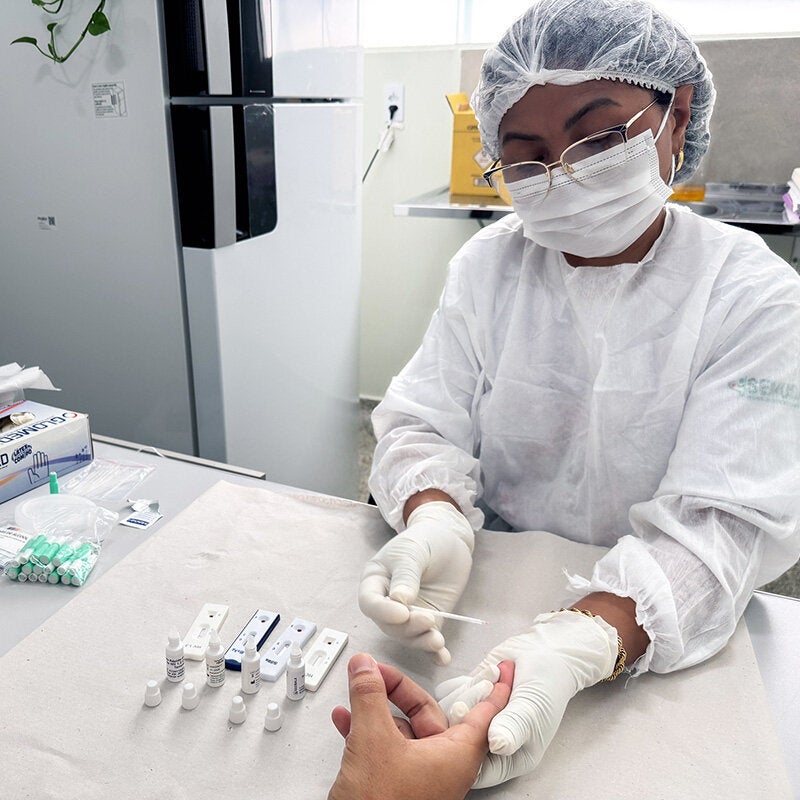
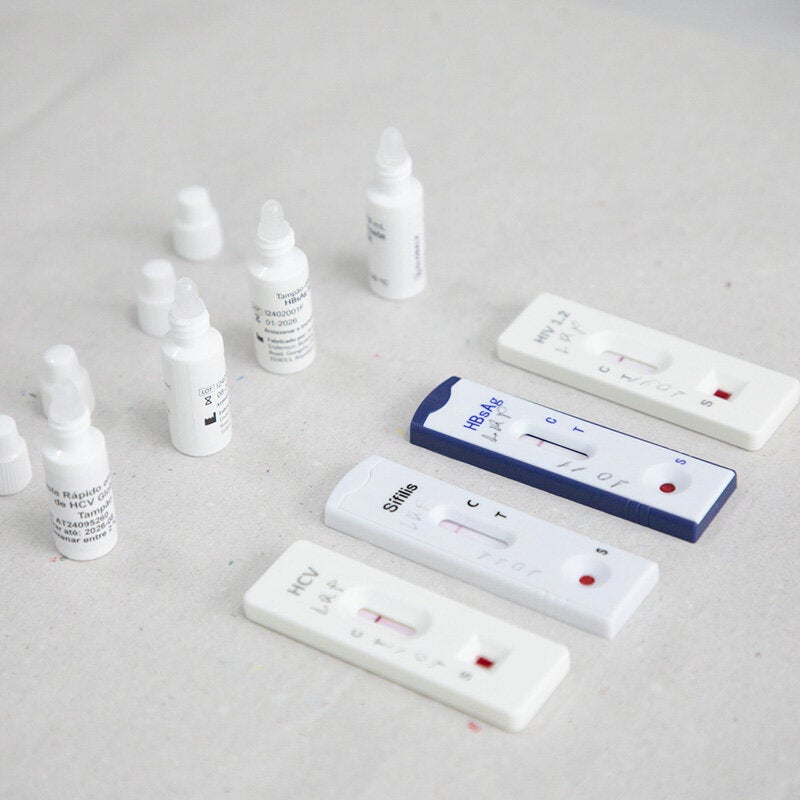
Rapid testing is simple, free, and accessible, and for Maria Priscila, a prenatal nurse who has been providing rapid tests at Cacoal Hospital’s primary care unit for years, it can be transformative: “In 20 minutes, we can guide them, initiate care, and lift a huge weight of fear. When they understand that the diagnosis doesn’t prevent their children from being born healthy, everything changes.”

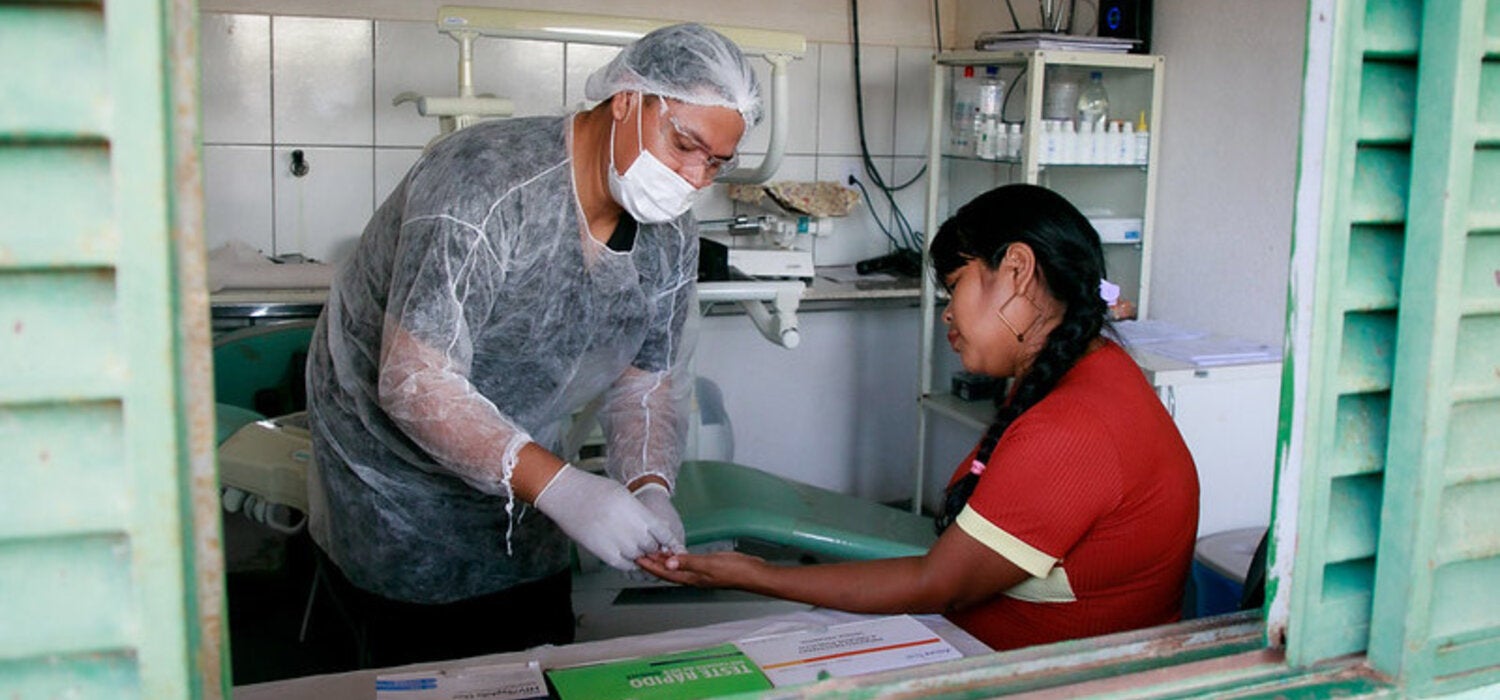
taking blood sample
testing strips
ultrasound

Thanks to these achievements and more, the WHO recently validated Brazil for the elimination of mother-to-child transmission of HIV. To meet elimination criteria, Brazil maintained a vertical transmission (mother-to-child) rate below 2% and greater than 95% coverage for prenatal care, routine HIV testing and timely treatment for pregnant women and newborns. The evaluation, which included data assessment and visits to health facilities across the country, was carried out by a global committee of independent experts, supported by the Pan American Health Organization (PAHO).

“Primary care is essential to eliminating HIV transmission because we are the gateway to the health system. When a patient comes here, we can do a rapid test early, and with this early diagnosis we can immediately refer them for treatment,” explains Dr. Camila Lira Borges, based in Salvador Hospital in Bahia.

HIV prevention in remote areas

The elimination of mother-to-child transmission of HIV in Brazil was made possible because primary care providers could reach remote villages and rural communities, including those in Indigenous territories.

Every month, teams of the Special Indigenous Health District of Rondônia travel long distances to provide prenatal care, rapid tests for various infections, and culturally appropriate guidance. Bringing testing, information, and follow-up into villages requires respect for cultures and traditions and a commitment to the rights of Indigenous peoples and to protecting future generations.

“Since my first pregnancy, I’ve always been well cared for. The nurse holds my hand, asks how I’m doing, does the tests, and explains everything clearly. I trust her. That gives me security,” says Katiane Magarawa, a pregnant woman from a Suruí village.

Katiane Magarawa
Wilma Macedo Santos Lima

“Care happens in the village, with quality and an attentive eye. And when a pregnant woman needs to be referred to the municipal service, she is guided every step of the way. She is never alone,” says Wilma Macedo Santos Lima, nurse and coordinator at Cacoal Hospital.

The stories of thousands of pregnant mothers and Brazil’s health care professionals prove that the elimination of mother-to-child transmission of HIV in Brazil is an achievement built by people. Every healthy baby born is a reminder that this work is effective and that Brazil is writing one of the most important public health stories in the region, inspiring other countries to build a future in which all children can be born free of HIV.