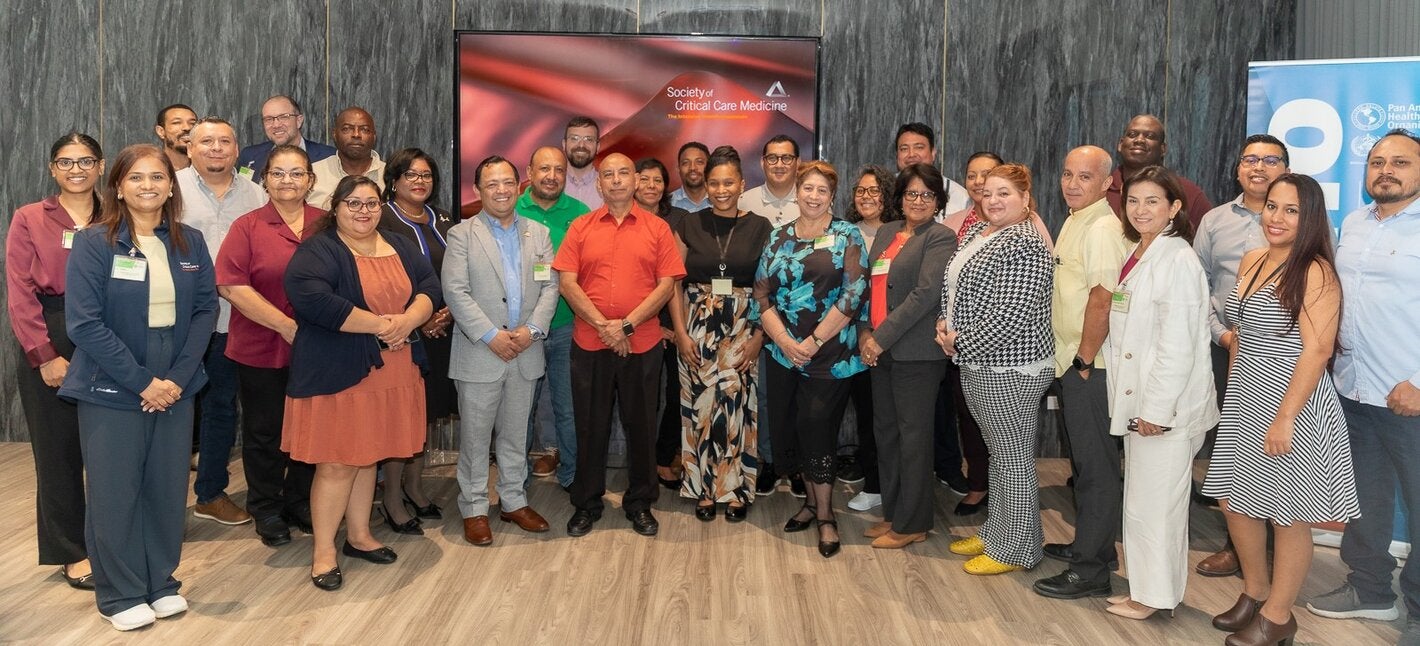
Bridgetown, Barbados, 10 June 2026 (PAHO/WHO) - The Pan American Health Organization (PAHO) participated in Belize’s National Workshop on Sepsis Care Pathways Implementation, held from 15–16 April 2026, as part of ongoing regional efforts to strengthen sepsis care and address its close connection with antimicrobial resistance (AMR). Sepsis continues to be a major cause of preventable mortality in the Americas, and improving early recognition, timely diagnosis, and appropriate antimicrobial use remains a shared priority across Member States.
Dr. Pilar Ramón‑Pardo, Chief of the AMR Special Program at PAHO/WHO, delivered a keynote technical presentation that helped frame the workshop’s discussions. Her session, Antimicrobial Stewardship and Sepsis, highlighted how stewardship supports, not competes with, life‑saving sepsis care. She emphasised the importance of rapid, appropriate initial therapy, timely de‑escalation, optimised treatment duration, and the use of biomarkers to guide decisions, all within the context of rising AMR trends in the Region.
The workshop was convened by the Government of Belize with support from PAHO/WHO and the Society of Critical Care Medicine (SCCM). Over two days, multidisciplinary teams used the WHO Core Clinical Care Readiness (C3R) Tool and SCCM’s “10 Steps to Improve Sepsis Care in Low‑Resource Settings” to map existing sepsis care pathways, identify system‑level gaps, and prioritise practical actions for improvement. The discussions reinforced the importance of embedding antimicrobial stewardship into every stage of sepsis management.
This activity aligns with the recently endorsed Strategy and Action Plan to Reduce the Burden of Sepsis (2025–2029), which calls for integrated, systems‑based approaches to reduce sepsis mortality across the Region. PAHO will continue supporting Belize and other Caribbean countries as they strengthen sepsis care, improve antimicrobial use, and advance national implementation of the Strategy.