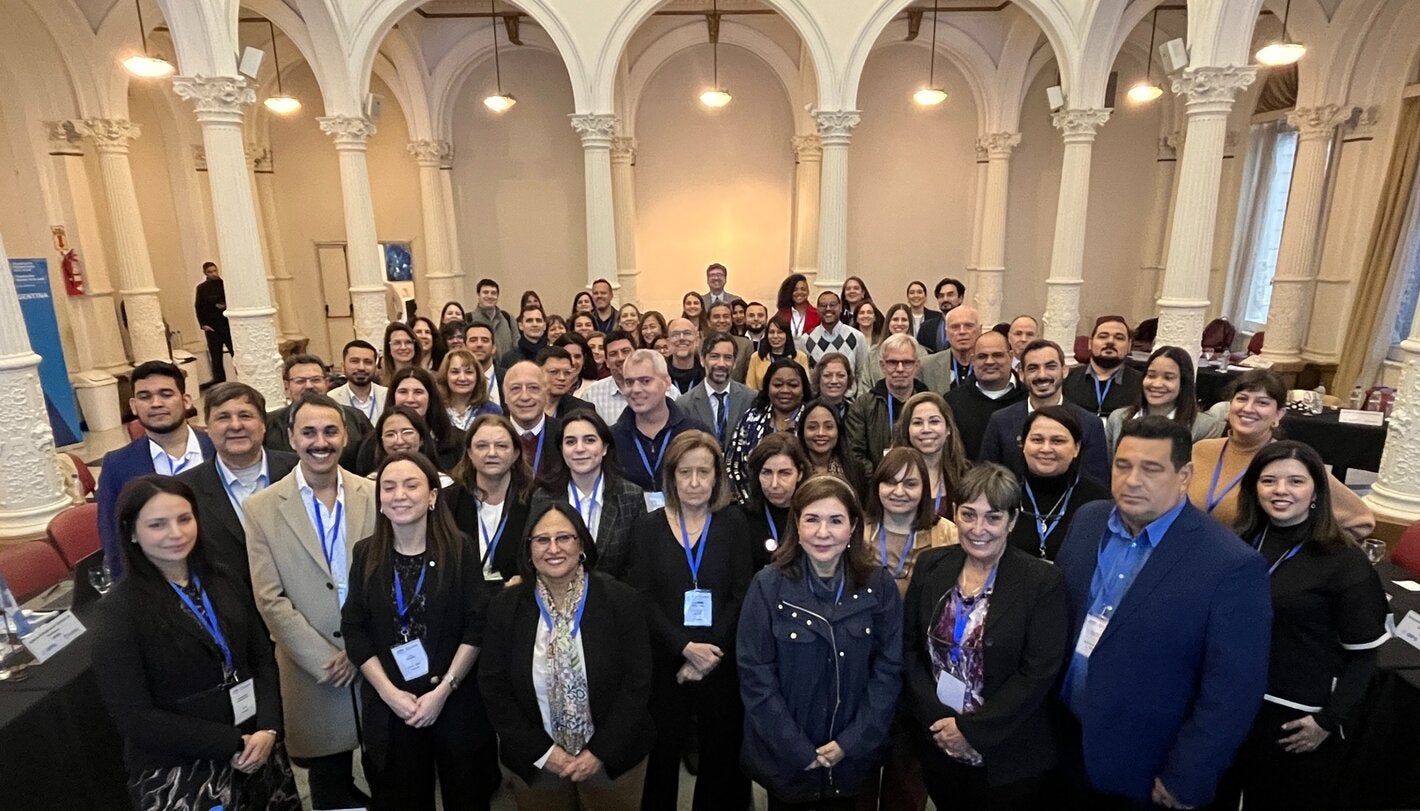
Buenos Aires, june 13 2025.- The Health Technology Assessment Network of the Americas (RedETSA), with support from the Pan American Health Organization (PAHO/WHO) as Secretariat, and the Government of Argentina, held its 16th meeting today in Buenos Aires with the goal of promoting the exchange of experiences and best practices among its members to continue strengthening the regional network.
Throughout the meeting, representatives from 38 health technology assessment institutions across 19 countries in Latin America and the Caribbean shared milestones, best practices, and experiences.
RedETSA aims to strengthen and promote the process of Health Technology Assessments (HTA) in the Americas, encouraging information exchange to support decision-making regarding the adoption, use, and replacement of health technologies.
"The assessment of health technologies is an essential tool for managing with integrity, organizing decisions, improving the quality of care, and ensuring sustainable and equitable access to new technologies for all citizens," said Argentina’s Minister of Health, Mario Lugones.
He added, "If we fund ineffective technologies or allocate resources to interventions that add no value, we end up excluding those who truly need and could benefit from appropriate treatments."
Eva Jané Llopis, PAHO representative in Argentina, stated: "Innovation and the development of new technologies have opened new therapeutic opportunities. However, sometimes these technologies do not lead to clinically significant therapeutic improvements compared to those already integrated into health systems, creating a paradox."
In this context, she emphasized that health technology assessments "are a methodological and institutional tool that can help balance access, equity, and sustainability to meet the challenge of building universal health coverage systems that ensure adequate financial protection."
Judit Rius Sanjuan, Director of PAHO’s Department of Innovation, Access to Medicines, and Health Technologies (IMT), highlighted the importance of evidence-based health technology assessments and the work of RedETSA members in strengthening access to health technologies: "Expanding access to health technologies is a significant global challenge that affects all countries systemically and is exacerbated in our region due to high out-of-pocket expenses, public budget constraints, and stark socioeconomic disparities. In this context, the work of RedETSA members to ensure that science, data, and health evidence are central to public health decision-making is more important than ever."
She also announced that PAHO’s Executive Committee member countries will discuss a new regional policy on access to high-cost and high-priced technologies in June.
During the meeting, which was closed and exclusive to members, a new regulation for the network's operation was approved, and upcoming activities were defined based on the interests and proposals of its members. Among these is the creation of a working group on artificial intelligence.
This year’s meeting agenda includes a discussion panel on current challenges in Health Technology Assessment and health decision-making, featuring experts from Argentina, Colombia, Costa Rica, and Uruguay.
Additionally, thanks to support from the Spanish Agency for International Development Cooperation (AECID) through the CSAI Foundation, RedETSA members will also participate in the International Society for Health Technology Assessment (HTAi) meeting, which will follow and be held in the region for the second time. In this context, RedETSA members will lead workshops and presentations to exchange regional knowledge and experiences with global experts.
The CSAI Foundation thus joins the Brazilian Ministry of Health in financially supporting the network’s operations.