The meeting will review the regional situation regarding measles, rubella and congenital rubella syndrome in the Americas, as well as evidence submitted by countries on the elimination of these diseases.
Washington, D.C., October 14, 2026 (PAHO) – The Measles and Rubella Elimination Regional Monitoring and Re-Verification Commission (RVC) will hold its sixth annual meeting from November 10 to 13, 2026, to review the epidemiological situation of measles, rubella and congenital rubella syndrome (CRS) in the Region of the Americas, as well as countries’ elimination status.
The RVC is an independent technical body comprising international experts in epidemiology, public health, virology, pediatrics and immunization. Established in 2019, it succeeded the International Expert Committee, which verified the elimination of rubella and congenital rubella syndrome in the Americas in 2015 and measles in 2016. Since then, the RVC has overseen the maintenance of these achievements and advised the Director of the Pan American Health Organization (PAHO) on the situation in individual countries and across the Region.
This year’s meeting comes one year after the RVC concluded that endemic measles transmission had been re-established in Canada, resulting in the Region losing its measles-free status in 2025. Canada is currently the only country in the Region classified as endemic for measles, while all other countries retain their elimination status.
The review process will follow the Regional Framework for Monitoring and Re-Verification of Measles, Rubella and Congenital Rubella Syndrome Elimination in the Region of the Americas, which establishes the criteria and procedures countries must follow to document the sustainability of elimination or request re-verification, where applicable.
As part of this process, all Member States submit national reports for review. At the November meeting, the Commission will examine data for 2025 and the first half of 2026. It will analyze information on vaccination coverage, the quality of epidemiological surveillance, laboratory results—including molecular and virological evidence—outbreak response and the performance of national immunization programs. It will also review specific information on outbreaks and transmission chains.
The assessment is based on an integrated analysis of all components established in the regional framework. No single source of evidence determines the final classification of a country’s elimination status.
Among the issues the RVC will examine is the re-establishment of endemic measles transmission. This occurs when epidemiological and laboratory evidence indicates that a chain of transmission involving a viral strain with an identical genotype and lineage has continued uninterrupted for 12 months or longer in a country or defined geographical area.
At the conclusion of the meeting, the Commission will classify countries according to their elimination status and make recommendations to address any gaps identified. Its conclusions and recommendations will be submitted to the PAHO Director for consideration.
The RVC’s annual meeting is a closed technical meeting. National reports submitted by countries are restricted-access documents and are used exclusively for assessment purposes by the RVC and PAHO’s Technical Secretariat.
The Commission will subsequently publish a final report summarizing its deliberations, conclusions and recommendations, which will serve as the official record of the review process. The report of the fifth annual meeting, held in Mexico City in November 2025, is available here.
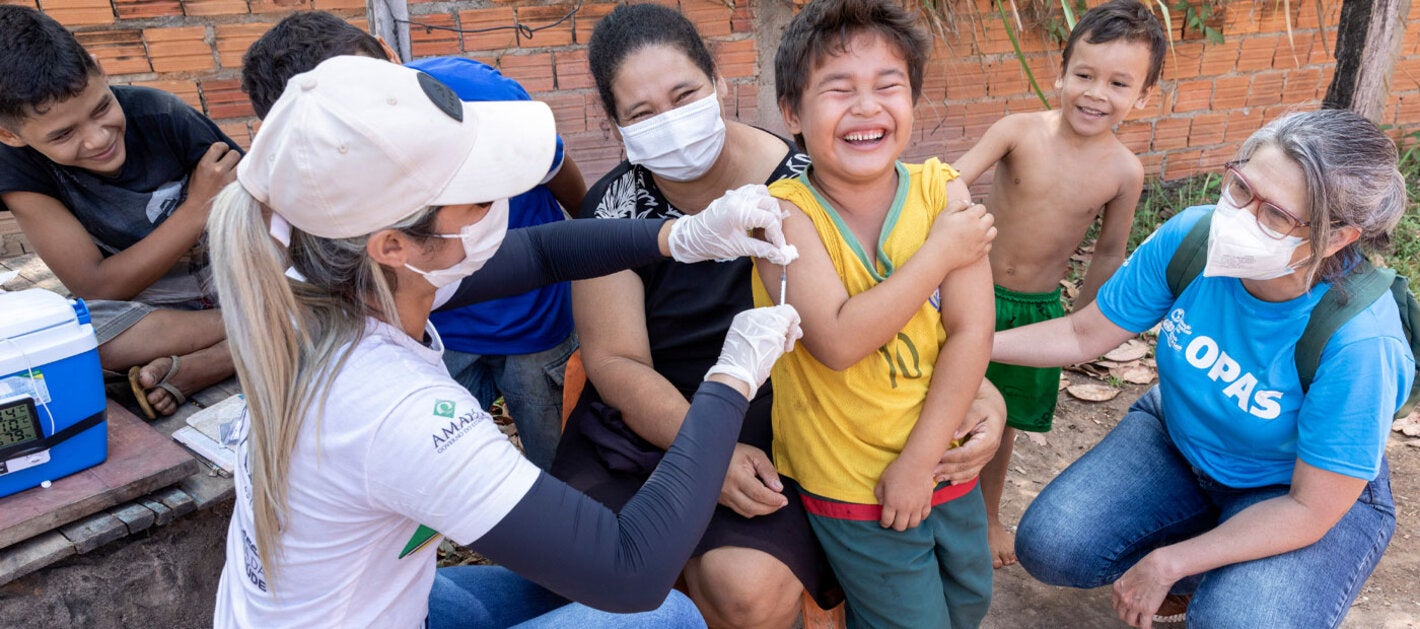
Maintaining the elimination of measles, rubella and congenital rubella syndrome requires countries across the Region to work together to achieve high and homogeneous vaccination coverage of 95% or higher, maintain sensitive surveillance systems, ensure strong laboratory capacity and guarantee a rapid response to outbreaks.
The RVC’s annual review of countries’ elimination status is a fundamental component of regional efforts to preserve the achievements of countries in the Americas and prevent the re-establishment of endemic transmission of these diseases.