At a side event co-organized by the Mérieux Foundation USA, Weill Cornell Medicine, GHESKIO Centers and PAHO, PAHO Director highlights lessons from the Americas and the importance of sustained investment in laboratory capacity between crises
New York, September 21, 2026 (PAHO) – Robust laboratory systems are essential to prevent, detect and respond to health threats, and require sustained investment between crises, Pan American Health Organization (PAHO) Director Dr. Jarbas Barbosa said today at a high-level event on the sidelines of the 81st United Nations General Assembly.
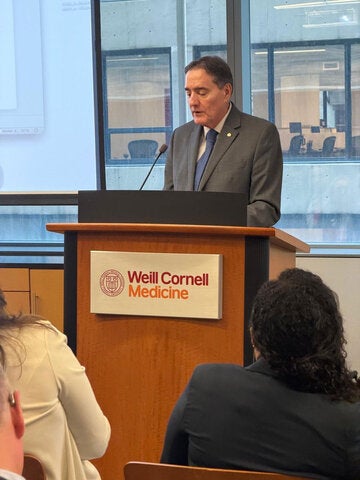
Speaking at the event, “Crisis in preparedness: laboratories and frontline readiness in the time of Ebola,” Dr. Barbosa highlighted lessons from the Americas, emphasizing that laboratory preparedness is much more than sophisticated equipment or the ability of a national reference laboratory to perform a specialized test. It is a system that must enable countries to detect unusual events, safely collect and refer specimens, provide timely and reliable diagnosis, share information across institutions and borders, and rapidly translate laboratory findings into public health action.
While Ebola is not currently circulating in the Americas, PAHO has been working with countries to prepare for the possibility of imported cases. Following the Ebola outbreak in Africa earlier this year, PAHO strengthened regional preparedness, supporting countries to reinforce surveillance, laboratory diagnosis, biosafety, infection prevention and control, and the safe referral of samples to specialized laboratories.
Dr. Barbosa highlighted recent experience with hantavirus as an example of how laboratory, genomic and epidemiological capacities must work together. In 2025, eight countries in the Region reported more than 200 confirmed cases and 60 deaths. PAHO issued an epidemiological alert, strengthened diagnostic protocols and conducted regional training with reference laboratories and WHO Collaborating Centers in Argentina, the United States and Panama.
These capacities were soon put to the test when a cluster of Andes hantavirus pulmonary syndrome associated with the MV Hondius cruise ship became an international public health event. PAHO helped establish communication between the countries involved and ANLIS-Malbrán in Argentina, bringing specialized Andes virus diagnostic expertise into the investigation. As contacts were identified in Spain, the United Kingdom, the Netherlands and eventually Canada, laboratories, epidemiologists and public health authorities were able to exchange information and coordinate rapidly.
PAHO also collaborated with the genomic team characterizing the virus, connecting laboratory and genomic findings with the epidemiological investigation and risk assessment. Dr. Barbosa emphasized that this integration of diagnostics, genomic surveillance, epidemiology and public health decision-making is essential to effective preparedness.
PAHO continues to strengthen regional genomic surveillance through PAHOGen, PAHO’s Genomic Surveillance Regional Networks, connecting capacities and expertise across the Americas.
“The hantavirus experience illustrates an important principle: Not every country needs to maintain every highly specialized diagnostic or genomic capacity. But every country must be able to rapidly access those capacities through trusted national, regional and international networks when they are needed,” Dr. Barbosa said.
He emphasized that when a public health event crosses borders, there is no time to begin identifying experts, reference laboratories, diagnostic protocols, specimen-referral pathways or channels for communicating results. These relationships and mechanisms must already be in place.
Preparedness therefore requires sustained investment in adaptable molecular platforms, trained professionals, quality-management systems, biosafety and biosecurity, reliable specimen referral and transport, resilient supply chains, interoperable information systems, and strong national and regional laboratory networks.
“Preparedness is built between emergencies,” Dr. Barbosa said. The surveillance systems, laboratory protocols, genomic expertise, trained professionals and trusted relationships strengthened during routine periods are the same capacities that allow countries to detect unusual events earlier, understand them faster and act before they become larger emergencies.
“That is not simply an investment in laboratories. It is an investment in stronger health systems, health security, preparedness and resilience,” he added.
The event brought together global and regional leaders to discuss how to strengthen laboratory systems as a cornerstone of pandemic prevention, preparedness and response, drawing on lessons from Ebola, COVID-19, H5N1 influenza and other emerging and reemerging infectious diseases. The event focused on practical solutions for strengthening laboratory systems for both routine health services and pandemic preparedness, including the need for sustained investment in clinical laboratory capacity.
Other speakers included Dr. Chikwe Ihekweazu, Executive Director of the WHO Health Emergencies Programme; Dr. Robert Harrington, Stephen and Suzanne Weiss Dean at Weill Cornell Medicine; and Dr. Robert Sebbag, Vice President of the Mérieux Foundation.