São Paulo, September 21, 2026 (BIREME/PAHO/WHO) – The World Health Organization (WHO) has published the global research priorities and agenda for traditional, complementary and integrative medicine (TCIM) for 2025–2034. The document provides Member States, funding agencies, and research institutions with a framework to guide priorities and investments aimed at generating evidence to support the safe, effective, and equitable integration of TCIM into health systems.
The publication recognizes BIREME/EIH/PAHO/WHO’s contribution to the development of the agenda, particularly in facilitating the priority-setting process in the Region of the Americas and engaging the research community in Latin America and the Caribbean. Among the actions proposed to implement the agenda, WHO also calls for consolidating the WHO Traditional Medicine Global Library (WHO TMGL) as a trusted global repository for scientific knowledge on TCIM, guided by principles of ethical governance.
Research guided by health system needs
Traditional, complementary and integrative medicine is used by billions of people across all WHO regions and is increasingly part of discussions on primary health care and universal health coverage. Despite this widespread use, less than 1% of global health research funding is allocated to TCIM. According to WHO, there also remains a disconnect between existing scientific production and the evidence needed by decision-makers, health systems, and communities to make better-informed decisions on safety, regulation, financing, and service organization. The new agenda seeks to address this gap.
According to WHO, the document is not a clinical guideline, regulatory instrument, or public policy prescription. Its purpose is to guide investments, focus research efforts, and support the generation of evidence that enables informed decisions on the contribution of TCIM to equitable and sustainable health systems.
The strategic framework is organized around two complementary dimensions. The first identifies high-burden clinical conditions – that is, health problems with a greater impact on populations and health systems –, population groups, and cross-cutting issues where TCIM research can generate greater social and health benefits. The second brings together four action areas – translate, mobilize, implement, and catalyze – aimed at making evidence more useful for health policies and practices, increasing resources for research, improving evaluation methods, and strengthening infrastructure, professional training, and international collaboration.
Global and regional priorities
Global research priorities include topics such as the use of TCIM, in conjunction with conventional biomedical care, in areas such as stroke, mental health, pain management, musculoskeletal conditions, cancer, metabolic health and endocrine conditions, as well as reproductive health and childbirth. The agenda also highlights health promotion, healthy aging, and healthy childhood as groups and approaches that remain underrepresented in research. Climate change and biodiversity, artificial intelligence, pandemic preparedness, and antimicrobial resistance are among the cross-cutting issues requiring specific attention.
For the Region of the Americas, the document prioritizes research on mental health – including sleep and psychosocial resilience –, pain management, healthy aging, metabolic syndrome, and maternal and child health. It also recommends economic studies to support decisions on public financing and coverage, analysis of integration and regulatory models, stronger regional networks, and the adoption of intercultural approaches that recognize the rights, territories, and ancestral knowledge of Indigenous Peoples.
The agenda also includes a specific section on research involving Indigenous medicine. Its principles include community-led priority setting, self-determination, benefit-sharing, the preservation and revitalization of knowledge, and recognition of its epistemological integrity. In this context, it is relevant to note that approximately 40% of conventional pharmaceutical products have origins that can be traced to traditional knowledge. In relation to Indigenous knowledge, the document reinforces the importance of the leadership and active participation of Indigenous Peoples, together with intellectual property protection, respect for cultural protocols, and tangible benefits for participating communities.
Global process included participation from the Americas
The development of the document combined analyses of the literature and public data with consultations involving experts and stakeholders from all six WHO regions. The process reviewed 39,927 funded projects across 40 funding programs, assessed global research capacity, and brought together 199 participants from 75 countries in regional consultations, as well as 235 experts in two rounds of a Delphi survey.
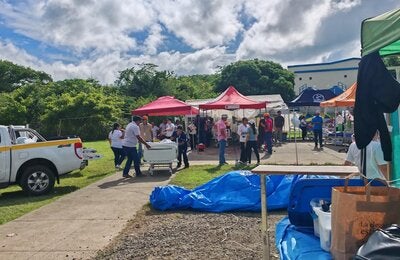
One stage of the global process took place in São Paulo on June 11 and 12, 2025, during the Regional Consultation on Research Prioritization in Traditional, Complementary and Integrative Medicine. Organized by the Health Systems and Services team (HSS), BIREME, and the WHO Global Traditional Medicine Centre, the event brought together approximately 50 representatives from ministries of health, researchers, experts, Indigenous leaders, and Indigenous organizations from different countries in the Region. Regional contributions helped adapt global priorities to the epidemiological, cultural, and institutional conditions of the Americas.
In the acknowledgments section, WHO highlights the contribution of BIREME, a PAHO/WHO Specialized Center that is part of the Department of Evidence and Intelligence for Health Action (EIH), noting that BIREME’s partnership was instrumental in situating the priority-setting process within the context of the Americas and ensuring meaningful participation by the health research community in Latin America and the Caribbean. The document also recognizes the contributions of professionals from BIREME and other PAHO/WHO areas to the design and facilitation of regional consultations, the formulation of Region-specific priorities, and the review of the publication.
WHO TMGL is part of the implementation actions
Among the actions highlighted for the WHO Secretariat, the agenda calls, during the scaling and integration phase, for operationalizing the WHO Traditional Medicine Global Library as a trusted and ethically governed global repository for knowledge generated through TCIM research. Developed by BIREME in coordination with the WHO Global Traditional Medicine Centre, the TMGL platform helps organize scientific and technical information sources, make them accessible, and expand their discovery and use.
This direction continues one of the commitments established in the Delhi Declaration on Traditional Medicine, adopted in 2025 during the Second WHO Global Summit on Traditional Medicine. Its inclusion in the research agenda translates this international commitment into actions aimed at reducing research fragmentation, standardizing metadata and terminology, and facilitating the translation of evidence into policies and practices. The agenda also recommends the development and maintenance of global TCIM research databases, while observing intellectual property protection, data sovereignty, and the rights of traditional knowledge holders.
Implementation through 2034
Implementation is proposed in three indicative phases: foundations and governance during the first two years; strengthening systems and financing from the third through the fifth year; and scaling and integration from the sixth through the tenth year. Each country may define its starting point and pace according to its capacities, resources, and national context. Monitoring includes a midterm evaluation in 2029 and a final evaluation in 2035.
According to WHO, linking clinical priorities, regional needs, protection of Indigenous knowledge, financing, research methods, and information infrastructure can provide a coherent framework to support public decision-making. The goal is to generate evidence capable of guiding the safe, effective, and equitable integration of TCIM into health systems, in line with the Global Traditional Medicine Strategy 2025–2034.