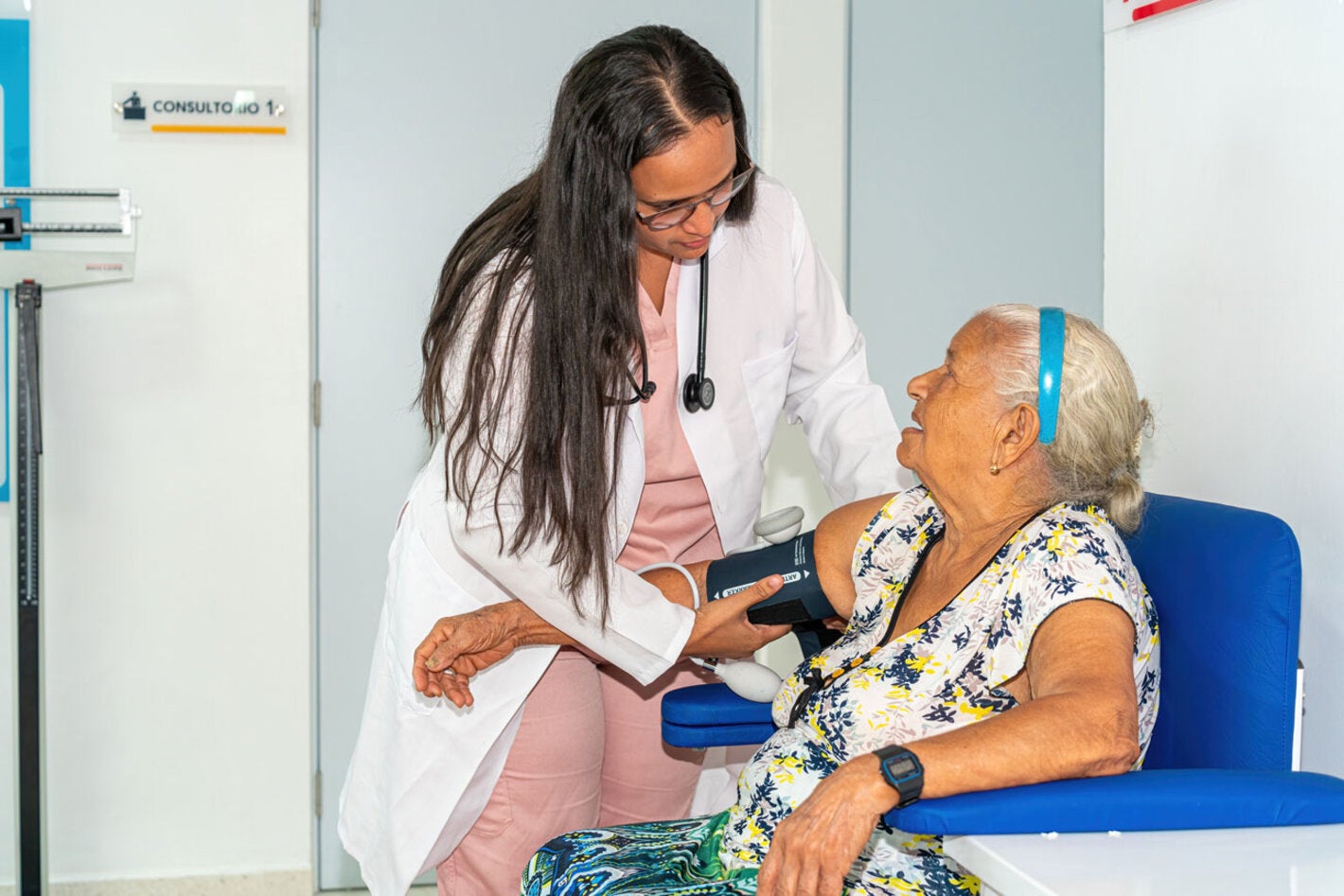
New York – September 24, 2025 (PAHO) – At a high-level side event during the 80th United Nations General Assembly (UNGA80) yesterday, the Pan American Health Organization (PAHO) joined health ministers, global financial institutions, and strategic partners to call for action to expand primary health care (PHC) as the foundation for tackling noncommunicable diseases (NCDs), the leading cause of death worldwide.
Co-hosted by the Governments of Mexico and Saudi Arabia, with PAHO and the WHO Eastern Mediterranean Regional Office (EMRO), the event titled “Revolutionizing Care for Noncommunicable Diseases: Expanding Access through Primary Health Care” highlighted country-led reforms as global models.

“Scaling up Primary Health Care requires changes in how resources and institutions are organized,” said Dr. Jarbas Barbosa, PAHO Director. “The experiences shared today show that progress is possible.”
Noncommunicable diseases —including cardiovascular diseases, diabetes, cancer, and chronic respiratory conditions—are the main killer in the Americas. Despite advances, millions lack access to essential services, medicines, and diagnostics. Untreated NCDs could cost the region up to 4% of GDP by 2050 due to lost productivity and rising healthcare costs.
Four shifts to transform NCD care
Dr. Barbosa outlined four policy shifts to scale NCD care through PHC:
- Shift to people-centered care: Move away from hospital-centric models toward people- and community-centered approaches. Too often specialized services dominate health investment, leaving prevention and early detection out of reach for many.
- Integrate financing and service delivery: Many countries still operate siloed programs for different diseases, leading to inefficiencies and gaps in coverage. Pooling resources and embedding NCD care into essential PHC packages can help address this.
- Embrace innovation: As health technologies evolve rapidly, the global health community must expand access to affordable diagnostics, essential medicines, and digital tools.
- Act intersectorally: Health systems alone cannot solve the NCD crisis. Address NCD drivers like food systems, labor conditions, education, and environmental exposures through policy coherence across sectors.
These shifts are already driving results. Mexico’s IMSS-Bienestar delivers free NCD care to underserved areas with community follow-up and home medicine delivery. Chile and Costa Rica sustain PHC-based chronic disease management through fiscal and social agreements, while Uruguay combines tobacco control with PHC reforms. Saudi Arabia’s Vision 2030 leverages telemedicine for NCD care, offering a scalable model.
PAHO's strategic role
To accelerate regional transformation, PAHO launched the Better Care for NCDs Initiative in 2023, providing technical guidance on integrating NCD services across PHC—from prevention to palliation—while prioritizing underserved populations. The HEARTS in the Americas initiative, active in 28 countries, has reached over 10,000 primary care facilities, treating millions for hypertension and diabetes. PAHO’s Regional Revolving Funds further ensure access to affordable medicines and diagnostics.alli
The Alliance for Primary Health Care—led by PAHO, the Inter-American Development Bank, and the World Bank—manages a US$8 billion health portfolio. This alliance is coordinating investments, driving innovation, and reducing fragmentation to deliver real results.
The event closed with a strong consensus: transforming health systems to integrate NCD care into PHC is both necessary and achievable.
“By embedding NCD care within PHC, countries can reduce catastrophic out-of-pocket spending, strengthen resilience against crises, and safeguard the productivity of societies,” Dr. Barbosa concluded. “Primary Health Care can then become the cornerstone of our response to noncommunicable diseases, expanding access and transforming lives worldwide.”
The panel also featured interventions from Abdulaziz bin Hamad Alramaih, Deputy Minister of Health for Planning and Development of Saudi Arabia, and Ramiro López Elizalde, Undersecretary of Health Policy and Population Well-being of Mexico, who shared national experiences expanding access to services, medicines, and technologies. Dr. Hanan Balkhy, WHO Regional Director for EMRO, delivered closing remarks, emphasizing the need for coordinated multisectoral approaches to improve NCD care.
Additionally, health ministers from Argentina (Mario Lugones), Barbados (Jerome Walcott), Ethiopia (Mekdes Daba), and Somalia (Ali Haji Adam), among others, participated in the event.