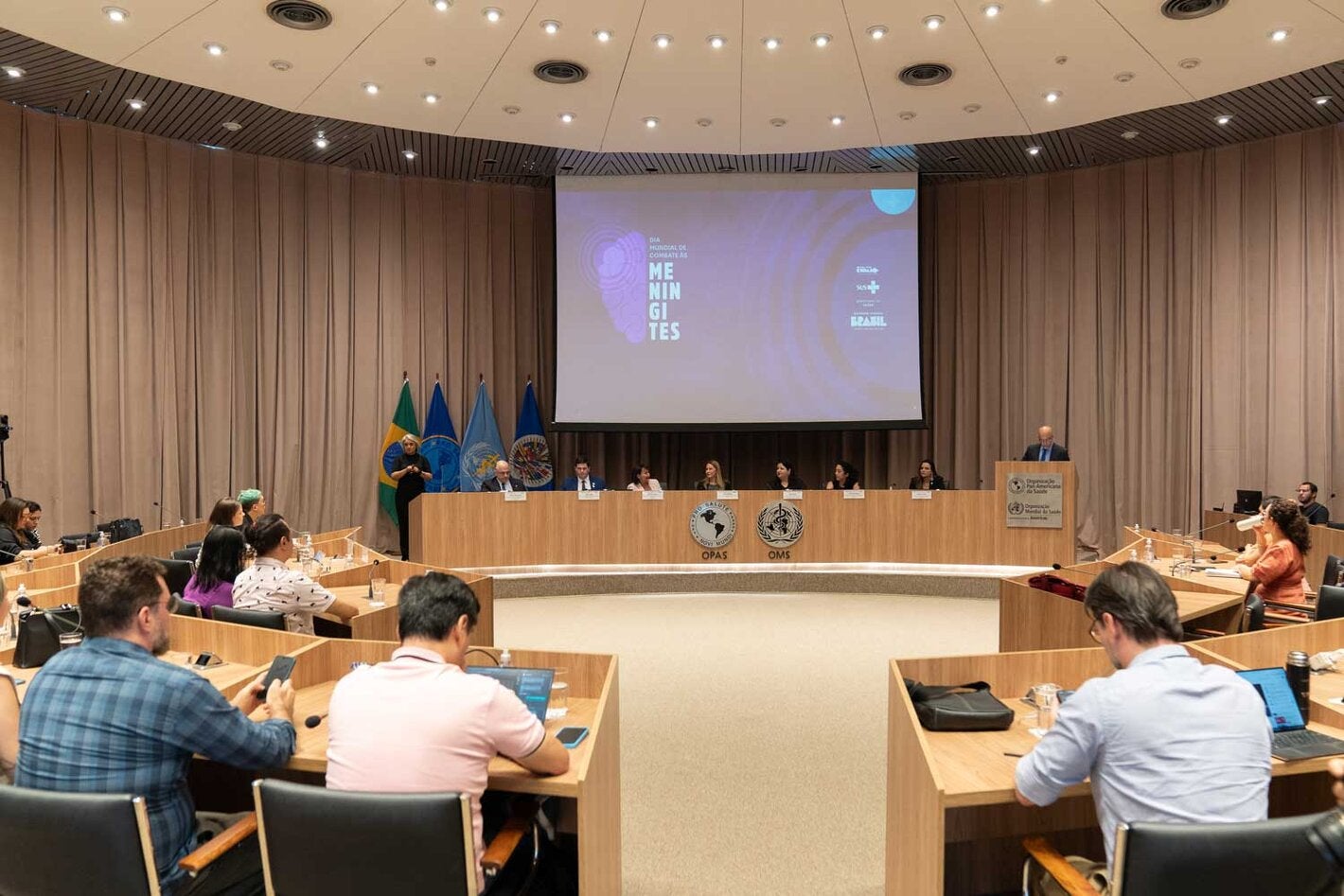
Brasília, October 3, 2024 – On the eve of World Meningitis Day, celebrated on October 5, the Brazilian Ministry of Health launched the National Plan to Defeat Meningitis by 2030. The plan is aligned with the regional and global goals set by the Pan American Health Organization (PAHO) and the World Health Organization (WHO).
At the opening of the event, PAHO and WHO representative in Brazil, Socorro Gross, highlighted the relevance of the plan, which demonstrates the country's strong commitment to combating a disease with the impact that meningitis has.
“The group most affected by meningitis in our region is children, with 1 in 6 dying and 1 in 5 suffering lifelong disabilities,” said Socorro Gross, who also emphasized that by launching a pioneering and innovative plan in the Region, Brazil not only reinforces its leadership role but also sets an example for other countries in the Americas.
The plan is based on three main objectives of the WHO Global Roadmap: to eliminate bacterial meningitis epidemics; to reduce vaccine-preventable bacterial meningitis cases by 50% and deaths by 70%; and to prevent disabilities and improve the quality of life of survivors. It proposes coordinated actions with the Unified Health System (SUS), focusing on five essential pillars: prevention and control of epidemics; diagnosis and treatment; epidemiological surveillance; support for affected people; and communication.
The Secretary of Health and Environmental Surveillance (SVSA), Ethel Maciel, explained that the plan was developed over 18 months, in a collective process that involved the collaboration of various departments of the Ministry of Health, the National Council of Health Secretaries (Conass), the National Council of Municipal Health Secretaries (Conasems), and support from PAHO. The plan began to take shape in 2023, and the final guidelines were discussed at a workshop held in Brasilia, which brought together experts from the SUS, PAHO, and WHO.
Ethel Maciel also emphasized the importance of interinstitutional work and the One Health approach, mentioning that Brazil reaffirmed its commitment to controlling antimicrobial resistance during the United Nations General Assembly, an issue that is directly related to the fight against meningitis. “We are currently, under the leadership of our minister, working on a decree for an Interinstitutional One Health Committee, to consider a much broader approach to health governance,” she said.
One Health is an integrated and unifying approach that aims to balance and optimize the health of the planet and all its inhabitants in a sustainable manner.
Also participating in the opening panel were the director of the National Immunization Program (PNI), Eder Gatti; the technical advisor to Conass, Nereu Mansano; the technical advisor to Conasems, Kandice Falcão; the advisor to the Antimicrobial Resistance Program at PAHO, Nathalie El Omeiri; the head of the team for the Global Roadmap to Defeat Meningitis by 2030 at WHO, Marie-Pierre Preziosi; the director of the Department of Community Health Strategies and Policies at the Secretariat of Primary Care (Saps), Evellin Silva; and the director of the Department of Hospital, Home, and Emergency Care, Aline de Oliveira Costa.
The ceremony also featured testimonials from the president of the Brazilian Association for the Fight Against Meningitis, Suelen Caroline, who is the mother of a child who had meningitis, influencer Ivan Baron, and Olympic athlete Caio Ribeiro, who were also affected by the disease.
Meningitis in Brazil
Meningitis can be caused by bacteria, viruses, fungi, and parasites, with viral and bacterial meningitis being the most relevant to public health due to their high incidence and potential for outbreaks. Bacterial infections are generally more severe, and in Brazil, the SUS offers vaccines against serogroups A, C, W, and Y of bacterial meningitis, with serogroup C being the most common in the country.