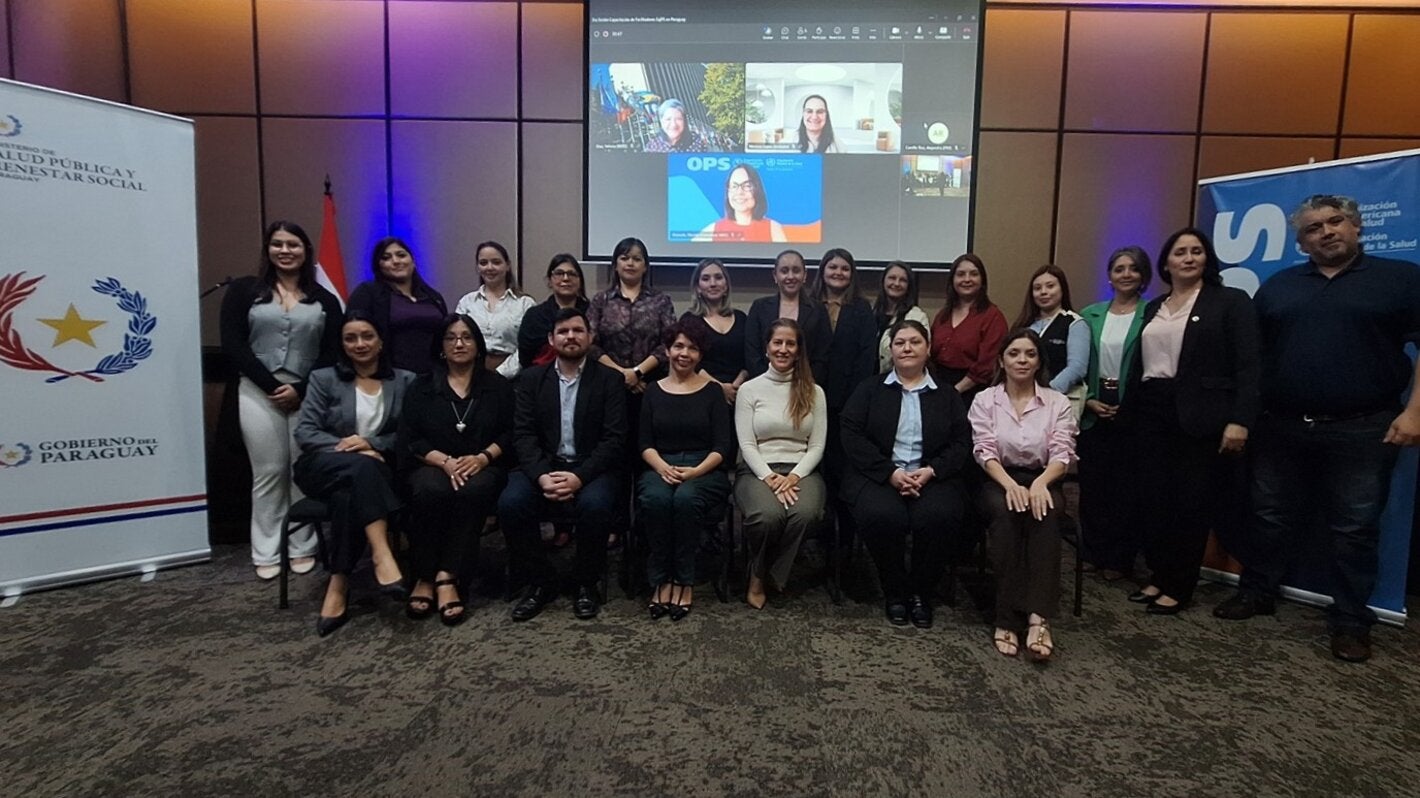
Washington, D.C., 4 August 2026 (PAHO)– The Pan American Health Organization (PAHO) implemented a hybrid training model in Paraguay to train national facilitators for the implementation of the Interprofessional Health Teams tool (EqIPS), combining virtual sessions with an in-person, hands-on learning laboratory. The initiative was carried out in coordination with the Ministry of Public Health and Social Welfare (MSPBS), through its National Directorate for Strategic Health Human Resources (DNERHS), with support from the PAHO/WHO Representative Office in Paraguay.
The training combined two virtual sessions focused on the tool’s conceptual foundations with an in-person workshop designed as a hands-on learning space. During this final phase, participants applied the EqIPS tool through exercises and simulations that reproduced situations typical of the day-to-day work of interprofessional health teams.
“Training national facilitators is a key step in ensuring that the tool can be implemented and sustained over time. Our goal is for countries to build their own capacities to strengthen the organization and performance of interprofessional health teams in primary care,” said Yohana Díaz de Valle, PAHO Regional Advisor for Human Resources for Health.
This hybrid model made it possible to integrate remote technical training with in-person activities aimed at building the competencies needed to facilitate the tool’s implementation in the field.
With this training, the new MSPBS facilitators now have the capacities needed to implement the methodology in their local contexts. Their responsibilities will include diagnosing, organizing, and strengthening collaborative work in primary health care, identifying operational gaps, and proposing participatory solutions.
The tool was first implemented in the Itapúa Health Region. Building on that experience, Paraguay is now moving toward its expansion to other regions, supported by this new group of facilitators. This methodology offers a replicable model for other countries seeking to strengthen their own facilitator teams using optimized resources.
This initiative is part of the Health Workforce Policy 2030 (CD60/6), approved by PAHO Member States, which promotes the organization of interprofessional teams with resolutive capacity at the primary care level. The experience developed in Paraguay shows how the Region is advancing toward that goal through innovative, cost-effective training models that are adaptable to the realities of each country, fostering the development of more integrated and resilient health teams.