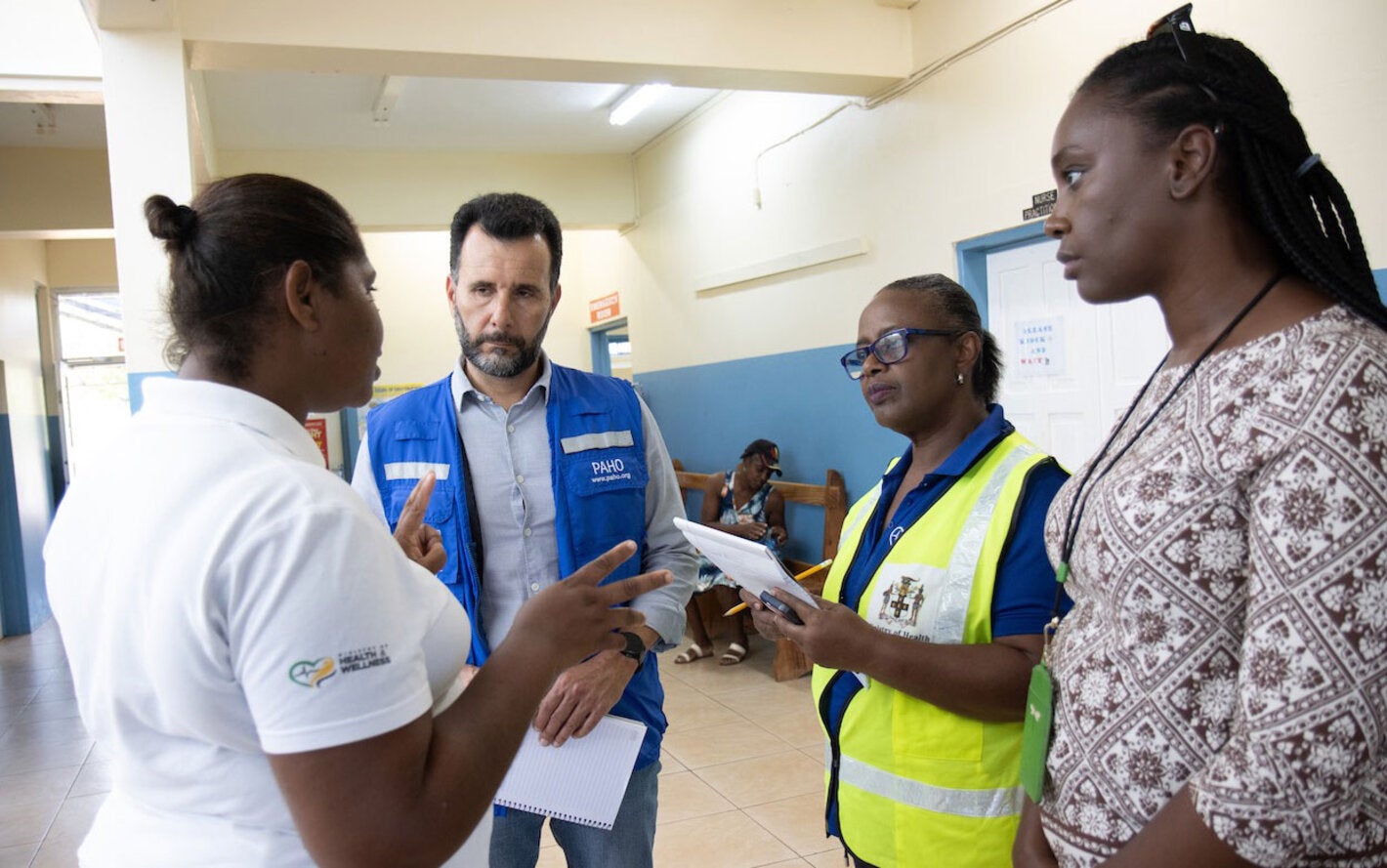
Just days after the hurricane, Jamaica's Ministry of Health, supported by PAHO, conducted an assessment and activated the National Mentral Health and Psychosocial Support Working Group.
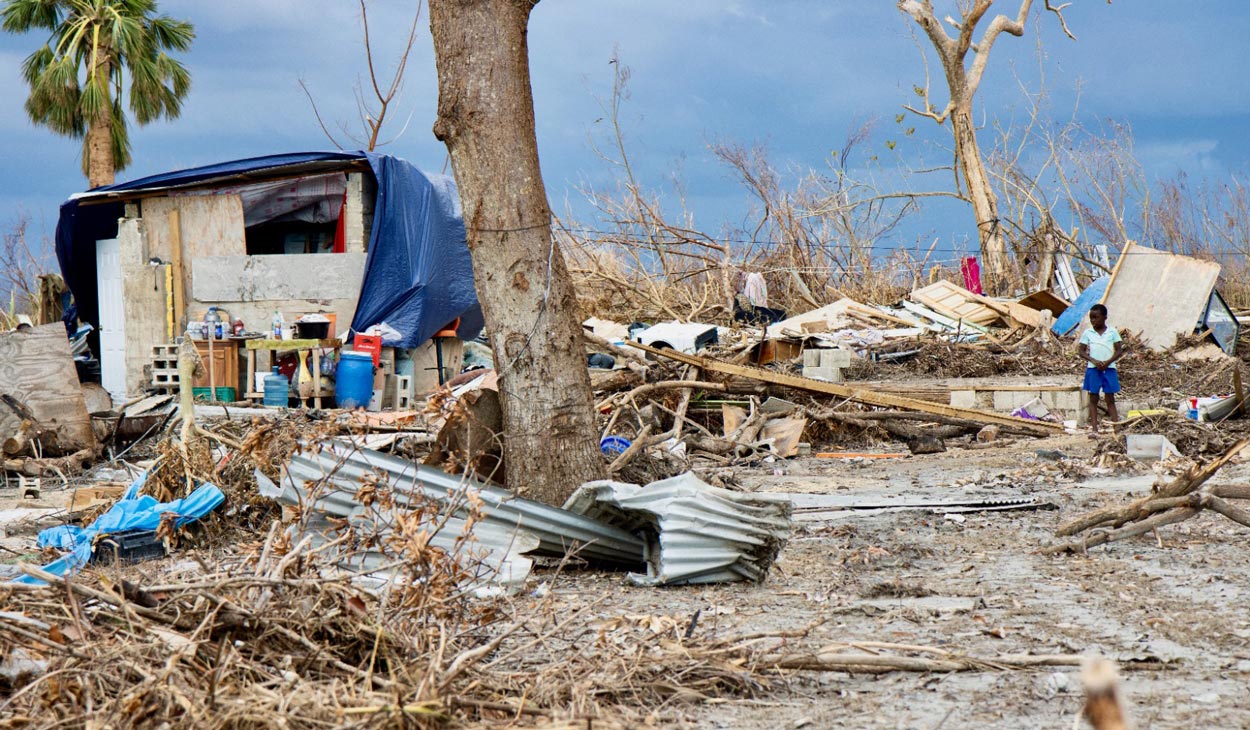
Kingston, December 10, 2025 (PAHO) – Hurricane Melissa has severely damaged health service infrastructure and disrupted life in Jamaica. In the aftermath, thousands of displaced families, health workers, children, and people living with chronic illnesses continue to deal with the storm’s psychosocial impacts: including acute stress, grief, anxiety, and emotional exhaustion.
With shelters operating at capacity and privacy in short supply, early assessments show that people who lost their homes or livelihoods are experiencing deep feelings of helplessness and uncertainty. Older adults, overwhelmed health workers, and people living with chronic illnesses are also struggling with fatigue and diminished coping abilities.
For decades, Jamaica delivers mental health care through a community-based model integrated into its primary health system. The Ministry of Health & Wellness (MoHW) deploys mental health experts (psychiatrists, psychologists, and psychiatric nurses) to health centers across the island on a weekly or biweekly basis. This rotation system allows people to access care close to home - through outpatient mental health clinics, home visits, and mobile outreach teams - and ensures that individuals with severe conditions receive adequate and continuous support. This model normally provides broad, equitable coverage, with over 300 participating clinics.
According to post-hurricane analysis, over 130 health clinics were damaged, causing disruption in services. In Trelawny, for example, two of six mental health service sites became non-functional after the hurricane, while in St. Elizabeth four of six centers stopped operations - dramatically reducing access to routine follow-up and medication continuity for people living with mental health conditions.
As a result, urgent clinical and psychosocial risks emerged: people with severe mental illness who depend on regular treatment were suddenly at risk of disruption and relapse, while communities already coping with acute stress, grief, and anxiety faced even greater vulnerability in the hurricane’s aftermath.
“The devastation caused by Hurricane Melissa has led to widespread emotional distress and if it is not addressed in a coordinated way, we will miss people who require mental and psychological support,” explains Dr. Kevin Goulbourne, Director of Mental Health Services for the MoWH.
Strengthening national coordination
The Panamerican Health Organization (PAHO) immediately responded with support to help Jamaica’s Ministry of Health and Wellness (MoHW) organize a multilayered support system, reactivate critical services, and coordinate dozens of responding organizations. Just days after the hurricane, the Ministry, supported by PAHO, conducted a 48-hour assessment and activated the National MHPSS Working Group, bringing together 14 organizations. The group adapted and rolled out the WHO/PAHO 4Ws tool, a simple and effective way to identify gaps, understand challenges, and map who was doing what and where in the early phase of a response.
Many of the hardest-hit communities - St. Elizabeth, Trelawny, Westmoreland, and St. James - experienced prolonged isolation due to blocked roads and damaged infrastructure. MoHW and PAHO mobilized 20 trained volunteers to deliver psychosocial support in shelters. These interventions integrate structured problem-solving counseling with key behavioral strategies to improve people's ability to cope and function. Joined by the Jamaican Red Cross and C-TECH, these teams reached approximately 950 people in the first two weeks, providing psychological first aid, stress-management techniques, and referrals where needed.
Simultaneously, PAHO, in collaboration with the MoHW and the University of the West Indies (UWI), launched a series of weekly face-to-face training sessions in Psychological First Aid (PFA). These sessions are complemented by the dissemination of comprehensive guidance materials designed to strengthen the MHPSS surge response. Over 100 health sector workers have been trained thus far, including participants from the hardest-hit communities.
Supporting Jamaica’s health workers
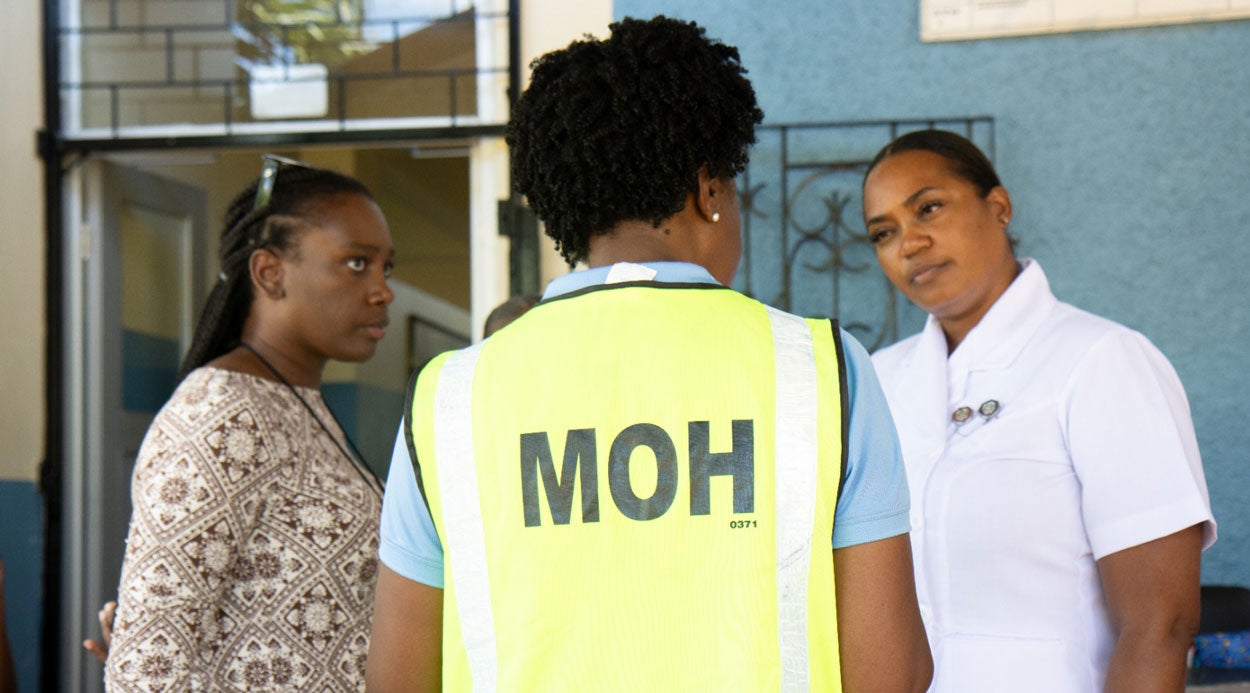
Health workers were among the most heavily affected by the hurricane, working under extreme stress while dealing with personal losses and displacement. To support them, PAHO helped establish a weekly “Care for Carers” deployment of mental health professionals from the Southeast Regional Health Authority to the most affected parishes. By the end of the month, over 200 health workers from 11 health facilities had received group or individual support sessions.
“Many health professionals are experiencing grief and loss, have lost their homes, and still feel compelled to continue working in emergency settings and provide services,” said Marcello Roriz de Queiroz, a mental health expert with PAHO who was deployed to Jamaica immediately after the hurricane.
With PAHO’s support, the MoHW intensified mental health messaging through radio, social media, and printed materials. The campaigns promote positive coping strategies, counter misinformation, and connect people to support services like the national Mental Health and Suicide Prevention Helpline and the UMatter Chatline.
Regional psychiatrists were invited to join the Mental Health and Psychosocial Support Working Group, updating them on evolving needs. Mobile mental health teams reestablished follow-up, home visits, and medication continuity in hard-to-reach communities, efforts crucial to reaching psychiatric patients whose treatment was interrupted by the hurricane.
“With PAHO’s support, we have developed indicators and data collection sheets used by MHPSS providers to ensure we can record data for monitoring and evaluation. With this information we can make adjustments to ensure the efficiency and effectiveness of our support,” Dr. Kevin Goulbourne added.
Next phase: Building capacity
PAHO and MoHW are transitioning into the second phase of the MHPSS response, shifting from short-term emergency deployments toward longer-term institutional strengthening. Priorities include expanding training for health workers on key mental health and psychosocial support interventions, restoring and equipping mobile mental health outreach teams, institutionalizing the Care for Carers program, and optimizing parish-level information systems to improve mental health support services.
“The next phase must prioritize consolidating and expanding these capacities through institutional mechanisms,” Roriz de Queiroz advised, highlighting the need to embed MHPSS preparedness and coordination into national structures to improve resilience for future emergencies.