Bridgetown, Barbados, 10 April 2026 (PAHO/WHO) - The Pan American Health Organization’s (PAHOs) Antimicrobial Resistance (AMR) team has had a busy start to the year, engaging with partners across the region to share knowledge, strengthen collaboration, and highlight progress under the UK Fleming Fund-supported project, Strengthening Antimicrobial Resistance Response in the Caribbean.
During a recent session of the monthly “Caribbean AMR Catch-up” , Dr. Pilar Ramon-Pardo, Chief of the Antimicrobial Resistance Special Program, Communicable Diseases Prevention, Control and Elimination at PAHO, presented an update on the PAHO Plan of Action on AMR 2027–2031, outlining the proposal and timelines for the next phase of regional action. The group brings together representatives of AMR multisectoral committees, focal points of National Action Plans and key local and regional partners for the AMR response including healthcare practitioners, epidemiologists, communicators, researchers, microbiologists, public health professionals, veterinarians, food/agriculture and environmental health specialists from across the Caribbean to exchange ideas and strengthen coordination around AMR priorities. The sessions are led by Dr. Franka Des Vignes, Subregional Advisor for Disease Surveillance and Epidemiology at the PAHO/WHO Subregional Program Coordination Office for the Caribbean, and organised by Dr. Kimberly Salmon, International PAHO Consultant.
At the regional level, Dr. Nathalie El Omeiri, Advisor for Antimicrobial Resistance Response, represented PAHO in a roundtable discussion convened by the International Centre for Antimicrobial Resistance Solutions (ICARS) in collaboration with the International Development Research Centre (IDRC) on regional initiatives for innovation, integration, resource mobilization, and priority-setting for AMR mitigation under the People-Centred Caribbean AMR Research and Innovation Project. In her intervention, she emphasized the need to connect stewardship-focused initiatives with broader regional AMR strengthening efforts already underway in the Caribbean, including laboratory capacity-building, surveillance strengthening, data systems improvement, and the routine use of AMR data for decision-making through the Fleming Fund-supported programme. She also highlighted the importance of PAHO-supported regional communities of practice, including CRB-led monthly Caribbean AMR technical meetings, to sustain collaboration across countries and help ensure that project-based activities are better aligned with regional strategies and longer-term system strengthening objectives.
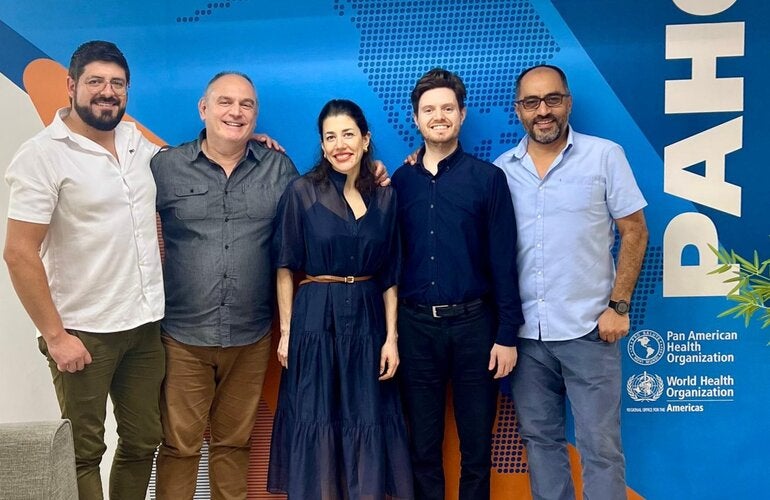
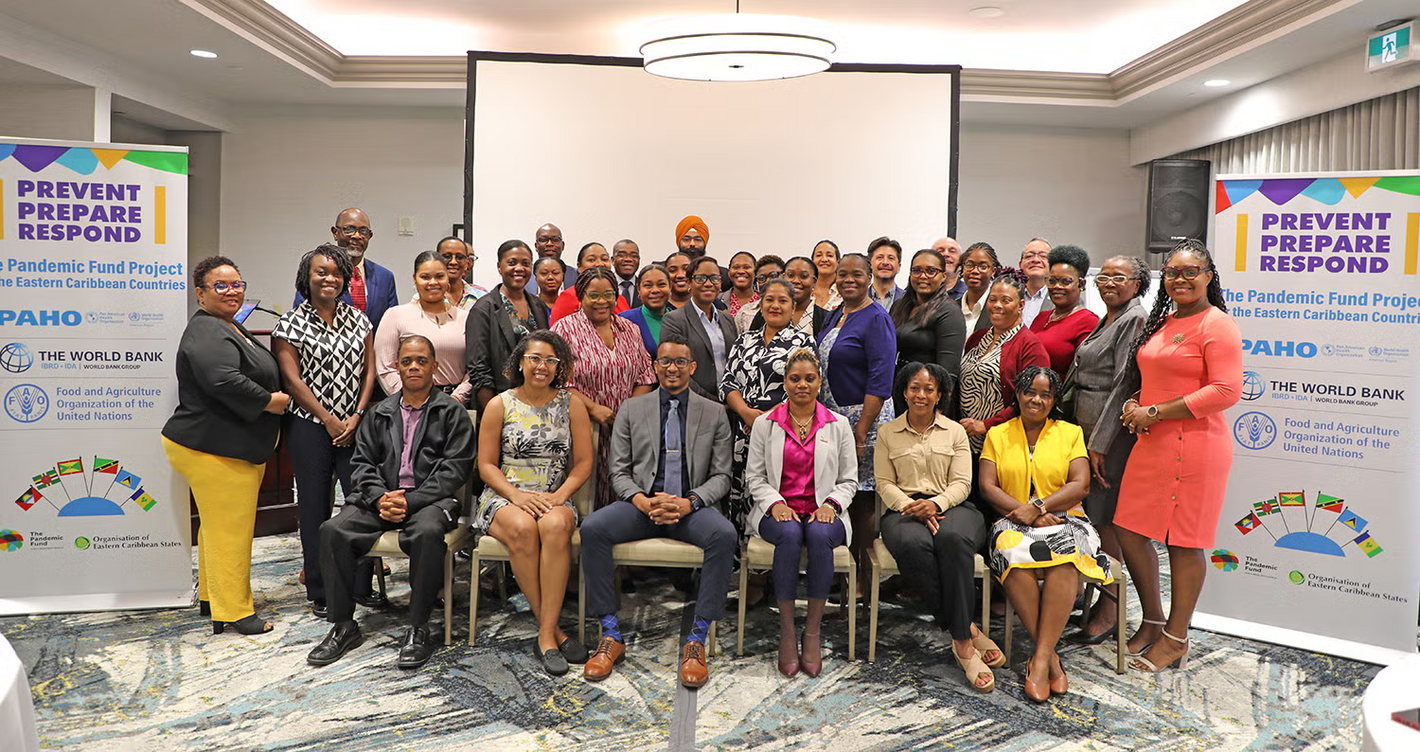
The team also contributed to regional discussions on strengthening laboratory systems. Dr. Marcelo Galas, Technical Officer for Antimicrobial Resistance Surveillance, participated in a meeting on Strengthening Laboratory Quality Systems in the Eastern Caribbean, bringing together partners from the Eastern Caribbean, PAHO, OECS, and other organisations to share lessons and identify practical pathways toward sustainable laboratory systems. During the session on the importance of laboratory quality systems, Dr. Galas highlighted the critical role that strong laboratories play in supporting effective surveillance and protecting public health.
Together, these engagements reflect the continued collaboration and shared commitment of partners across the Caribbean working to strengthen the region’s response to AMR.
The team also contributed to regional discussions on strengthening laboratory systems. Dr. Marcelo Galas, Technical Officer for Antimicrobial Resistance Surveillance, participated in a meeting on Strengthening Laboratory Quality Systems in the Eastern Caribbean, bringing together partners from the Eastern Caribbean, PAHO, OECS, and other organisations to share lessons and identify practical pathways toward sustainable laboratory systems. During the session on the importance of laboratory quality systems, Dr. Galas highlighted the critical role that strong laboratories play in supporting effective surveillance and protecting public health.
Together, these engagements reflect the continued collaboration and shared commitment of partners across the Caribbean working to strengthen the region’s response to AMR.