Both organizations held a meeting on PAHO’s culturally safe childbirth methodology.
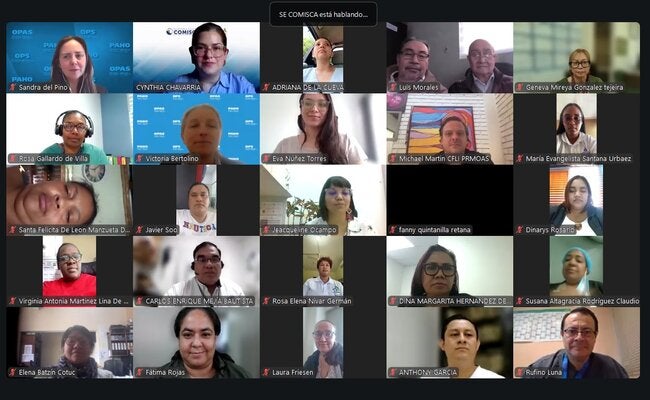
Washington, D.C., 28 January 2026 — In order to further strengthen collaboration and advance intercultural health in Central America, the Pan American Health Organization (PAHO) and the Executive Secretariat of the Council of Ministers of Health of Central America and the Dominican Republic (SE‑COMISCA) held a virtual seminar on PAHO’s Culturally Safe Childbirth Methodology, delivered by PAHO. During the session, held on January 28, Cynthia Vanessa Chavarría, Technical Assistant for Gender Institutionalization and the Prevention of Adolescent Pregnancy at SE‑COMISCA, presented the project Strengthening capacities for culturally appropriate and humanized childbirth care in Indigenous territories of Guatemala and Belize. The meeting included discussions on the possibility of aligning this project with some of the tools PAHO has been developing to promote interculturality in maternal and neonatal health, particularly the Culturally Safe Childbirth tool, which has been implemented and/or disseminated in ten countries across the Region.
The opening session featured remarks from the Executive Secretary of SE‑COMISCA, Renán De León Cáceres, and the Local Coordinator of the Canada Fund for Local Initiatives at the Permanent Mission of Canada to the Organization of American States (OAS), Mikol Martin. The seminar was moderated by Cynthia Vanessa Chavarría. A total of 175 participants attended the seminar, including heads of maternal health programs, maternity staff, and first‑level health care personnel from across the subregion.
This activity was held in the context of the Subregional Cooperation Strategy for Central America, the Dominican Republic, and Mexico 2025-2031, which was signed by SE‑COMISCA, the Mesoamerica Project, and PAHO. It also aligns with SE‑COMISCA’s Strategy for Equity and Equality in Health between Women and Men in Central America and the Dominican Republic 2023-2030, in line with its strategic action area aimed at promoting interventions that ensure comprehensive health care for population groups living in conditions of vulnerability and exclusion, including Indigenous Peoples.
PAHO Policy on Ethnicity and Health
PAHO’s Advisor on Cultural Diversity, Sandra del Pino, highlighted the importance of strengthening the work on interculturality, in line with the mandates unanimously approved by PAHO Member States, such as the Policy on Ethnicity and Health (2017), as well as PAHO's Strategy and Plan of Action on Ethnicity and Health 2019-2025.
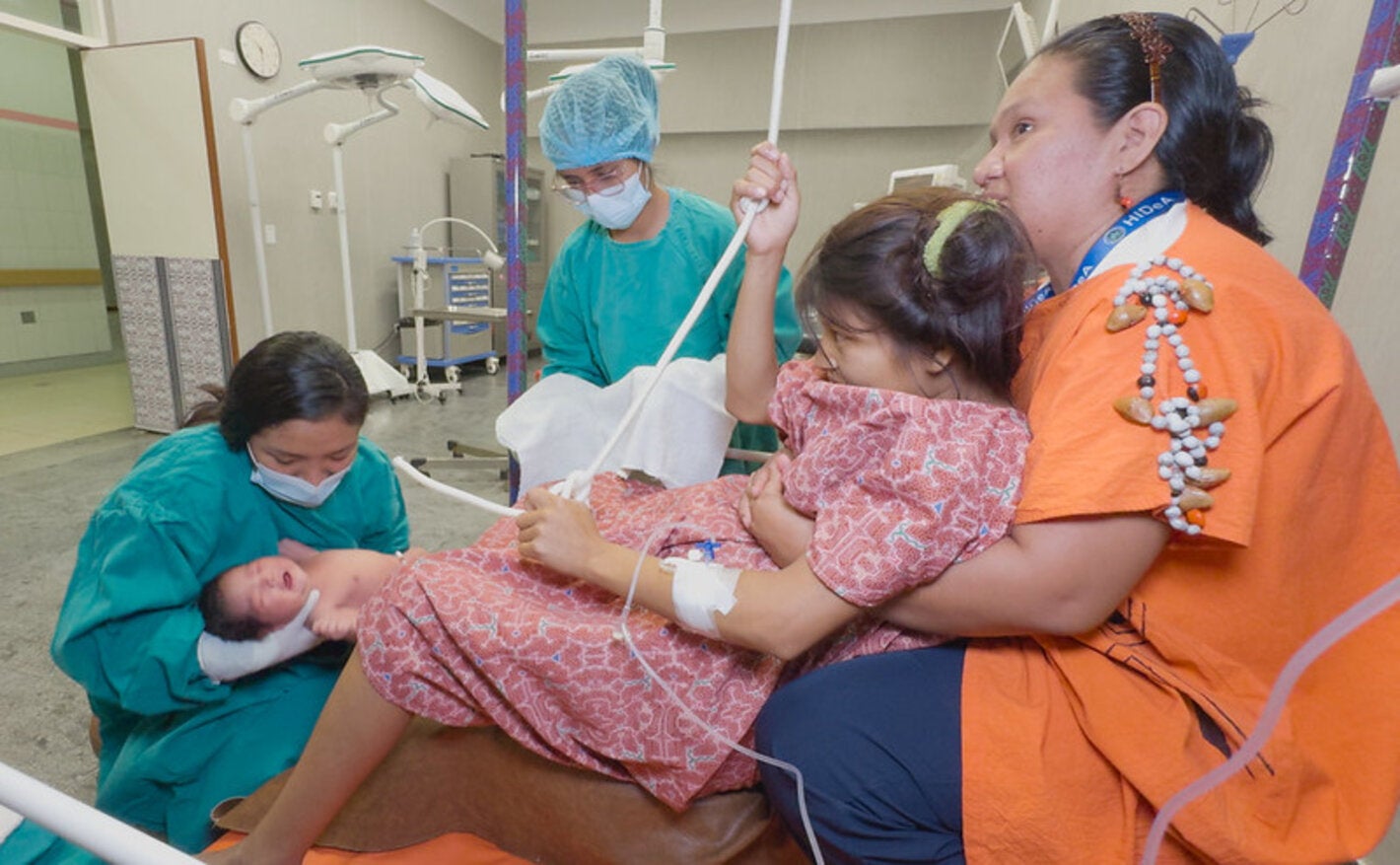
During the seminar, participants emphasized the benefits of using the culturally safe childbirth promotion tool to reduce maternal and infant mortality. It was also highlighted that its implementation will enable the health service networks of SICA Member States to improve the integration of an intercultural approach to childbirth and postpartum care for women from different ethnic groups.
The use of the tool promotes an approach to maternal and neonatal health that emphasizes women’s empowerment and work grounded in respect for different worldviews, contributing to improvements in maternal and neonatal health in Indigenous and Afro‑descendant communities,” explained Del Pino.
PAHO reaffirmed its commitment to providing technical support to the subregion to promote maternal and neonatal health with an intercultural approach, facilitate the exchange of experiences between countries, and drive the development of intercultural health policies.
This working session was proposed during the Meeting of Indigenous Youth of Latin America and the Caribbean, held in November 2025, which also included the participation of subregional integration mechanisms such as SE‑COMISCA, as well as ORAS‑CONHU (the Andean Health Organization-Hipólito Unanue Agreement) and the Amazon Cooperation Treaty Organization (ACTO).
With the support of Canada
Regarding the seminar co-organized by PAHO and SE‑COMISCA, it was facilitated by PAHO’s Department of Social and Environmental Determinants for Health Equity (DHE), in coordination with the Office of Country and Subregional Coordination (CSC), with the aim of strengthening competencies in intercultural health in this subregion of the Americas.
These activities are carried out with financial support from Canada’s Department of Foreign Affairs, Trade and Development (DFATD) and will contribute to strengthening the capacities of health personnel and traditional midwives in the care of pregnancies among Indigenous women, with the goal of helping to reduce maternal and neonatal mortality in the region.
More than 200 million people identify as Afro‑descendants in the Americas, and 55 million identify as Indigenous peoples in Latin America and the Caribbean—one of the most ethnically diverse regions in the world, yet also one of the most unequal.
Available data show higher fertility rates and pregnancies at younger ages, limitations in access to quality sexual and reproductive health services, and higher levels of maternal and infant mortality.