28 July 2025 (PAHO/WHO) – Journalists from Argentina, Brazil, Colombia, Ecuador, and Mexico took part in a regional workshop on solutions journalism and road safety held in Natal, Brazil. The event was organized by the Pan American Health Organization/World Health Organization (PAHO/WHO), with support from the Bloomberg Philanthropies Initiative for Global Road Safety. The workshop offered tools to transform the way road traffic incidents are covered by the media, framing them not just as tragedies but as problems with real, evidence-based solutions.
In the Americas, traffic crashes claim over 145,000 lives every year and cause at least 4.1 million non-fatal injuries, including more than 638,000 serious injuries. Countries around the world have committed to halving road traffic deaths and injuries by 2030. In the region, this means reducing the current road mortality rate from 14.09 to 6.73 per 100,000 inhabitants.
“Traffic deaths are just the tip of the iceberg,” said Ricardo Pérez Núñez, PAHO’s Regional Advisor on Road Safety. “For every death, there are 28 injured people—four of whom may suffer permanent consequences,” he added, stressing the need to move toward “transport systems that are safe, sustainable, inclusive, and equitable.”
PAHO/WHO sees journalist training as a key pillar for accelerating change.
Journalism as a driver of change
The workshop, which was held on 22–23 July, addressed key road safety challenges and promoted a systems-based approach—shifting responsibility away from individuals and toward those who design policies, infrastructure, and regulations. Among the solutions discussed were compact urban design, safe public transport, and active mobility.
“Traffic injuries are not inevitable. They are preventable and predictable,” said Victor Pavarino, PAHO/WHO’s Road Safety Focal Point in Brazil, noting the disproportionate burden on pedestrians, cyclists, and motorcyclists—especially in vulnerable communities.

Matthew Taylor, a communications consultant with WHO, highlighted the importance of language in media coverage: “Using terms like ‘crash’ or ‘collision’ instead of ‘accident’ highlights that these events are avoidable.” He also emphasized the need to provide systemic context, linking crashes to broader failures such as lack of infrastructure or enforcement. “News reporting must catch up with the science. The way we tell these stories can generate public support for structural changes that save lives,” he said.
Taylor also introduced the principles of solutions journalism—a practice that emphasizes rigorous, evidence-based reporting on how societies are responding to challenges, rather than focusing solely on what went wrong. “It’s not about hiding problems,” he said. “It’s about showing what responses are being implemented, how they work, what results they’re achieving, and what lessons can be drawn.”
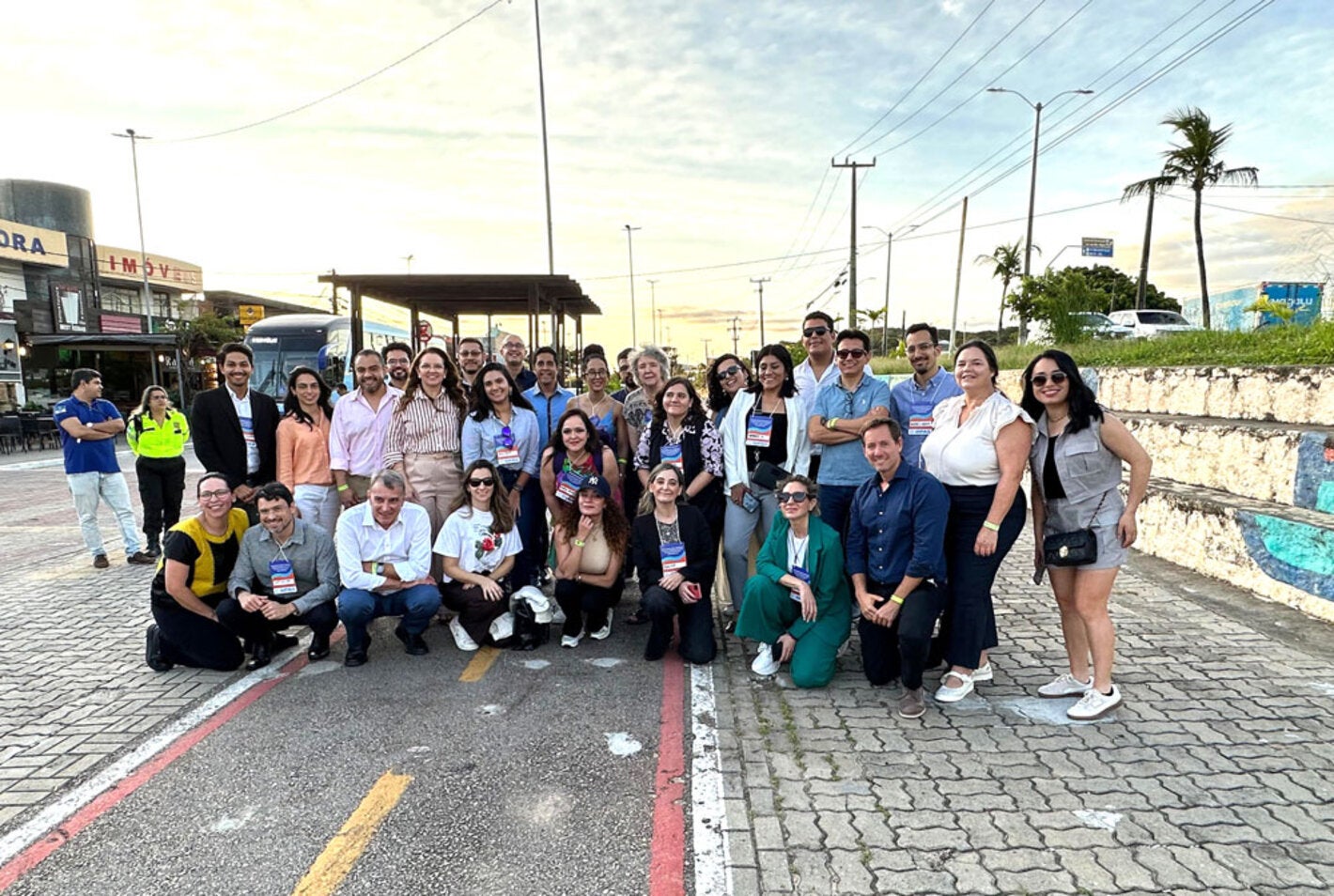
The workshop included a site visit to observe interventions implemented by the city of Natal, such as its new binary traffic system, designed to reduce risks and improve circulation. Participants also heard from journalists and relatives of crash victims working to turn personal loss into action.

A growing regional network
This training is part of a broader global strategy led by WHO and its partners to strengthen road safety coverage. More than 3,000 journalists have been trained worldwide. In Latin America, cities like Medellín, Buenos Aires, Bogotá, and now Natal, have hosted these workshops since 2017.
Through hands-on exercises, participants learned how to apply solutions journalism in their daily reporting. “It’s not just about reporting what happened,” said Sebastián Oliel, PAHO’s Media and Communications Specialist. “It’s about investigating how it could have been prevented. About moving from raw data to deeper analysis. From focusing on individual error to exposing system failures that can be addressed to protect users and reduce the risk of serious injuries and deaths.”
“The tools I’m taking back to Colombia go far beyond road safety—they’ve changed how I think about covering this issue,” said Nicoll Buitrago, a journalist with Colombia’s Noticias Caracol.
Daiana Lombardi, from Argentina’s Todo Noticias channel, added: “With the right policies, timely decisions, road safety education—and yes, fines and enforcement—thousands of lives could have been saved. For me personally, this workshop sparked a need to drive change from my small corner of the world, to understand that I have a chance to improve people’s quality of life—or at least try.”