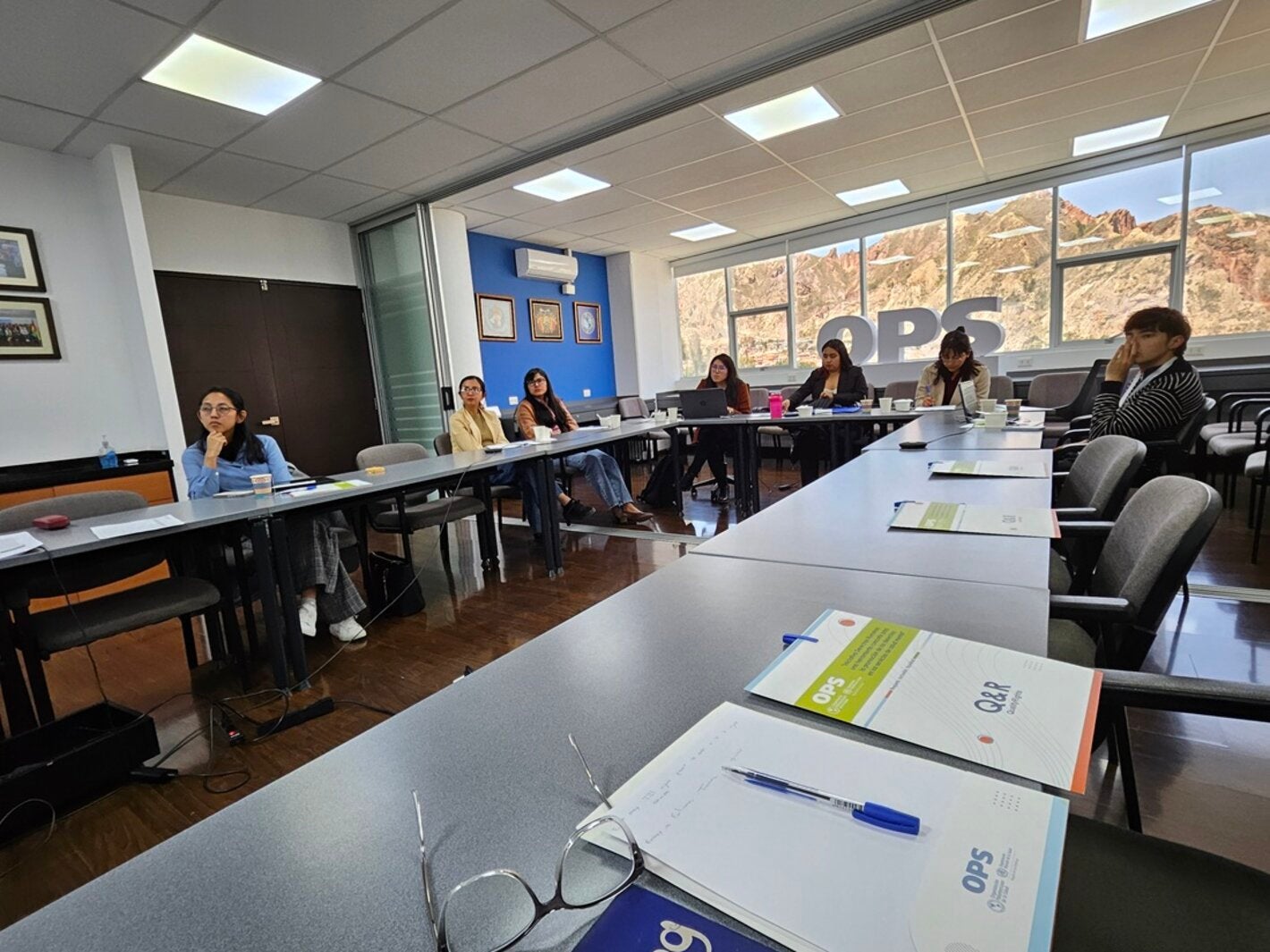
La Paz, Bolivia, 5 October 2026 (PAHO/WHO)- Fifteen young Bolivians who participated in regional validation and co-creation processes for the ANIMA-AA toolkit took another step in their training by strengthening their skills to become facilitators of Dialogues of Knowledge, a methodology aimed at fostering community participation, collective reflection, and action to address violence against children and adolescents.
The workshop, organized by the Pan American Health Organization/World Health Organization (PAHO/WHO) in La Paz with financial support from the Government of Canada, sought to enable participants to apply ANIMA-AA in different community settings, facilitating spaces where adolescents, families, institutions, and other stakeholders can share experiences, knowledge, and proposals for preventing violence.
ANIMA-AA is a PAHO/WHO toolkit designed to strengthen the health sector’s response to violence against children and adolescents. It provides practical guidance for delivering respectful, rights-based and survivor-centered first-line support and connecting survivors with appropriate care and protection services.
The initiative is based on a central premise: children, adolescents, and young people should not be viewed solely as recipients of policies or interventions, but as actors who can actively contribute to developing solutions.
Violence against children and adolescents is a serious violation of human rights and a public health concern. Its consequences can affect physical, mental, sexual, and social health and extend throughout the life course. However, many situations remain hidden due to fear, stigma, the normalization of violence, or barriers to accessing support and protection services.
In this context, PAHO recognizes that the health sector plays a strategic role in early identification, care, and support. An empathetic, respectful, and person-centered initial response can help reduce harm, strengthen protection, and facilitate access to specialized services.
From participants to facilitators
The young people who took part in this training had previously been trained in ANIMA-AA, and participated in national and regional validation processes for the toolkit and in workshops to co-create communication materials for violence prevention. This previous experience now prepares them to bring the methodology to other settings and facilitate conversations that help identify beliefs, practices, and social norms related to violence.
The training in the Knowledge Dialogues Methodology aimed to strengthen participants’ knowledge and techniques for facilitating, while also building their capacity to plan and implement community-based intervention strategies that actively engage communities in promoting and upholding their rights.
Dialogue as a tool for prevention
The Knowledge Dialogues Methodology seeks to foster horizontal exchanges among individuals, communities, and institutions, recognizing diverse forms of knowledge, experiences, and ways of understanding an issue. When applied to violence prevention, it creates spaces to challenge normalized practices, identify risk and protective factors, and develop responses through meaningful community participation.
The the young facilitators will play an active role in the municipality of Viacha as part of the international mission to Bolivia led by Britta Baer, PAHO Advisor on Violence Prevention.
Through this initiative, PAHO/WHO is working to strengthen not only the capacities of Bolivia’s health system, but also the meaningful participation of young people as part of a more comprehensive response to violence against children and adolescents.