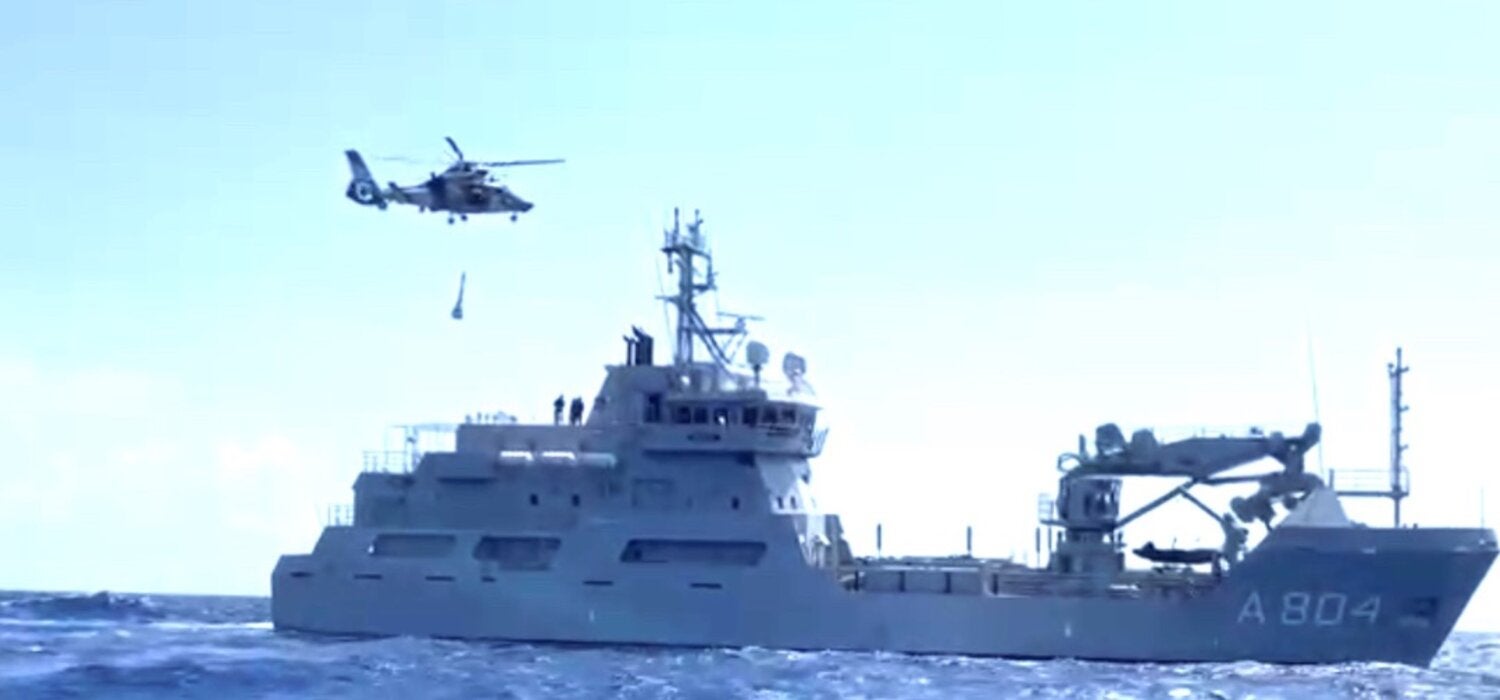
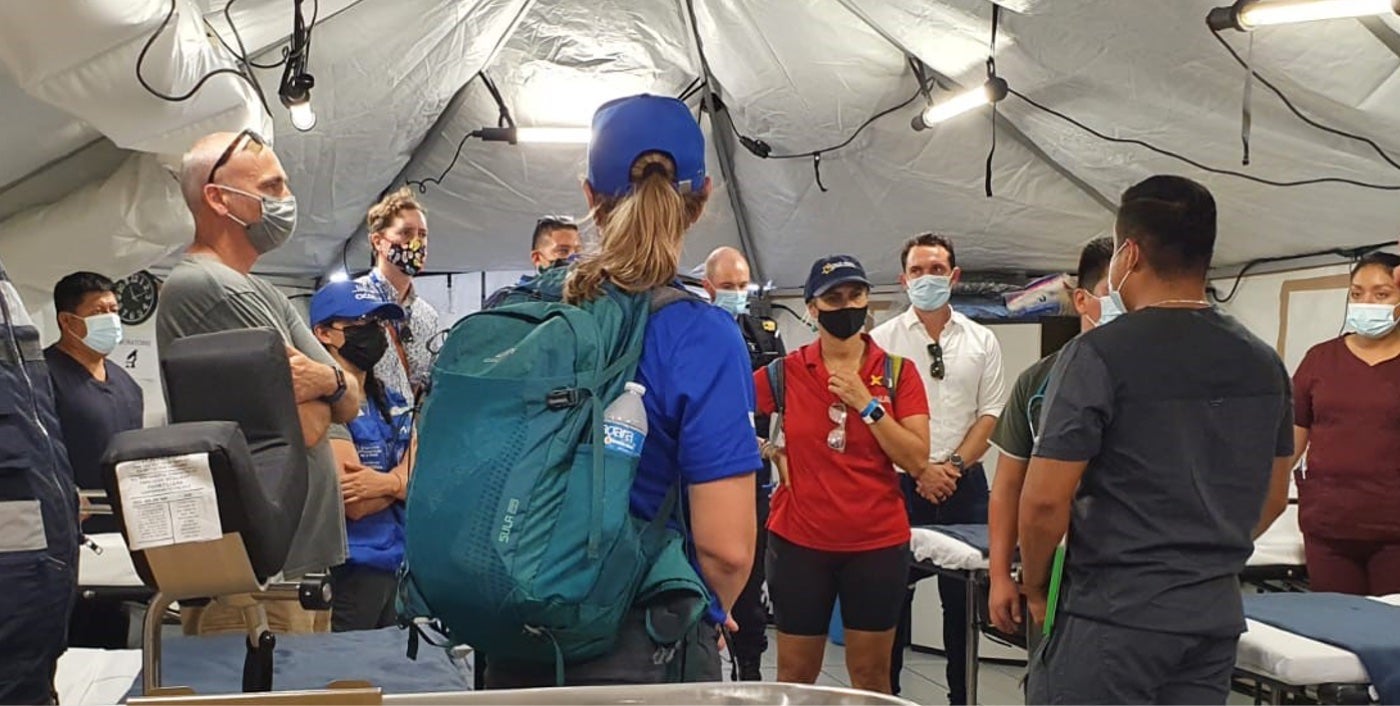
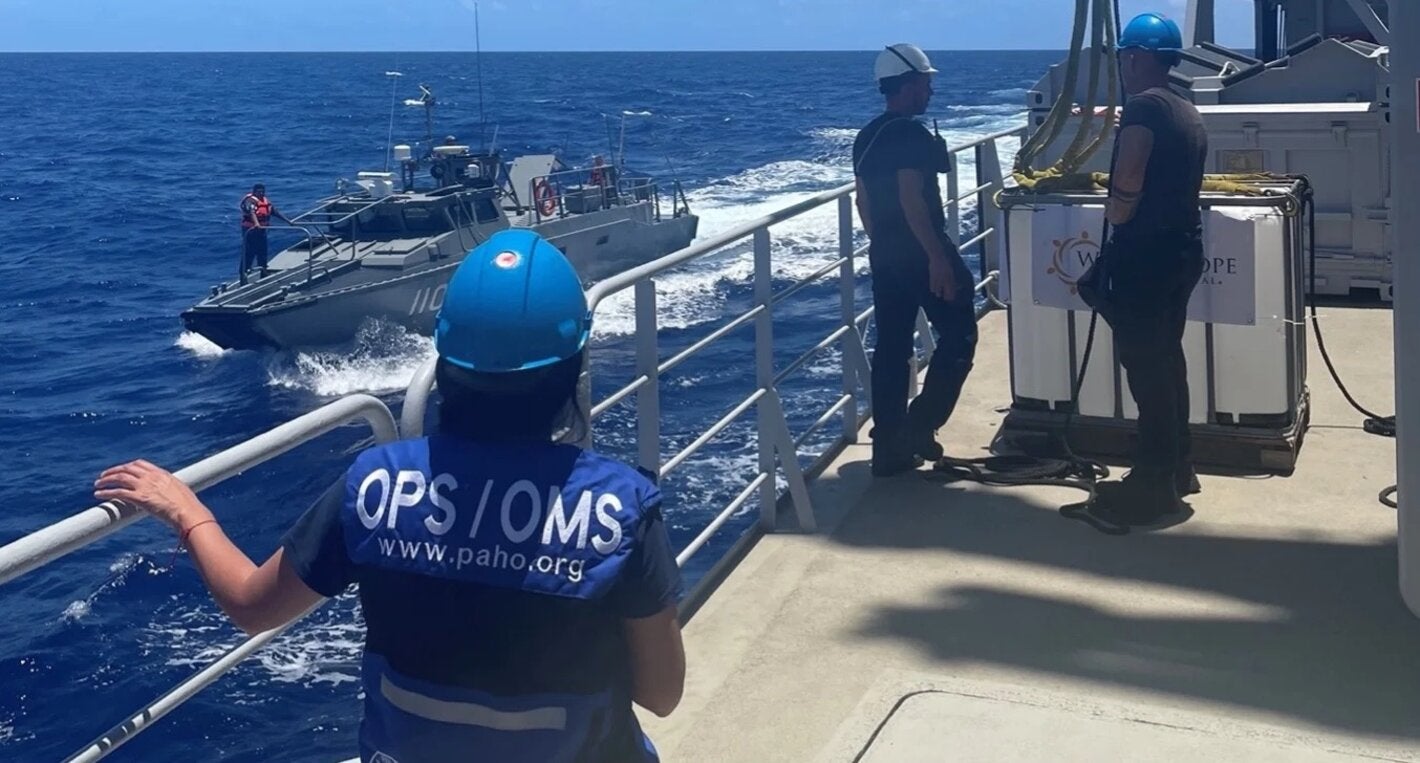
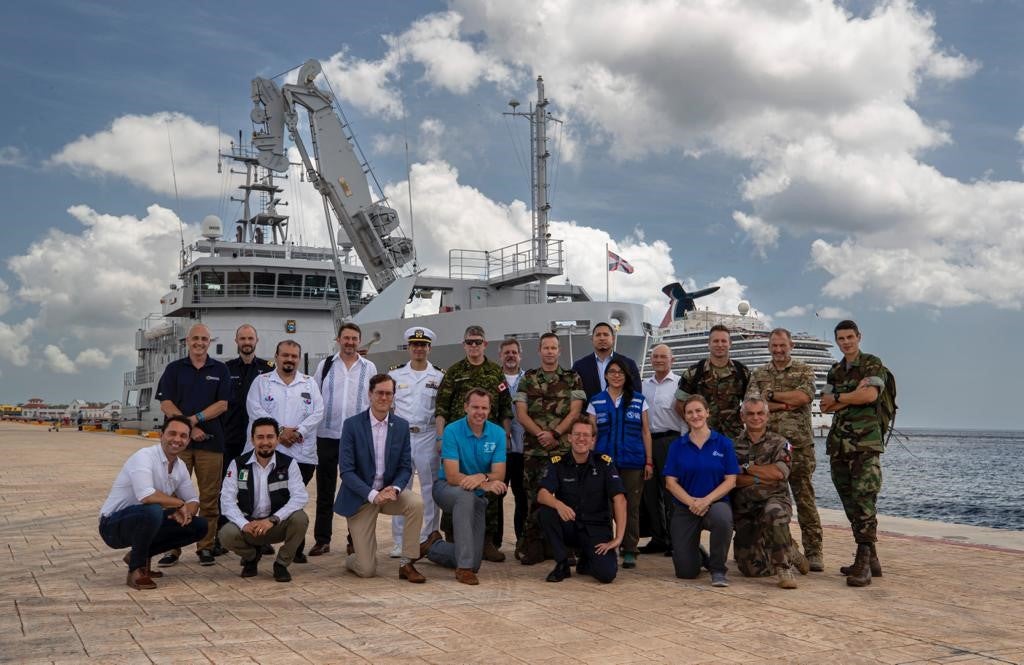
Exercise participants aboard the Pelikaan, the logistical supply ship of the Netherlands' Royal Navy.
PAHO assists Member States in building capacity to prepare for and respond to health emergencies, as well as recover from them. This support includes assistance with development of national EMTs that play a key role in responding to scenarios that may overwhelm the clinical care capacity of integrated health services networks. In some cases, the EMTs may also be deployed internationally to help neighboring countries or other regions during emergencies.
For example, after the devastating earthquake in Haiti in August 2021, PAHO supported Haiti's Ministry of Public Health and Population in requesting and coordinating deployment of 18 international EMTs to the country. The teams, aligned with EMT standards, treated 35,608 patients and performed 359 surgeries.
De la Fuente explained that the civil-military collaboration practiced during the recent exercises is increasingly important to build response capacity in the Caribbean. For example, he said, some of the recent Caribbean Emergency Medical Team deployments have been a result of a joined effort from defense forces and Ministries of Health that help these medical teams to deploy faster to remote areas or in adverse conditions.
“These combined medical teams provide a best-practice example for civil-military health collaboration in the Caribbean as well as in Barbados and Jamaica” he said “where military provide logistic and operational support and health agencies provide clinical care capacity, allowing the national Emergency Medical Team (EMT) to reach remote or most impacted areas during complex or challenging disaster scenarios”