Psychoactive substances are re natural or synthetic compounds that act on the central nervous system and produce changes in the processes that regulate thoughts, emotions, perception, and behavior.
These substances include illicit drugs such as cocaine, heroin, or amphetamines; medications with potential for misuse, such as prescribed opioids or sedatives; and other legally used substances such as alcohol, tobacco, or some industrial solvents. The use of psychoactive substances can produce immediate effects such as intoxication, impaired coordination, or cognitive alterations, which increase the risk of injuries, violence, and risky sexual behaviors. In addition, their use can increase risks to physical and mental health, particularly when consumption occurs frequently or in contexts of vulnerability.
Repeated or prolonged use may lead to the development of substance use disorders, which are chronic conditions characterized by loss of control over consumption, intense craving for the substance, and continued use despite negative consequences for health, social relationships, academic or occupational performance, and overall well-being.
- It is estimated that more than 316 million people worldwide used drugs in the past year, representing approximately 6% of the population aged 15–64.
- Cannabis is the most widely used illicit drug globally, with around 228 million users, followed by opioids, amphetamines, cocaine, and MDMA.
- Approximately 61 million people live with drug use disorders, meaning that about 1 in 5 people who use drugs develop significant health problems or dependence.
- Only 1 in 11 people with drug use disorders receives treatment, reflecting a major gap in access to health services.
- In the Region of the Americas, drug use disorders represent a growing burden of disease and mortality, with more than 145,000 deaths attributable to drug use in 2021.
- Drug use disorders place a heavy burden on individuals and communities. The social consequences of substance use disorders extend far beyond the individual user and affect families and personal relationships.
- Problems related to drug use and substance use disorders are preventable and treatable. When identified early, the risks associated with harmful drug use can be reduced through health assessments and brief interventions.
- Illegal drugs are used more frequently in high-income countries in the Americas, but the health consequences of drug dependence—disease, disability, and death—occur disproportionately in low- and middle-income countries, where access to health services is more limited.
- Drug use continues to represent a major public health burden globally and regionally. It is estimated that more than 316 million people worldwide used drugs in the past year, representing approximately 6% of the population aged 15–64.
- Globally, drug use is associated with a significant burden of disease, with nearly half a million deaths and about 28 million disability-adjusted life years (DALYs) attributable to drug use in 2021.
- In the Region of the Americas, drug use disorders represent a growing burden of mortality and disability. It is estimated that more than 145,000 deaths were attributable to drug use in 2021, reflecting the impact of increasing use of opioids, stimulants, and other substances in several countries of the Region.
- Drug use disorders disproportionately affect vulnerable populations and are closely linked to other health problems, including mental disorders, infectious diseases, and injuries.
- In the Region of the Americas, it is estimated that 17.7 million people were living with drug use disorders in 2021, mainly related to opioids and cannabis. These disorders represent a major burden of disease, with 77,717 deaths directly attributable to drug use disorders that year.
Explore the data interactively in the ENLACE portal
The harm associated with psychoactive substance use depends on the interaction of multiple factors, including:
- The type of substance used
- The method and frequency of consumption
- The biological and psychological characteristics of the individual
- The social, economic, and cultural context in which use occurs
The consequences may include physical and mental health problems, overdose, injuries, infectious diseases, disability, and premature death.
Numerous evidence -based interventions can reduce psychoactive substance use and its health consequences. These include prevention strategies, early detection, treatment of substance use disorders, harm reduction services, and recovery and rehabilitation programs.
To increase effectiveness, interventions should be:
- Accessible and affordable, ensuring that all people with substance use disorders can receive appropriate treatment
- Evidence-based and focused on improving well-being
- Culturally appropriate
- Responsive to the specific needs of affected populations
- Sustained over time
- Framed within a human rights approach and aimed at reducing stigma associated with drug use
- Designed with low barriers to access so they can reach those most in need, especially in the early stages of the disorder
- Based on a “treatment pyramid”, where more intensive interventions are reserved for the most severe or complex cases, maximizing efficiency and minimizing costs
- Supported by data on drug use prevalence and treatment needs, backed by information systems that allow continuous evaluation of the response
- Coordinated across the health, social assistance, justice, and other sectors to ensure a comprehensive and continuous continuum of care.
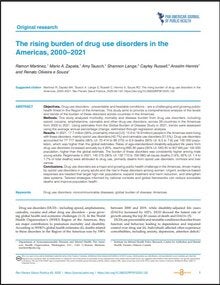
More information: The rising burden of drug use disorders in the Americas, 2000–2021
The Pan American Health Organization (PAHO) works with countries in the Region to strengthen a public health approach to the prevention, treatment, and reduction of the consequences of substance use.
Priority areas of technical cooperation include:
- Strengthening health systems for the treatment of substance use disorders
- Integrating mental health and substance use services into primary health care
- Developing evidence-based policies
- Preventing drug use among vulnerable populations
- Strengthening information systems and epidemiological surveillance
PAHO also promotes collaboration among countries, academic institutions, and international organizations to improve the regional response to problems related to substance use.