Artificial intelligence offers new opportunities to improve decision-making and optimize health services, provided that its implementation is guided by ethical principles, scientific evidence, and a people-centered approach.
Within the framework of the digital transformation of the health sector, artificial intelligence is emerging as a key component for data analysis, knowledge generation, and decision support in increasingly complex and interconnected systems.
Its adoption is part of a broader approach that promotes interoperability, the strategic use of information, and capacity-building across the Region.
At the same time, its implementation raises important challenges. The use of artificial intelligence in public health must aim to maximize its benefits without compromising people’s rights.
This involves ensuring transparency, data protection, equity, and human oversight in automated processes, always with the goal of contributing to more integrated, timely, and trustworthy health systems that promote health and well-being for all people.
Useful links



Tools for Public Health
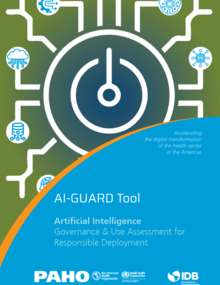
Provides insights into the level of readiness for implementing artificial intelligence in health, identifying strengths and gaps in key areas such as governance, data, and technical capacities.

Digital literacy in AI
Strengthens the capacities of health teams to understand, assess, and apply artificial intelligence, promoting its responsible use and supporting decision-making processes.

Technical documentation
Brings together resources and guidance on artificial intelligence in public health, including ethical principles, conceptual frameworks, and experiences to support its implementation.
Principles for the Use of Artificial Intelligence in Health
The use of artificial intelligence in public health should be guided by ethical and technical principles that maximize its benefits without compromising people’s rights.
Click on each card to learn about the principles that guide the responsible development and use of artificial intelligence in public health.
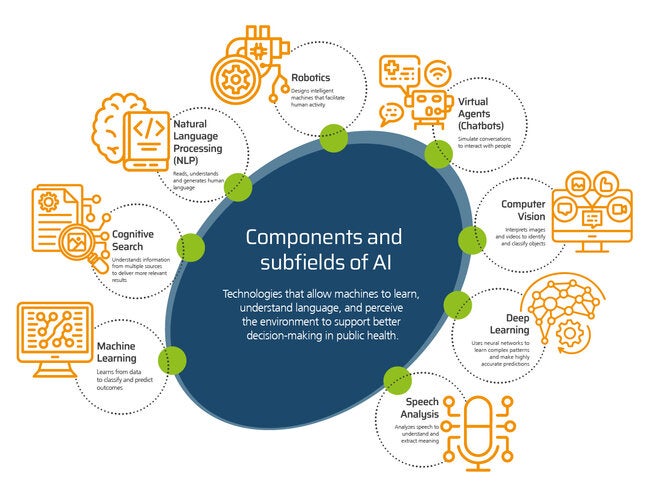
AI components and subfields that can benefit public health
Artificial intelligence is based on a range of components and subfields that make it possible to process data, recognize patterns, interpret information and generate predictions. These capabilities can be applied across multiple areas of public health.
These include technologies designed for data analysis, understanding human language, process automation and interaction with people. Their application can strengthen epidemiological surveillance, improve access to information and support clinical and management decision-making.
Below are some of these components. Scroll through the carousel to learn more about them.
Multimedia
News


Events
10 Sep 2026 - 10 Sep 2026

6 Aug 2026 - 6 Aug 2026