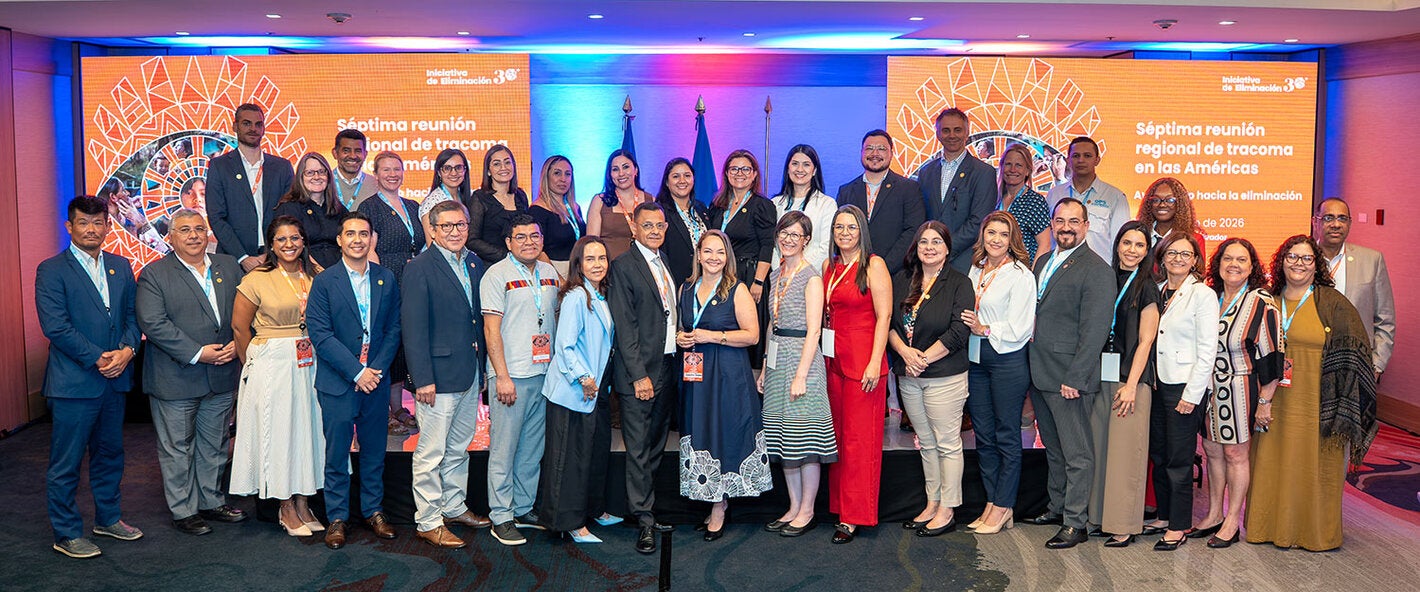
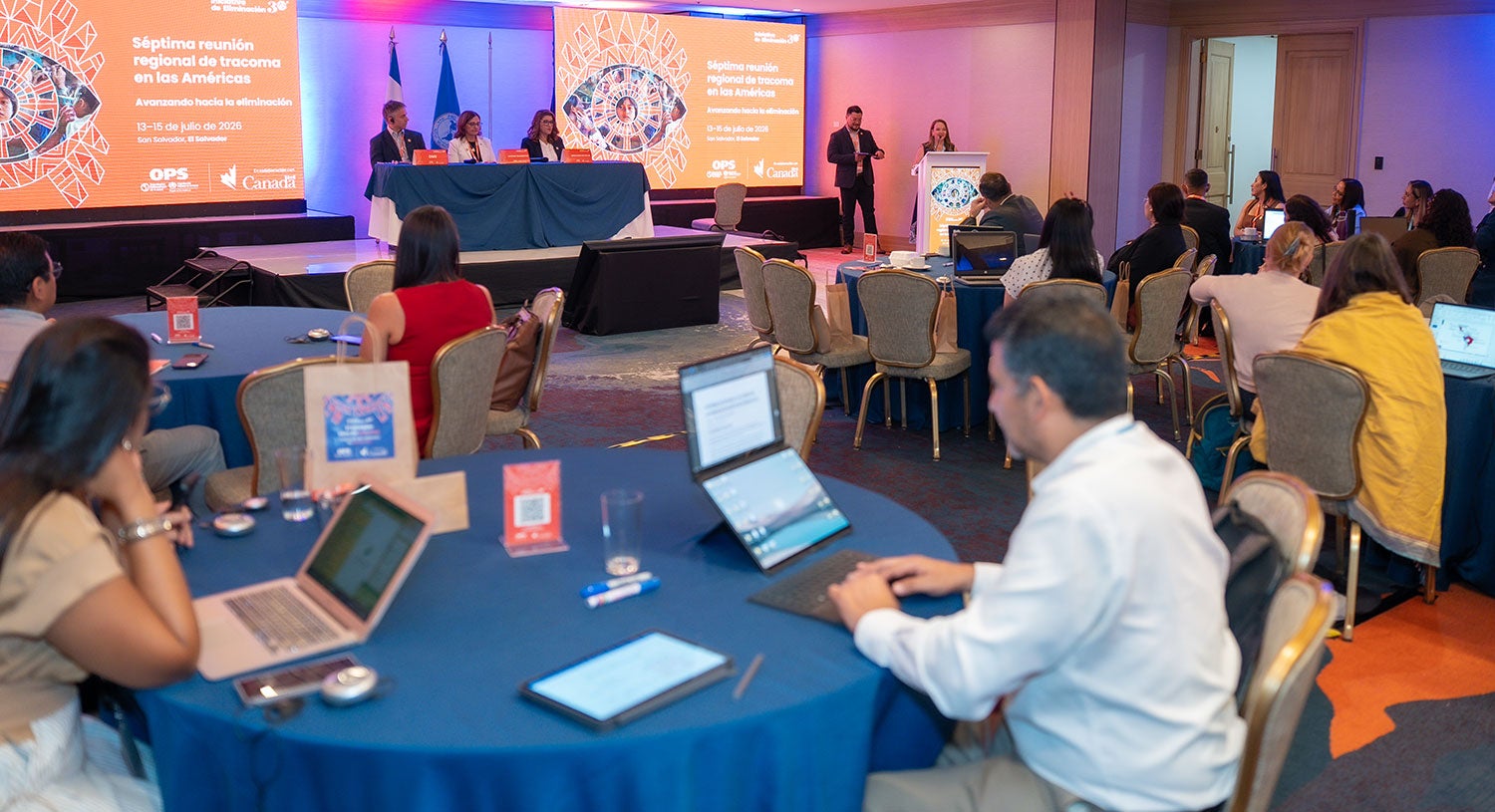
Washington, D.C., July 15, 2026 (PAHO) – Delegates from ten countries of the Americas, together with international experts, development partners, and technical organizations, participated in the “Seventh Meeting of National Program Managers for the Elimination of Trachoma as a Public Health Problem in the Americas”, held in San Salvador, El Salvador, from July 13 to 15 and organized by the Pan American Health Organization (PAHO).
"Eliminating trachoma requires far more than disease-specific interventions. It requires strengthening primary health care, working alongside communities, and integrating water, sanitation and hygiene actions, as well as eye health. This meeting will further strengthen collaboration among our countries and create new opportunities to accelerate trachoma elimination while contributing to our shared goal of building an Americas free of communicable diseases," said Dr. Martha Saboyá, PAHO's Senior Advisor for the Disease Elimination Initiative, during the meeting's opening session.
Delegations from the Ministries of Health of Bolivia, Brazil, Colombia, Ecuador, El Salvador, Guatemala, Guyana, Panama, Paraguay, and Venezuela participated in the meeting, alongside representatives from the World Health Organization (WHO), the U.S. Centers for Disease Control and Prevention (CDC), Tropical Data, the International Trachoma Initiative (ITI), the International Coalition for Trachoma Control (ICTC), the International Agency for the Prevention of Blindness (IAPB), Aldeia em Foco, and other strategic partners.
The meeting took place during the same week that El Salvador was validated by WHO and PAHO for eliminating trachoma as a public health problem, a milestone that served as an inspiration for other countries in the Region advancing toward elimination.
A regional platform for sharing experiences and strengthening capacities
Over three days, participants reviewed progress, challenges, and opportunities to accelerate trachoma elimination and ensure the sustainability of achievements made to date. Discussions reaffirmed that elimination requires an integrated approach that strengthens health systems and brings together eye health, primary health care, immunization, neglected tropical diseases, malaria, and water, sanitation and hygiene (WASH) interventions. In this context, participants highlighted the potential of trachoma programs to serve as an entry point for delivering integrated health service packages to remote and hard-to-reach communities, optimizing resources while expanding access to essential health services.
Sessions also examined regional progress toward trachoma elimination and its contribution to the PAHO-led Disease Elimination Initiative. International experts reviewed global and regional progress, while El Salvador shared the experience behind its recent WHO/PAHO validation and Paraguay presented progress toward achieving validation for the elimination of trachoma as a public health problem. Countries also exchanged experiences on post-validation surveillance, integrated epidemiological surveys, active case finding, and implementation of the SAFE strategy. In addition, they showcased innovations to strengthen surveillance, including the use of serology to monitor multiple diseases from a single blood sample, the integration of eye health indicators, and coordination with other public health interventions.
Participants also highlighted progress in implementing training workshops for health workers and communities on safe water management, good hygiene practices, and solid waste management.
The meeting also underscored the importance of developing culturally appropriate, gender-responsive, and equity-focused interventions. Participants emphasized the value of intercultural dialogue, collaboration with Indigenous authorities, and coordination between traditional and western medicine to ensure interventions respond to local realities. They also shared experiences using educational materials, culturally adapted communication strategies, and interactive learning activities, particularly for children, to strengthen community engagement and promote trachoma prevention.
A regional partnership to eliminate trachoma
Since 2023, PAHO has led the Initiative for the Elimination of Trachoma in the Americas, with financial support from the Government of Canada, to strengthen national capacities, expand epidemiological surveillance, promote implementation of the SAFE strategy, and address the social and environmental determinants associated with the disease.
Trachoma, caused by the bacterium Chlamydia trachomatis, is spread through contact with eye and nasal discharge from infected individuals. Repeated infections can lead to scarring of the inner eyelid, causing the eyelashes to turn inward (trichiasis), which can ultimately result in blindness. The disease primarily affects rural, remote, and indigenous communities with limited access to health services, safe water, and sanitation.
As the meeting concluded, participants agreed that achieving sustainable trachoma elimination will require continued investment in national capacities, high-quality epidemiological surveillance, culturally appropriate interventions, and stronger coordination across health programs, other sectors, and communities to effectively reach the populations most at risk.