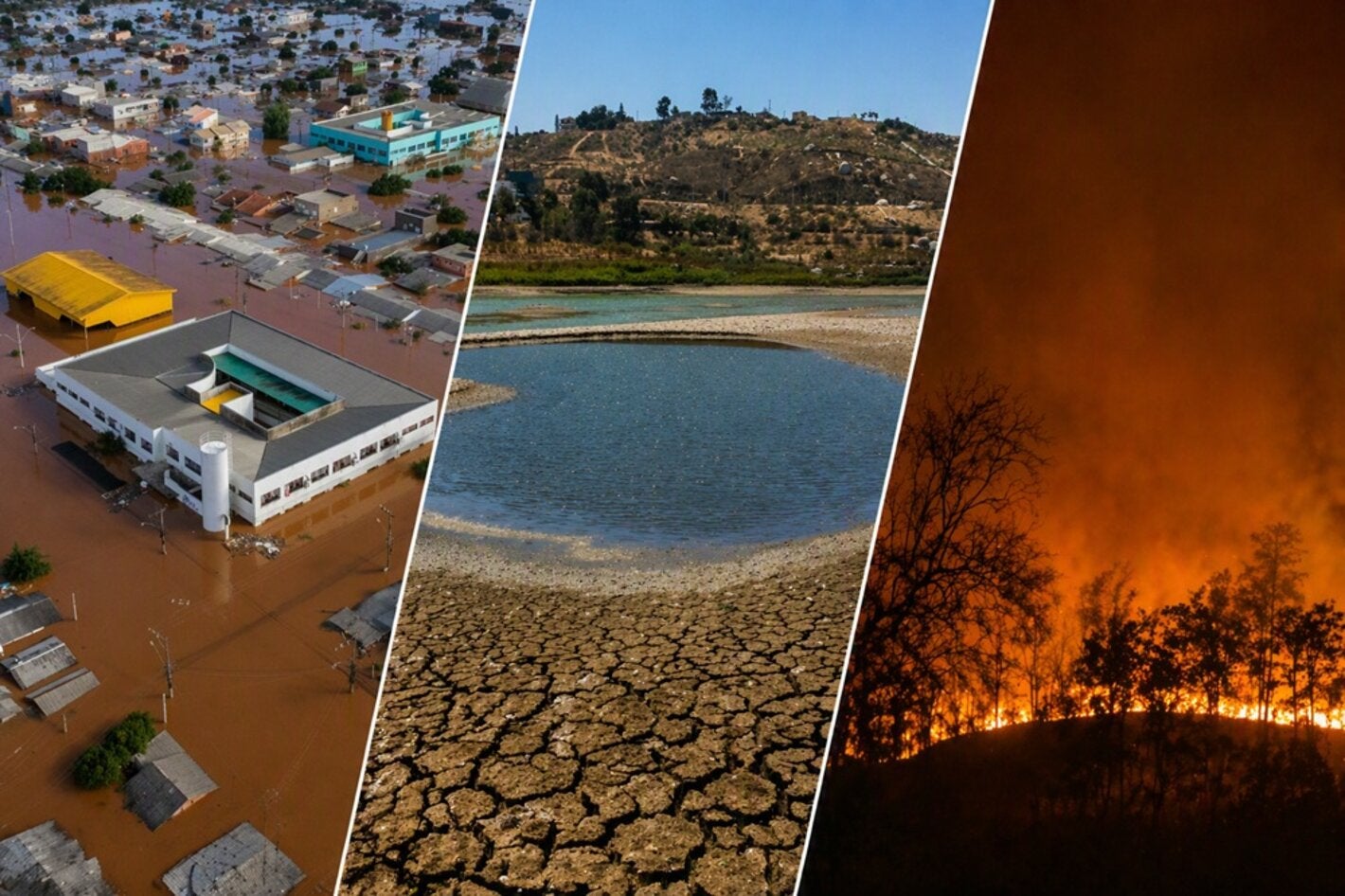
Drought, food insecurity, dengue, wildfires, and flooding are already affecting several countries across the region as El Niño intensifies.
Washington, D.C., September 18, 2026 (PAHO) – El Niño continues to strengthen and could have significant public health impacts across the Americas in the coming months, according to the Pan American Health Organization’s (PAHO) first regional situation report on the phenomenon.
The U.S. National Oceanic and Atmospheric Administration (NOAA) estimates there is a greater than 90% chance of a very strong El Niño during the Northern Hemisphere fall and winter of 2026–27.
PAHO reports that impacts are already being seen in different parts of the region. Several countries are experiencing drought, food insecurity, wildfires, and flooding amid the strengthening El Niño, although not all of these events have been directly attributed to the phenomenon. To date, eight countries or territories have issued official emergency declarations or alerts related to threats associated with El Niño.
“El Niño is not just a climate phenomenon. It can affect people’s health in many ways, from food insecurity and vector-borne and water-borne diseases to disruptions in health services,” said Dr. Ciro Ugarte, Director of PAHO’s Department of Health Emergencies. “With a greater than 90% chance of a very strong event, this is a risk countries should take seriously and prepare for now.”
The report highlights that more than 5.2 million people across the region are affected, exposed to risk, or experiencing acute food insecurity, while several countries are already reporting health impacts associated with extreme weather events. Based on available information, PAHO’s monitoring identified eight countries or territories experiencing active drought or water shortages, six facing wildfires with health impacts or risks, and five reporting damage from heavy rainfall or flooding.
In Central America, one of the primary concerns is the Dry Corridor, particularly in Honduras, Guatemala, and El Salvador, where drought is affecting water availability, agricultural production, and food security. In Guatemala, nearly three million people face critical levels of food insecurity, while Honduras reports between 1.8 and 2.2 million people affected by acute food insecurity.
In the Andean region, Colombia faces a complex situation marked by wildfires, heavy rainfall, and an active dengue outbreak, along with risks linked to malaria and yellow fever. Peru is experiencing one of the most severe situations in the region, with heavy rains, flooding, and landslides causing at least 70 deaths between December 2025 and August 2026 and affecting more than 600 health facilities.
Brazil currently presents some of the most significant environmental warning signs, including declining water levels across the Amazon Basin and worsening air quality linked to wildfires. According to data cited by PAHO, 630 municipalities have recorded fine particulate matter levels above World Health Organization (WHO) guideline levels. As of the reporting period, no direct correlation with specific health outcomes had been established.
In the Caribbean, Jamaica, Puerto Rico, and Trinidad and Tobago are reporting drought conditions and risks associated with water scarcity, while countries in the Southern Cone are maintaining preparedness measures in anticipation of increased rainfall, flooding, and other extreme events in the months ahead.
The report identifies a range of health risks, including the direct effects of extreme heat, vector-borne and water-borne diseases, deteriorating air quality, and disruptions to essential health services. It also warns that health facilities remain vulnerable to infrastructure damage, interruptions in water and power supplies, impacts on supply chains and vaccination programs, and reduced access to health care.
Previous El Niño episodes have also coincided with major public health emergencies, including the reemergence of cholera in the 1990s, the Zika and chikungunya epidemics in 2015–2016, and record dengue transmission in 2023 and 2024.
In response, PAHO is supporting preparedness and response efforts across the region, including initiatives to strengthen the resilience of health services, improve disease surveillance, enhance water security, and support continuity of care for vulnerable communities.
PAHO is urging countries to strengthen surveillance systems and early warning mechanisms, protect the continuity of essential health services, and ensure access to safe water, vaccination, medicines, and health care for the most vulnerable populations. The Organization also calls for the review and updating of hospital and health network contingency plans to reduce the potential health impacts of what could become one of the strongest El Niño events in recent years.