Washington, D.C., 3 December 2025 (PAHO)– One month after Hurricane Melissa tore through the Caribbean, the Pan American Health Organization (PAHO) continues working closely with national health authorities of Jamaica, Haiti, and Cuba to restore essential services, prevent and respond to disease outbreaks, and strengthen health systems in the hardest-hit countries.
Among pressing health risks, Jamaica has confirmed multiple cases of leptospirosis, Cuba is dealing with the spread of mosquito-borne diseases like chikungunya and dengue, and Haiti continues to face a cholera outbreak that began in October 2022.
On October 28, hurricane Melissa made landfall in Jamaica as a Category 5 storm. The next day, Melissa hit Cuba as a Category 3 storm and impacted neighboring countries, including Haiti.
The storm has affected more than five million people, displaced over 54,000 people, and resulted in 88 deaths. In Cuba, the storm damaged 95,000 homes, exacerbating housing shortages and increasing vulnerability to ongoing rainfall and future storms. Across the region, 747 health facilities were damaged (Cuba 642, Jamaica 124, and Haiti 9), severely disrupting access to essential health care.
“At this stage, PAHO is providing support to rehabilitate and restore damaged health facilities in order to reestablish essential health services, as well as prevent and control outbreaks,” said Dr. Ciro Ugarte, PAHO Health Emergencies director. "Our priority is to ensure that communities have access to safe, quality health care while remaining vigilant to rapidly detect and respond to health threats that linger in the aftermath of the hurricane.”
PAHO’s response
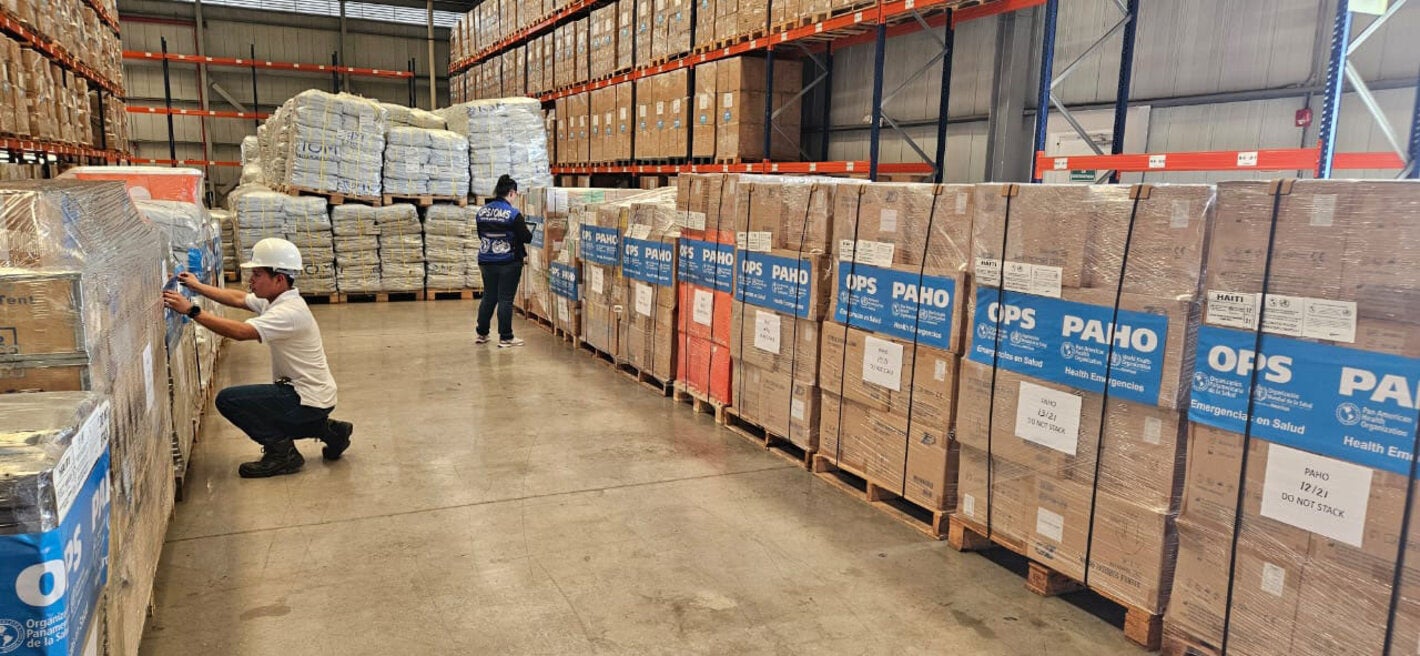
Since the onset of the emergency, PAHO has mobilized technical teams and more than 23 tons of medical supplies and equipment from its Regional Strategic Reserve in Panama, to support affected countries and restore health care services. PAHO is also supporting Jamaica's Ministry of Health and Wellness to strengthen and expand the provision of psychosocial and mental health services. In Cuba, PAHO delivered over 11.5 tons of medical equipment and supplies, including electric generators, tents, medicine, and health care kits, with support from Direct Relief, the U.N. Central Emergency Response Fund, and the European Union.
To support continuity of care in Jamaica, PAHO has coordinated the deployment of sixteen Emergency Medical Teams (EMTs) to alleviate overstretched health services and reinforce health care delivery. Type 2 EMTs are self-sufficient field hospitals with personnel capable of delivering inpatient and surgical care. Three Type 2 EMTs were set up close to hospitals in Black River, Falmouth, and Savannah-la-Mar, three medical facilities heavily affected by the storm. These EMTs are being operated by Samaritan’s Purse, Spanish Agency for International Development Cooperation, and the Barbados Defence Force.
In addition, thirteen Type 1 EMTs, rapid-deployment outpatient teams that provide essential primary care and basic emergency services, were established in affected communities to deliver essential primary health care. These teams are supporting health facilities in Black River, Middle Quarters, Darliston, Whitehouse, New Works, Savannah-la-Mar, Noel Homes, Chester Castle, Cornwall, Cambridge, Bethel Town, Wakefield, and helping restore access to basic services for thousands of people. Other PAHO response actions include:
- Strengthen disease surveillance and laboratory diagnostics: PAHO has shipped PCR testing kits for dengue, chikungunya, Zika, and leptospirosis, and is reinforcing laboratory capacity with additional equipment, including ELISA readers and pipettes. In Haiti, PAHO, alongside UNICEF, has distributed cholera kits to improve surveillance.
- Improve access to safe water and sanitation: PAHO has delivered critical hygiene supplies, emergency shelter materials, and specialized equipment to improve sanitation and ensure safe water treatment and the continuity of essential WASH services.
- Improve coordination of humanitarian assistance: PAHO has actively supported partner coordination through national networks, interagency platforms, and technical working groups. In Jamaica, the Health Cluster mapped and coordinated the efforts of nearly 45 organizations to ensure integrated support for the hurricane response and outbreaks.
One month later: Strained health systems
On November 24, Jamaican health authorities declared a leptospirosis outbreak, now with 18 confirmed cases, 39 cases under investigation, and six related deaths. Leptospirosis is a bacterial infection that spreads when people come into contact with water contaminated with the urine of infected animals. Surveillance teams in Jamaica are also investigating rising trends in fever, gastroenteritis, and vector-borne diseases.
A total of 124 health facilities in Jamaica sustained damage, including five of the country’s major hospitals. While electricity and water supplies are still being gradually restored, intermittent connectivity and water shortages persist in the Western and Southern regions. Despite the widespread damage, several health centers that were retrofitted under PAHO’s Smart Hospitals program— including Saint Ann’s Bay, Mandeville, and Santa Cruz—remained operational after the storm. These facilities, upgraded to withstand extreme weather and maintain critical services, suffered only minor damage, underscoring the importance of investing in resilient health infrastructure to save lives during emergencies.
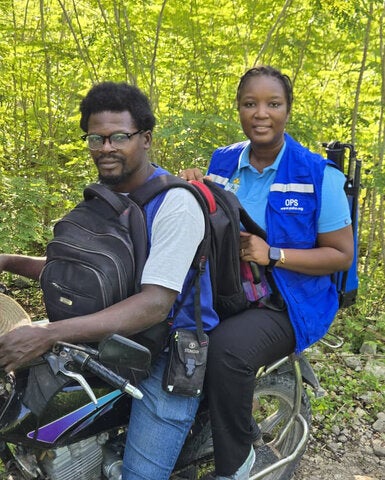
In Haiti, the government declared a three-month state of emergency—from 3 November to 3 February 2026—across six departments to accelerate assistance and restore essential services. The current cholera outbreak that re-started in late 2022 remains a major public health concern, now intensified by storm-related displacement and reduced access to safe water.
In Cuba, recovery efforts are complicated by blocked roads, collapsed bridges, and ongoing rainfall. The hurricane coincided with a surge in arbovirus transmission, particularly dengue and chikungunya. Flooding has further increased the risk of waterborne illnesses.
The generous contributions from PAHO’s strategic donors and partners -namely the Government of Canada, UN CERF, the European Union and the United Kingdom - are allowing PAHO to ramp up its support to affected countries and address immediate and short-term emergency health needs. Full recovery will require sustained collaboration and resources. PAHO recently published its Strategic Response Plan for Hurricane Melissa 2025, requesting US$25,217,000 from donors and partners to address priority health needs.
PAHO will continue working with health authorities in Jamaica, Haiti, and Cuba to help recover care delivery capacity, strengthen epidemiological surveillance and respond to outbreaks and other acute health needs that have emerged in the wake of the hurricane.