St. George’s, Grenada, 20 June 2025 (PAHO/WHO) - Health leaders and technical experts from Barbados and the Eastern Caribbean, including representatives from the UK Overseas Territories (UKOTs), came together for a groundbreaking four-day hybrid workshop hosted in Grenada titled “Social Determinants, Intersectionality and Human Resources for Health: Understanding Better Care for NCDs.”
Organized by the Pan American Health Organization/World Health Organization (PAHO/WHO) in collaboration with the Ministry of Health, Wellness, and Religious Affairs of Grenada, the workshop focused on deepening the understanding of health equity, social determinants, intersectionality, and the critical role of advocacy, coordination, and collaboration in strengthening human resources for health to deliver better care for non-communicable diseases (NCDs).
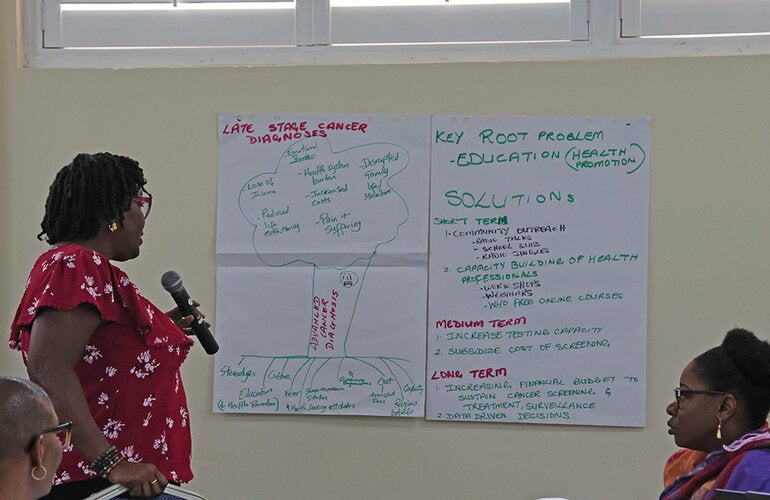
The workshop brought together Permanent Secretaries, Chief Medical Officers, health planners, NCD focal points, human resources for health personnel, and representatives from the Organisation for Eastern Caribbean States (OECS) Secretariat, with 23 participants attending in person and approximately 30 joining virtually each day. Participants engaged in a dynamic program combining expert presentations, practical group exercises, and participatory tools, such as Mentimeter, problem tree analysis and use of gameplay in allocating health resources.
A Regional Imperative
NCDs such as heart disease, diabetes, and cancer are the leading causes of death in the Eastern Caribbean, accounting for up to 83% of all deaths in the region. Addressing these challenges requires action not just within health services but across sectors, systems, and communities. In delivering opening remarks on behalf of Grenada’s Chief Medical Officer, Dr. Shawn Charles, Senior Medical Officer, NCDs, Dr. Anneth McLeish, emphasized the regional significance of the workshop:
“We are at a critical juncture where health systems must become more responsive and equitable. The strength of our human resources for health will define how well we manage and reverse the trends of NCDs. This workshop offers a chance for countries to step back, reflect, and make real, actionable changes that place equity at the centre,” said Dr. McLeish.
“Understanding and addressing the deep-rooted inequities in our health systems is critical to changing the trajectory of NCDs in our region,” said Dr. Taraleen Malcolm, PAHO Advisor for NCDs and Mental Health. “This workshop allowed countries to unpack the realities of intersectionality and explore practical, localized responses.”
Highly Engaging and Action-Oriented
The workshop format itself reflected innovation and inclusiveness. Designed as fully hybrid training, the sessions included plenary presentations, interactive group work, and live polling through Mentimeter to keep participants engaged throughout.
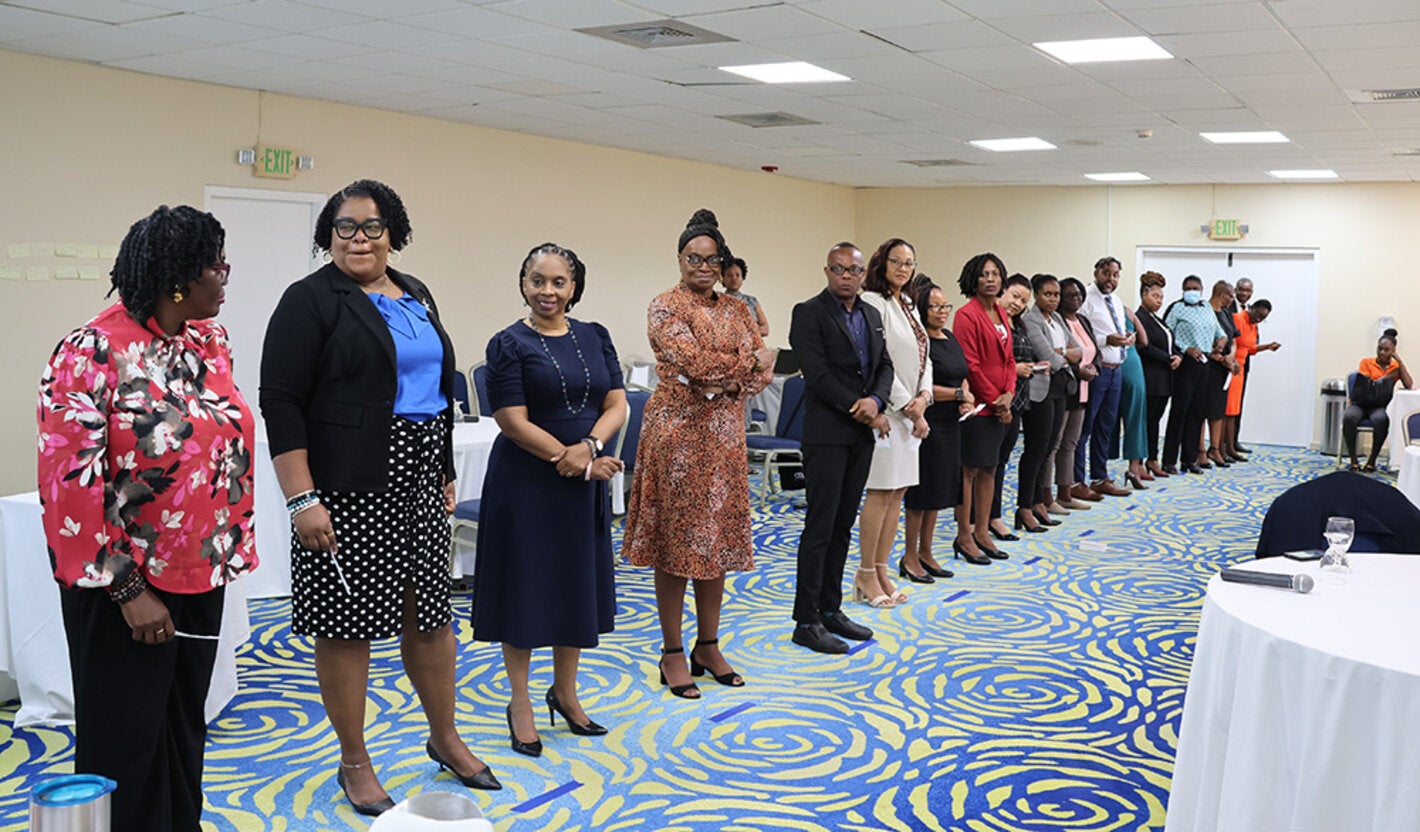
Hands-on activities such as the “Equity Walk,” case study discussions, and problem tree analysis exercises gave participants opportunities to experience and reflect on how social and structural inequities affect health outcomes. These sessions helped build shared understanding of the links between gender, poverty, geography, and access to NCD care.
“This wasn’t just another lecture series,” said Dr Sharon Belmont-George CMO, Saint Lucia. “It was a chance to connect the dots and walk in the shoes of others. It gave us the space to talk honestly about where the gaps are and what we can do about them.”
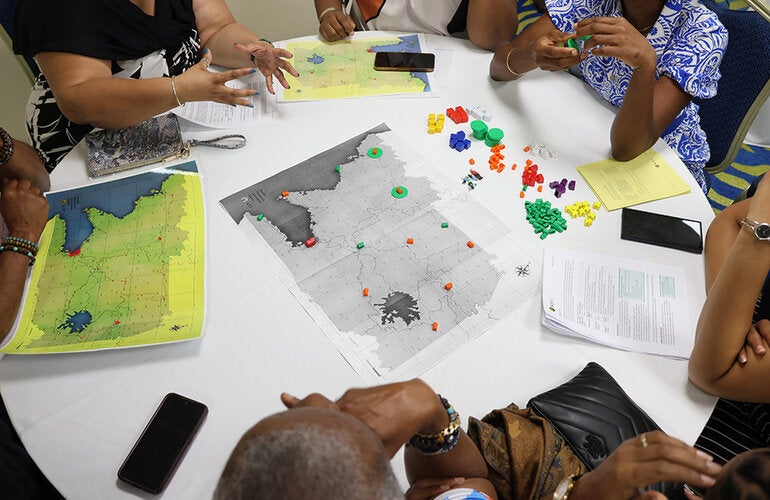
Experiential learning, through gameplay, was another highlight of the workshop. Participants used a game designed to simulate allocating health resources and testing the preventative services capacity of the health system design and organization. Participants played initially in groups and came together to discuss the rationale supporting decisions made, and the impacts of these decisions.
Focus on Human Resources for Health
The final two days of the workshop shifted to solutions, specifically the pressing need to strengthen Human Resources for Health (HRH). With the continued limited health workforce capacity and challenges in attaining and retaining equitable distribution of trained personnel, the countries worked together to assess gaps related to HRH advocacy, coordination and collaboration. Building on these gaps, participants drafted strategies to support them in achieving health workforce goals.
Facilitated by PAHO advisors and consultants, the sessions focused on advocacy, coordination and collaboration for HRH for Better Care for NCDs. Working within country groups, participants (both in-person and on-line) considered the current state of national advocacy, coordination and collaboration for HRH for Better Care for NCDs and strengthening approaches. Representatives of the OECS, worked along similar lines. At plenary, agreement was achieved on clear opportunities for enhanced advocacy, coordination and collaboration on HRH for Better Care for NCDs. In the final session, participants called for greater cohesion in the HRH community with the support of PAHO and the OECS.
Dr Lynora Drigo, NCD Coordinator from Dominica, emphasized the importance of strengthening HRH, noting that shortages of nurses and trained community health workers limit the country’s ability to deliver early detection and long-term management of NCDs.
Charting a Path Forward
The workshop concluded with participants reaffirming their commitment to advancing health equity and tackling the NCD epidemic through practical, collaborative, and context-specific solutions. The Grenada Ministry of Health was praised for its leadership and hospitality in hosting the event.
Dr. Vishwanath Partapsingh of PAHO highlighted the broader impact of the workshop:
“The energy, innovation, and honest dialogue we saw here this week reflect a region ready to lead change. With a greater understanding of the determinants, intersectionality and equity, these countries are both raising the bar towards equitable NCD care and setting the stage for a more resilient and inclusive health system.”
The workshop reaffirmed the collective commitment of Barbados and the Eastern Caribbean health leaders to the principles of equity and the Sustainable Development Goal of “Leaving No One Behind.” With practical tools and clear next steps in hand, the countries are poised to transform how NCDs, including mental health, are addressed from clinical settings to communities.
PAHO commended the Ministry of Health of Grenada for its gracious hosting and looks forward to continued partnership across Barbados and the OECS.